Elijah has always worked in the in-between spaces — where radio blends into the dancefloor, where design carries as much weight as sound, and where community is something you look after, not gesture towards. His work has always come from instinct more than strategy: sharing when it feels useful, creating when the timing is right, and refusing to turn everything into a business model.
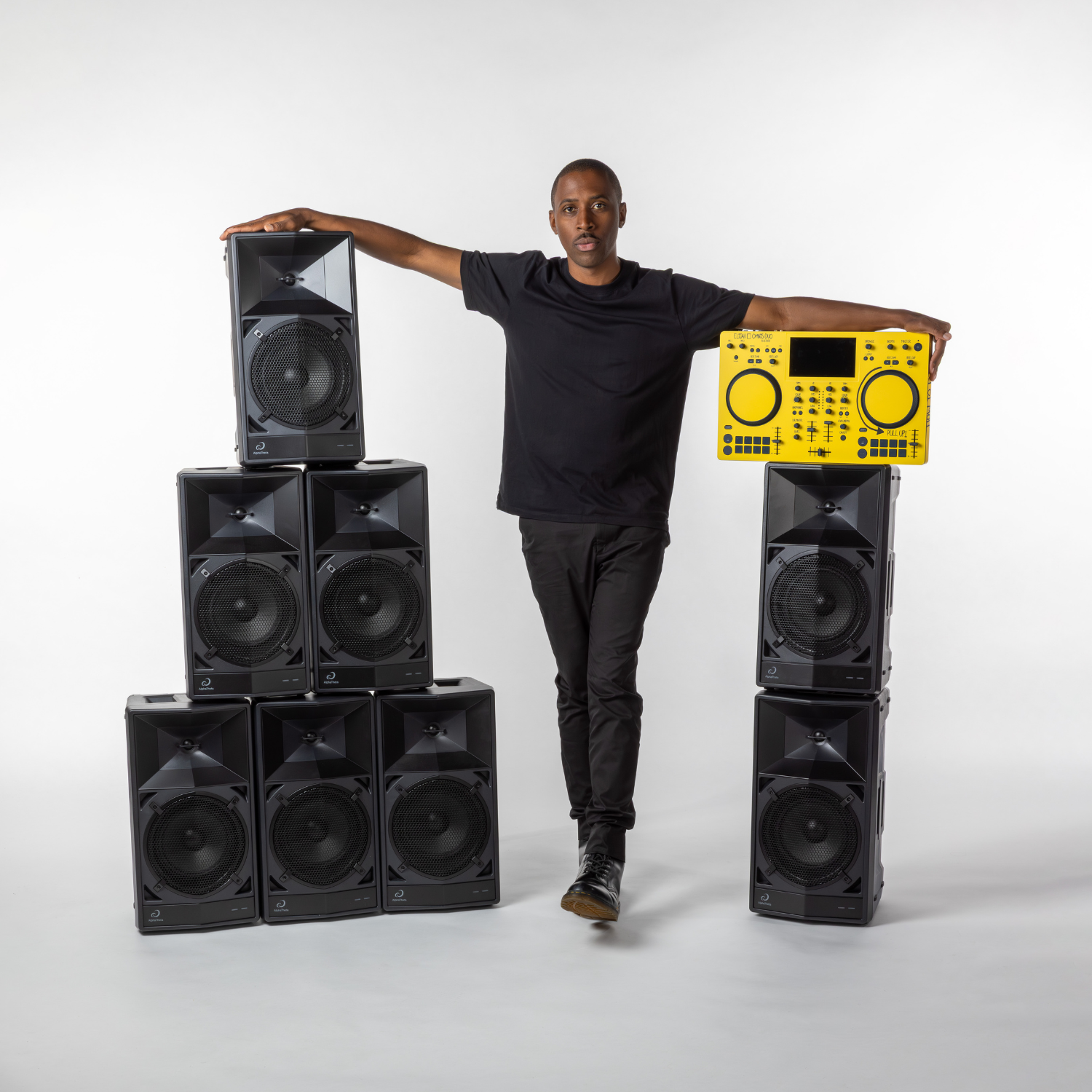
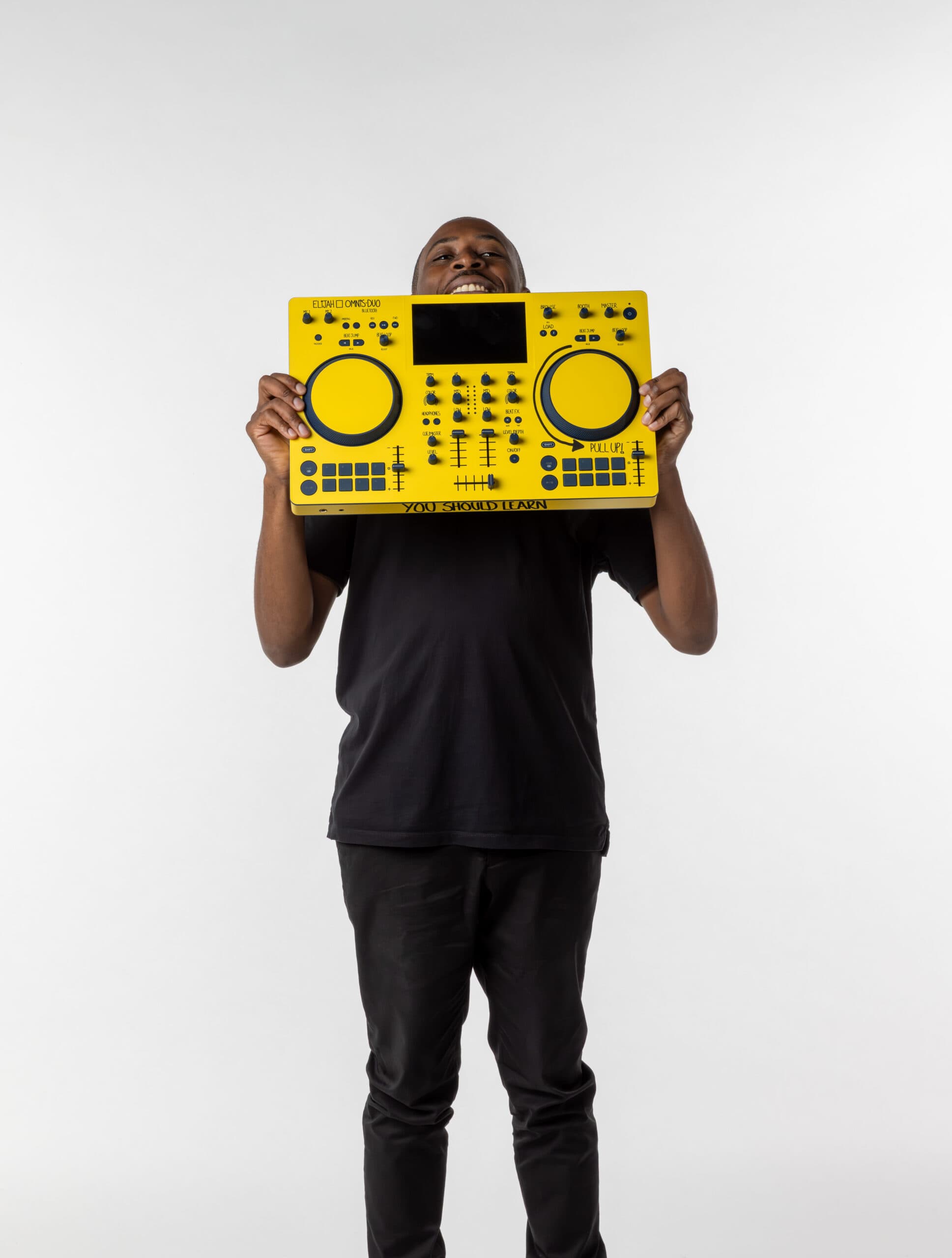
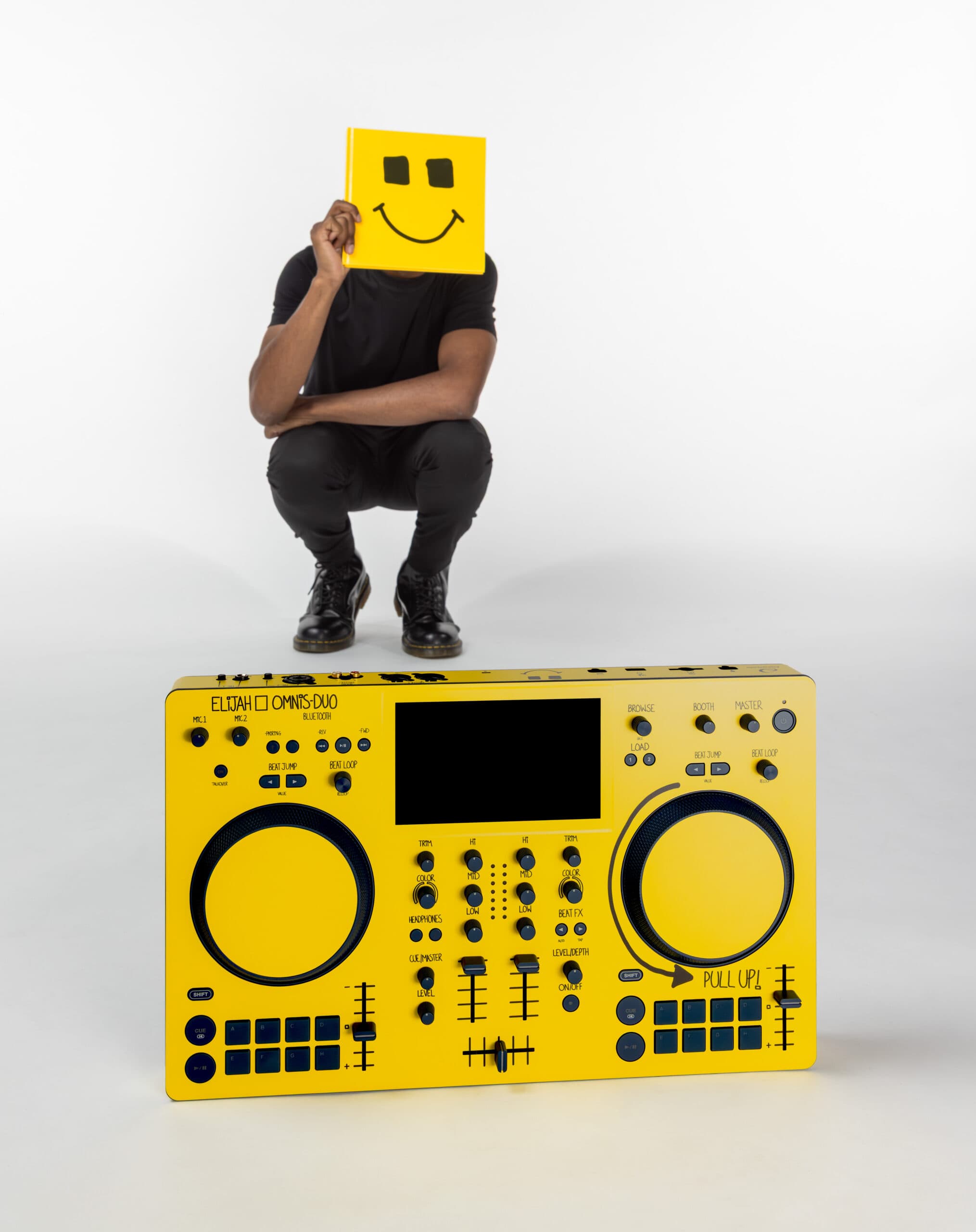
Yellow Squares grew out of that same approach. What started as a visual idea slowly became its own language — a way of thinking about creativity, pace, and paying attention in a culture that moves fast. That thinking has now jumped into the real world, too, most recently through a collaboration with AlphaTheta on a limited-edition OMNIS-DUO controller shaped by his playful, internet-rooted style.
We caught up with him about how Yellow Squares has evolved, why DJing should feel like an invitation rather than a gate, and what it means to make work outside the usual rhythm of the industry.
Yellow Squares started visually and grew into a whole world. Did you sense it would expand like that? How did it evolve?
The core of it was me sharing what I’d learnt from music and DIY culture. Around mid-2021, after Covid, people wanted information, direction, and ways into scenes again. So I kept sharing what I knew. At first, it was something I did alongside management. But people don’t just want theory — they want examples. So it gradually became “show and tell”: putting ideas into practice through creative work.
Because I never tried to monetise it — no courses, no upsells, no plan — it grew organically. It’s put me in a weird, unexpected art space, but it feels right.
When did this project first begin with AlphaTheta, and how did it come about?
I’d had the idea sitting in my head for a long time, but didn’t know what shape it should take. At IMS I met Keleigh from AlphaTheta and said, “This is exactly what I want to do — is this something you’d be into?” She was.
A lot of my ideas start as writing or concepts I carry around until the right person or moment appears. I don’t like burning through collaborations just to do them — I want to give things the time and attention they deserve. This was one of those.
With the AlphaTheta OMNIS-DUO, what feeling did you want to give someone using it?
Most studio gear looks industrial — very “equipment”. I wanted this to feel playful, familiar, like something you’d already interacted with online. Something that reminds you why you love music in the first place.
I wanted people to look at it and go, “What’s that?” A bit of intrigue. And also rethink DJing: it doesn’t always have to be static. This feels more like an instrument you move with.
There’s a sense of optimism and balance in your work. Where does that come from?
I don’t think I’m balanced — but I’ve had to be rational when working in art and with artists. You understand pretty quickly why not everything needs to be monetised, and why people protect certain parts of their creativity.
For me, I do things because I enjoy them. When I’m having fun, other people gravitate towards it. Because I’m not optimising for a market segment or ‘shareholder value’, the ideas hit differently.
I’m also aware of the rhythms of the internet — how artists announce things, how the industry moves. Doing things slightly differently makes them stand out.
You’ve lived through multiple phases of London nightlife. With clubs closing and costs rising, how do you feel about where things are heading?
There’s always been contraction. When I started, record shops were closing. Then big clubs. Then mid-sized ones. People always adapt — the shape just changes.
Now nightlife is part of a wider cultural lifestyle. People might DJ once a week, work another job, do a craft, go to talks, exhibitions, dinners. Young people don’t need to go out constantly — they’ll go out once a month for something great. That’s not a bad thing. It’s just different.
The important thing is that people running spaces actually want to run them. If not, it’s okay for things to change or end.
How has the mobility of the OMNIS-DUO changed how you DJ?
Before, I was more of a performer — clubs, controlled environments, specialist settings. Now I’m looser in the way I approach DJing. I’ll go back-to-back with anyone, play in bars, rooftops, living rooms, whatever.
I don’t want decks to feel like a velvet rope where only certain people are allowed. Ninety-nine percent of people are just music lovers — that’s who I’m interested in reaching.
You’ve said before, “If you love music, you should learn to DJ”. What does that open up for beginners?
It gives them a tangible relationship with music again — not just playlists. If you love garage, what tunes do you love? How do you put them together? Where do they come from?
DJing slows your listening down. It forces you to choose what you want in your ears and in the room. That’s good for beginners and also good for the musicians making the work.
You’re writing two books — what can you share about them?
One is about DJing. I’ve been doing it for 20 years, so it feels like the right moment to document what I’ve learned.
The second is about what artists can learn from pro wrestling. It asks whether the last 10 to 15 years of ‘authenticity’ culture has actually helped artists — and whether myth-making, character work and storytelling might serve them better going forward.
I’ve already started researching — travelling, watching shows, speaking to people — and both books should come out next year. They’re pushing me as a writer in a way I haven’t been pushed before.
How do you stay motivated during the difficult parts of the process?
I’m learning as I go. What helps is knowing I don’t want to reach the end of the decade wishing I’d finished these ideas sooner. It’s not about perfection — it’s about not carrying the regret of never doing them. So I keep going, even when it’s hard.
Where do you see Yellow Squares heading next?
It’s basically my design language now — a shorthand for ideas. The Substack lets me explore longer writing. The books extend the world further. The physical work, like the controller, takes it off the internet and into real life. I think the ‘advice notes’ era is done — that chapter feels complete. Yellow Squares will keep evolving, but only in ways that feel natural.
- WriterCherelle Chambers