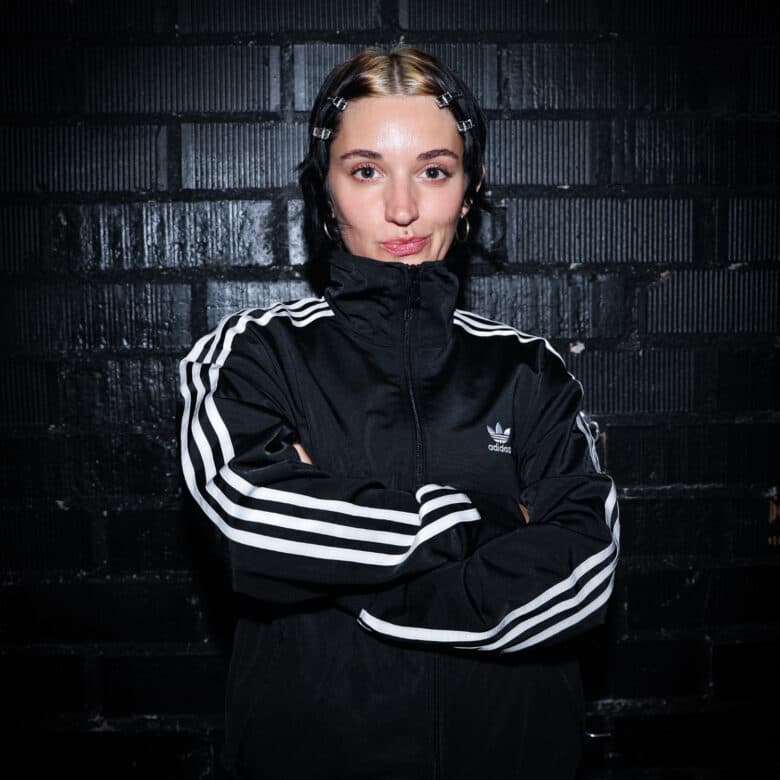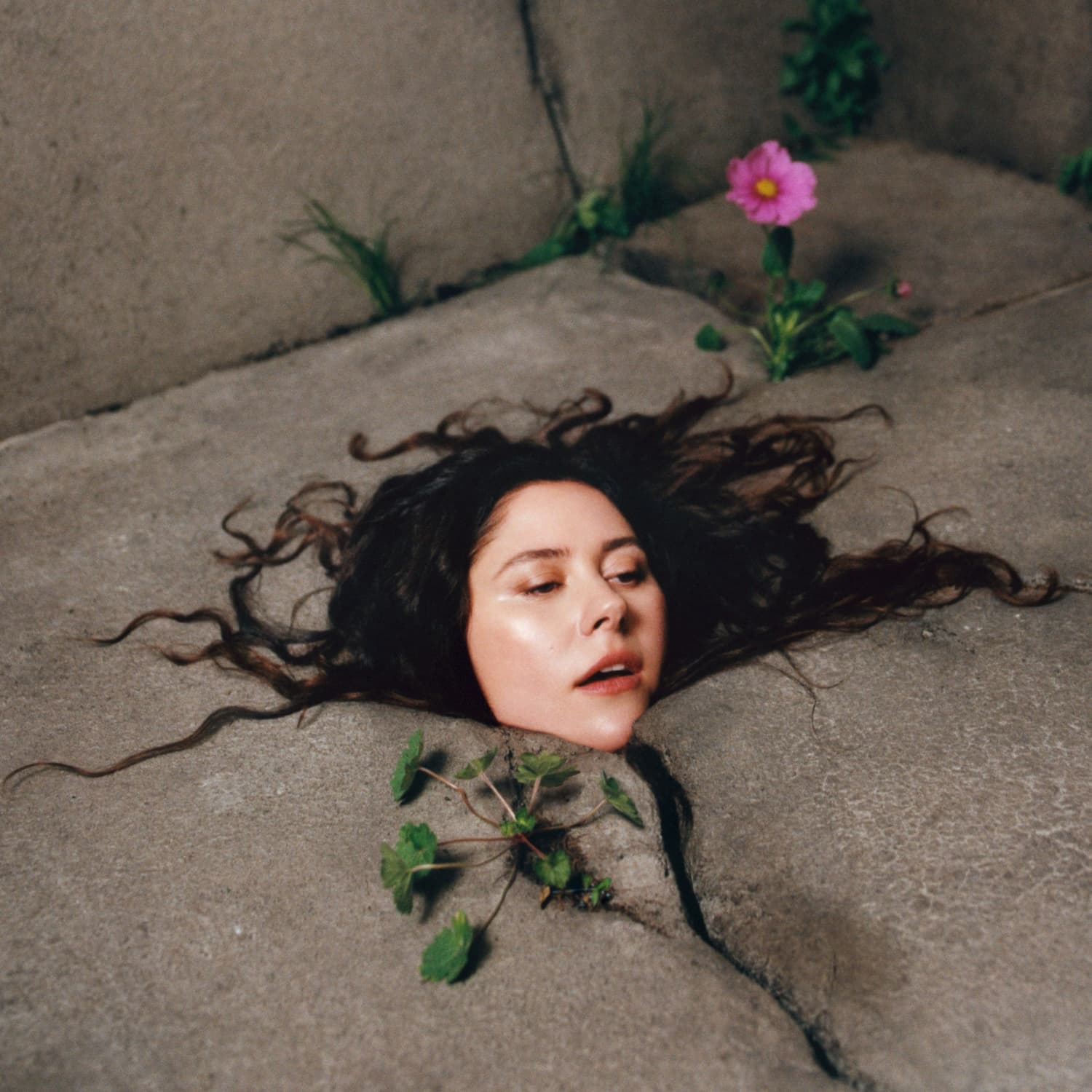
“We live in a concrete world,” ELIZA says at one point during our conversation. “But the flowers are still strong enough to burst through it.” It’s a simple image, but it sits at the heart of The Darkening Green, the London artist’s first album in several years. Written alongside longtime collaborator Finlay ‘Phairo’ Robson and producer EMIL, the record moves between love, nature and the emotional push and pull of modern city life.
Finished just weeks before ELIZA became a mother, the album arrived during a period of immense personal change. That shift inevitably shaped the way she stepped back, returned to the The Darkening Green and tweaked it according to the slow sanctity of early motherhood. Speaking with HUNGER, she reflects on that creative freedom, leaving the major label system behind and the question of connection — to people, to nature and to the world around us — that runs through the record.
Congratulations on the album. I’ve been listening to it a lot. I also kept coming back to the artwork. What’s the story behind the image?
It’s interesting because I don’t want to explain it too much. My brother said, “Oh, you’re a flower,” and I’d never thought about it like that, but I loved that interpretation. Of course I want to be a flower. For me, the idea is that we live in a very concrete world. It can swallow you up a bit. But flowers are still strong enough to burst through everywhere you look. I’d just love to see a world with a bit less concrete and a bit more flowers. There’s something so beautiful about spotting a little clover or a dandelion growing through the pavement. Just this tiny bit of life pushing through.
A track like ‘Fever Dreams’ touches on the pressure of modern city life. Do you think the way we live now makes it harder to connect with ourselves?
Yeah, definitely. When we’re not connecting with nature — the birds, the trees, the natural world — we start looking for that connection somewhere else. Often that ends up being in our personal relationships. Because obviously we are nature. When we’re disconnected from that, the only place we can really take that connection from is each other. That can make relationships incredibly meaningful, but it can also put quite a lot of pressure on them.
Were there particular songs that shaped the direction of the album?
Two songs felt like starting points. One was ‘For The Hell Of It’, which opens the album. It felt like I was finally saying things I’d been wanting to say for a while. It had a strong energy to it. Then there was ‘Anyone Else’. Sonically it was something I hadn’t really explored before, and it’s also a very powerful love song, which I hadn’t really written in that way before. Those two tracks felt like the beginning in different ways, and the rest of the album followed from there.
Do you remember the moment those songs came together?
Yeah, we wrote both of those in the studio — me and Fin. With ‘Anyone Else’ I remember dancing around like a crazy person while recording. My hair was flying everywhere, I was giggling and then suddenly getting emotional at the end of a line. It was one of those moments where you’re laughing and then suddenly you’re shedding a little tear. It was emotional but also really fun and full of love. I actually wish we’d had a camera on at that moment because it felt quite magical.
You stepped away from the major label system quite early in your career. How important was that decision for the music you’re making today?
For me, it was really important. At the time, I felt like I couldn’t properly communicate with the people making decisions on my behalf. There was also a lot of pressure to create pop hits. Stepping away gave me the space to experiment and figure out who I actually was as an artist. I needed time without pressure and without people telling me what they thought I should be doing.
What do you understand about yourself now that you didn’t when you first started making music?
Back then, I was still learning how to write songs and working with incredibly talented people. But I didn’t really know who I was within that, and I didn’t have much confidence in my instincts. Now I look back and realise the music was good — I just didn’t believe in myself. So I’ve learned to have a lot more love for my younger self. I think a lot of young people feel like that, though. You’re just figuring everything out.
You worked closely with producers Finlay ‘Phairo’ Robson and Emil on the album. What did they bring to the project?
Fin is basically my full-time creative partner. Even when I work with other musicians or producers, he’s involved throughout the whole process — writing, production and mixes. Emil was someone I worked with for the first time on this project. It was great bringing that new energy into the room. He’s incredibly talented and it felt exciting to create together.
You finished the album around the same time you became a mother. How did that period shape the process?
The album was finished a couple of weeks before my son was born. It was written and produced at that point. After he arrived, I didn’t listen to it again for a while. When I came back to it a few months later I could hear a few things that needed tweaking. So when he was about three months old I took him into the studio and made some small changes — adding vocals and adjusting parts of the production. That first year of motherhood slows everything down in a good way. You’re just in a completely different world. I think it allowed the record to sit for a bit longer and become what it needed to be.
Who shaped your musical taste growing up?
There are a few artists we actually have on the wall in our studio: D’Angelo, David Bowie, Aretha Franklin and T. Rex. Prince is huge for me, as well — and Joni Mitchell. When I was younger, I was obsessed with Aaliyah and Janet Jackson. And India.Arie, too. I also loved Radiohead as a teenager, which opened up a whole different world sonically.
Now that The Darkening Green is out in the world, what do you hope people take away from it?
Power. In whatever way they need it.
Is there a song on the album that feels especially personal?
They’re all personal in different ways, but I’d probably say ‘Anyone Else’. It’s about my love — someone I see every day and who’s part of my life all the time. So that’s probably the most personal you can get.
The album touches on wider themes, too. Were there social or environmental issues you wanted to address in this album?
Yeah, definitely. The most urgent thing for me is that we need to stop harming each other. Seeing people suffer — especially children — is devastating. At the same time, our relationship with the planet is incredibly important. The climate crisis and biodiversity collapse are urgent. For me, those things are connected. It’s about how we treat each other and how we treat the earth. Becoming a mother definitely makes you think about that more. Ultimately I just want to see things change for the better. That’s really the message of the album.
Listen to The Darkening Green here.
- WriterCherelle Chambers
- Image CreditsPhoebe Salmon