Introducing Shankar, the fashion label stitching Birmingham and Punjab together
Shankar was never intended to be a big brand. It was always about building a world — organically and sustainably, just like its designs. Named after a small village in northern India, the Birmingham-based label champions culture and artistry as much as clothing, inviting people to find resonance and a sense of belonging within it.
Having first launched in Covid with a bespoke service, Shankar has now released its first collection, Word is Born. Its inspiration, however, goes much further back: the “dapper” outfits that founder Jivan Purewal’s grandad wore back in the day. “One day we were there just going through photo albums,” Purewal recalls, “and I saw my grandfather and all of his brothers — just how smart they used to look. They wouldn’t leave that front door without tying a tie or wearing a suit.”
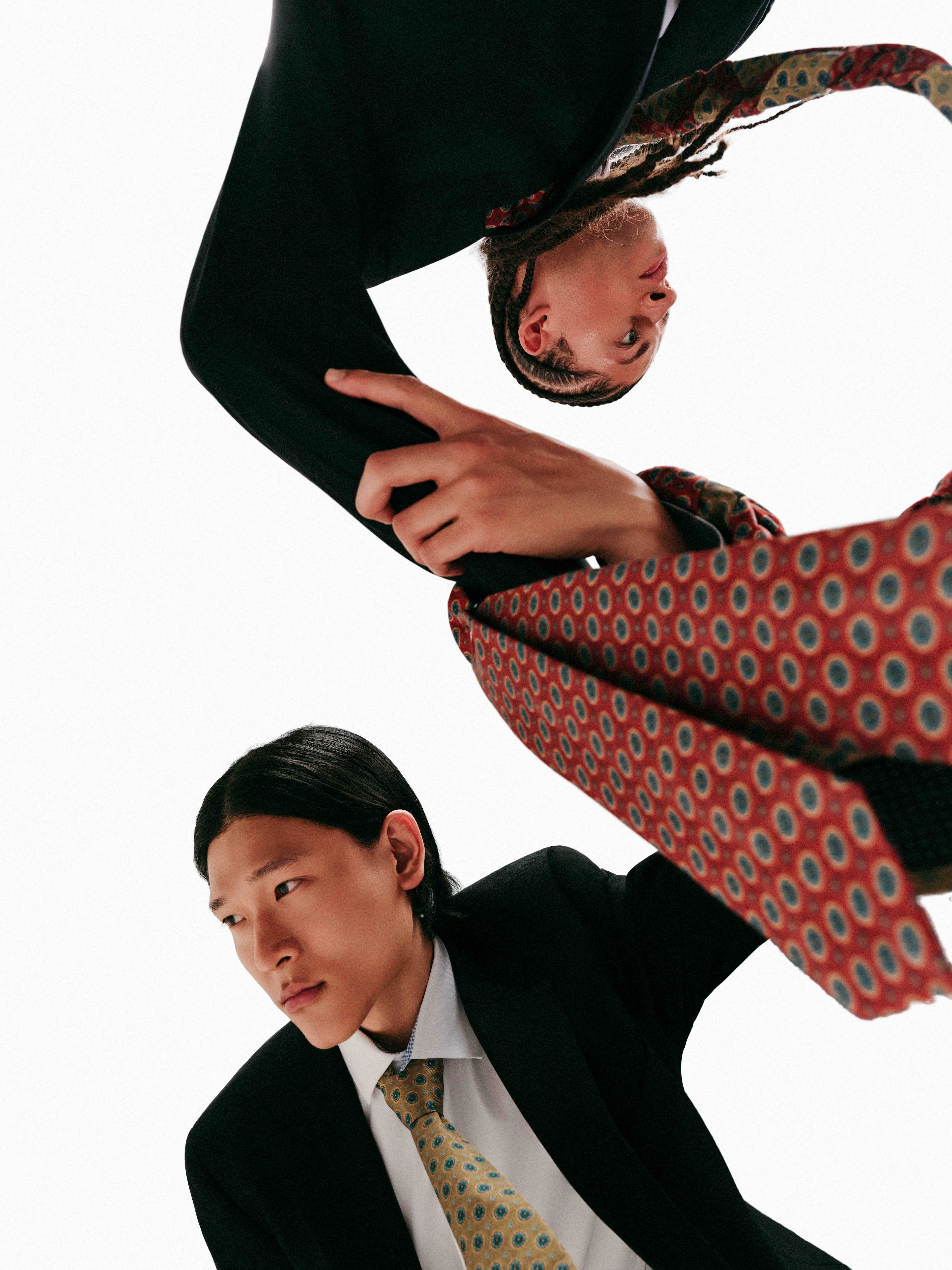
Purewal, therefore, founded the house as a meeting of two worlds: his ancestral home in Punjab and his childhood home in Birmingham. After a few online Adobe courses and experimentation, the first piece he ever created was a tie depicting an embroidered ‘charkha’ or spinning wheel, representing the cycle of life.
“We’re actually giving back to our community.”
Now, Purewal has honed his creation process. Each Shankar piece starts as a hand-painted sketch in the founder’s living room in Birmingham. From there, the design is brought to life by expert artisans in the brand’s namesake village. “It’s a nice feeling to have that we’re actually giving back to our community and letting them practice their trade,” the designer says.
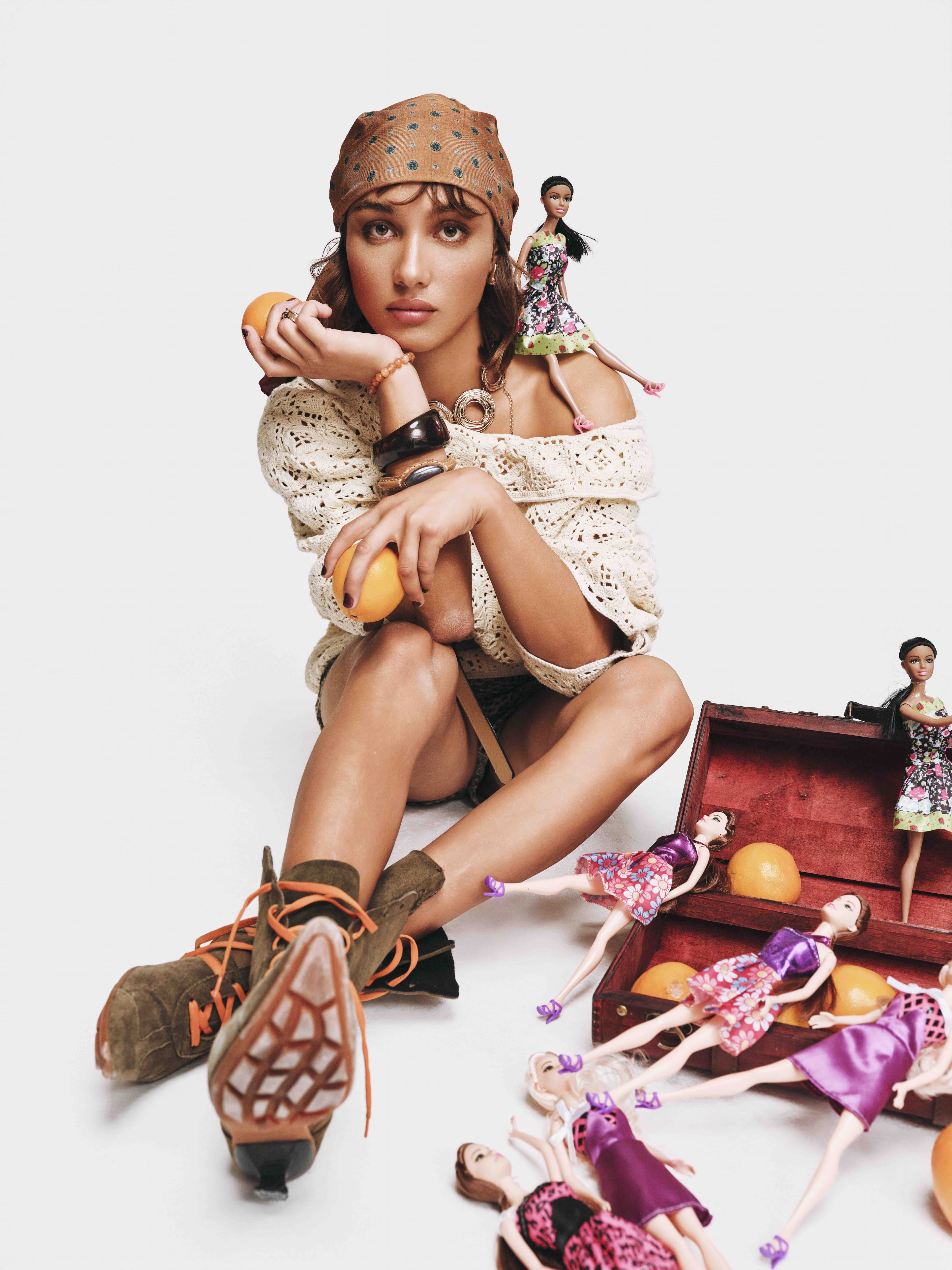
Sustainability and slow fashion are foundational to the house. Shankar prioritises heritage hand-making techniques over machine-made garments. Hand-embroidering naturally limits production, but at Shankar, it’s always quality over quantity. Some pieces are also made using sustainable fabrics like hemp and bamboo. In summary, for Purewal, Shankar is “telling a story of heritage which is reimagined for today’s runway.”
Transitioning from its bespoke origins, Shankar launched its debut collection, Word is Born for AW25. “Storytelling is so key for us,” Purewal says. “We were literally saying in the world of Shankar, This chapter has started, the Word has been born.” Comprising Cuban collar and crochet shirts, pocket squares and ties, the collection was initially inspired by the Mughal architecture of a derelict building in Shankar, which Purewal came across on one of his biannual visits to the village. Word is Born resulted in a combination of Persian artwork and architecture, accented by the quiet sophistication of European sartorial elegance.
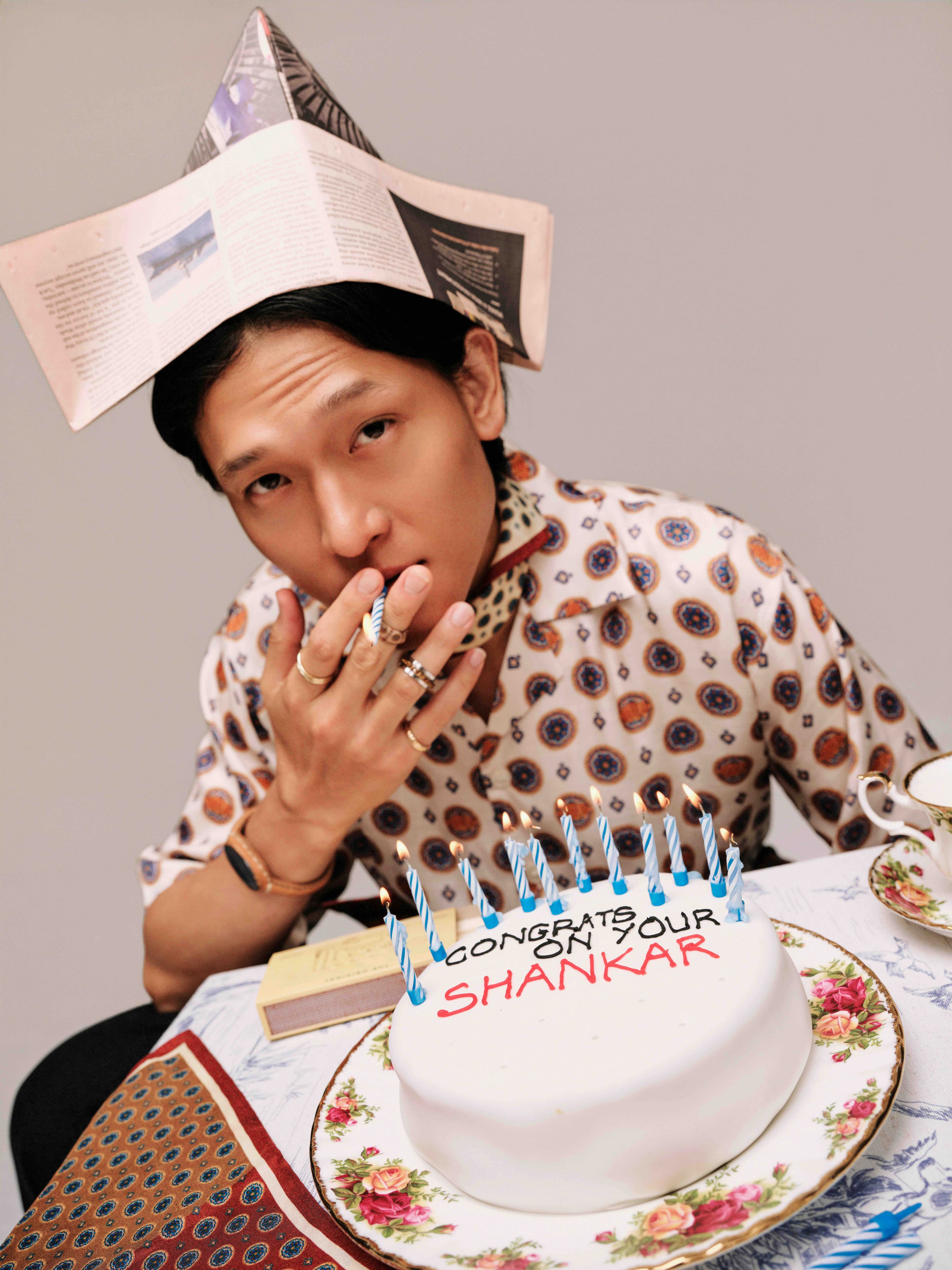
Every piece in the collection is carefully hand-made by local craftspeople at one of the four Shankar factories in India. Heritage is woven not only in the designs but also in the way they are realised. Purewal explains, “I came across this village in India, which has practised crochet for nearly eighty years, probably longer.” It was there that the founder connected with three widows. “I speak Punjabi, but they spoke a unique dialect of Hindi,” Purewal recalls. “So we had to actually have a middle person who was translating from Punjabi to Hindi. Our crochet was entirely done by these three ladies.” Each shirt took eighty-four hours for the artisans to hand-craft.
“It gives them a sense of belonging.”
While the collection was made entirely in India, the campaign was shot between London and Paris, truly embodying the brand’s ‘East meets West’ spirit. “When we showed the artisans some of the videos shot in Paris and in the UK — where they’ve never actually been able to come — some of them were emotional,” Purewal says. “Like, This is what we’ve created with our own hands. It’s really giving them that opportunity. [The people] are where these skills and practices come from. It’s just embedded into our history.” It’s this that forms a sense of connection between artisans and wearers alike. “It’s nice to see them almost wear Shankar on their chest as a name,” the founder says, “because it gives them a sense of belonging.”

Purewal expresses how Shankar is also inseparable from his own identity. Every stitch is informed by his memory and heritage. He hopes his audience, not just among the South Asian diaspora but across the world, can find a sense of belonging in the brand. As for expanding his world — Purewal aspires to take Shankar to realms beyond fashion, so that people can resonate with the brand without having to necessarily buy anything. But most of all, Purewal wants to pay homage to his ancestors and the artisans of Shankar village through the label.
The next steps will see Shankar release new collections and exhibit at Paris and New York Fashion Weeks during the second half of this year. Until then, the bespoke arm of the house will continue building a world rooted in craft, heritage and belonging.
- WriterKhushi Vora
- Image CreditsShankar