Nia DaCosta asks us to take a closer look at ourselves
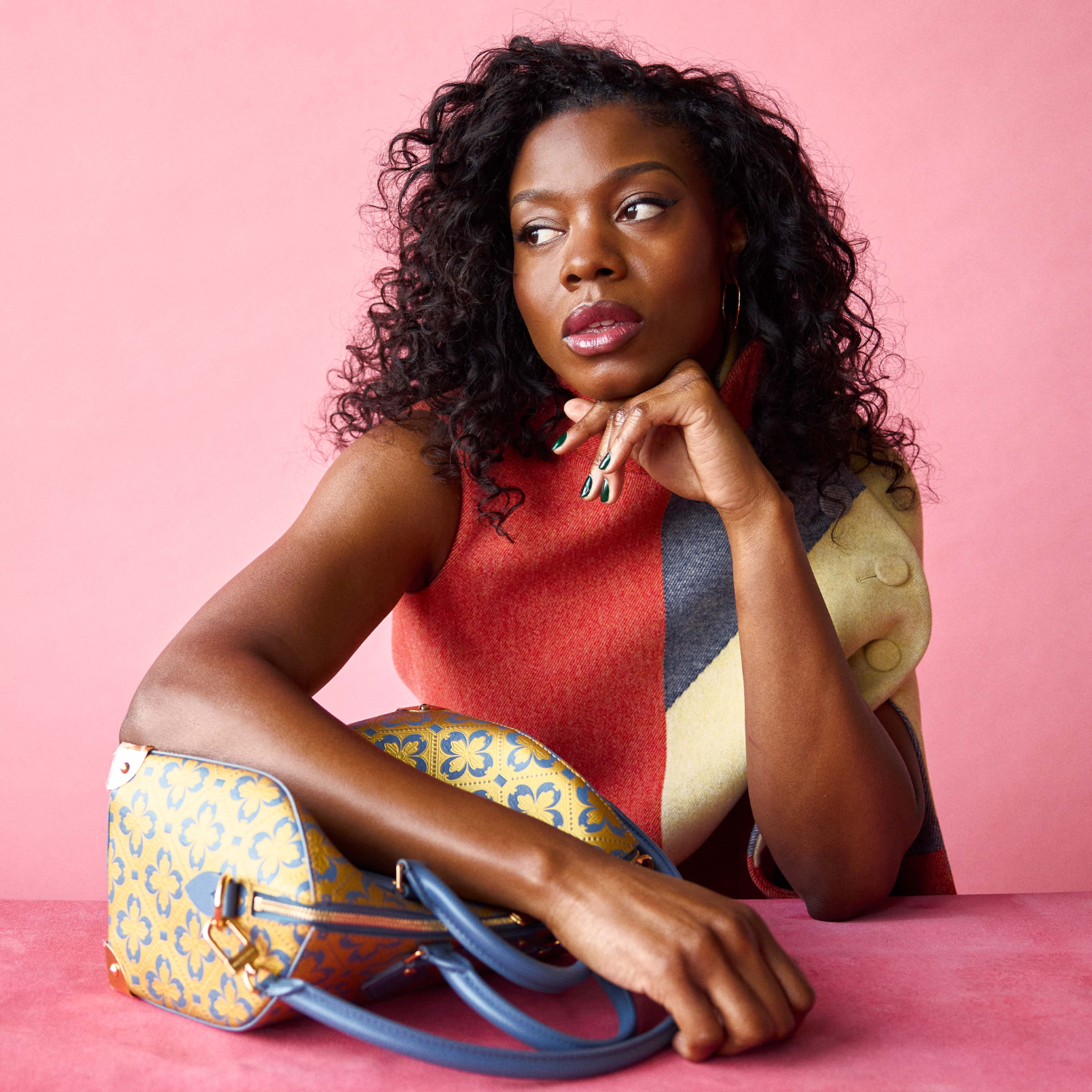
There’s always one thing that makes a creative tick, that sets them up to discover the method of artistic expression best suited to them, and if they’re good enough, sets them up for a successful career. Oftentimes, that ‘thing’ stems from an experience in their childhood — the ‘aha’ moment that opens their eyes to seeing the world differently, through a lens unique unto themselves. For Nia DaCosta, that creative catalyst was a fascination for stories. “I’ve always been a storyteller,” the director tells me. “When I was younger, I was always reading, and always so curious.” Part of that preoccupation was simply escapism from her parents divorce, the rest a sense of epistemic curiosity. “Like, why are adults the way they are?” she ponders. “And why did that adult just lie?”
Before delving into the director’s current projects, namely Hedda and 28 Years Later: Bone Temple, we trace back through DaCosta’s own origin story. “I remember distinctly the first time I heard an adult lie, and I knew they were lying because it was about me,” she says. “I was completely amazed. I’d left my backpack at her house by mistake, and when she was driving me home she said, We’re not going back for it.” DaCosta then tells me how, upon arriving at her parents’ house, the woman told them, “[Nia] said not to worry about it”. “I was so amazed,” the director continues. “Like, Oh wow, she really is just a liar.”
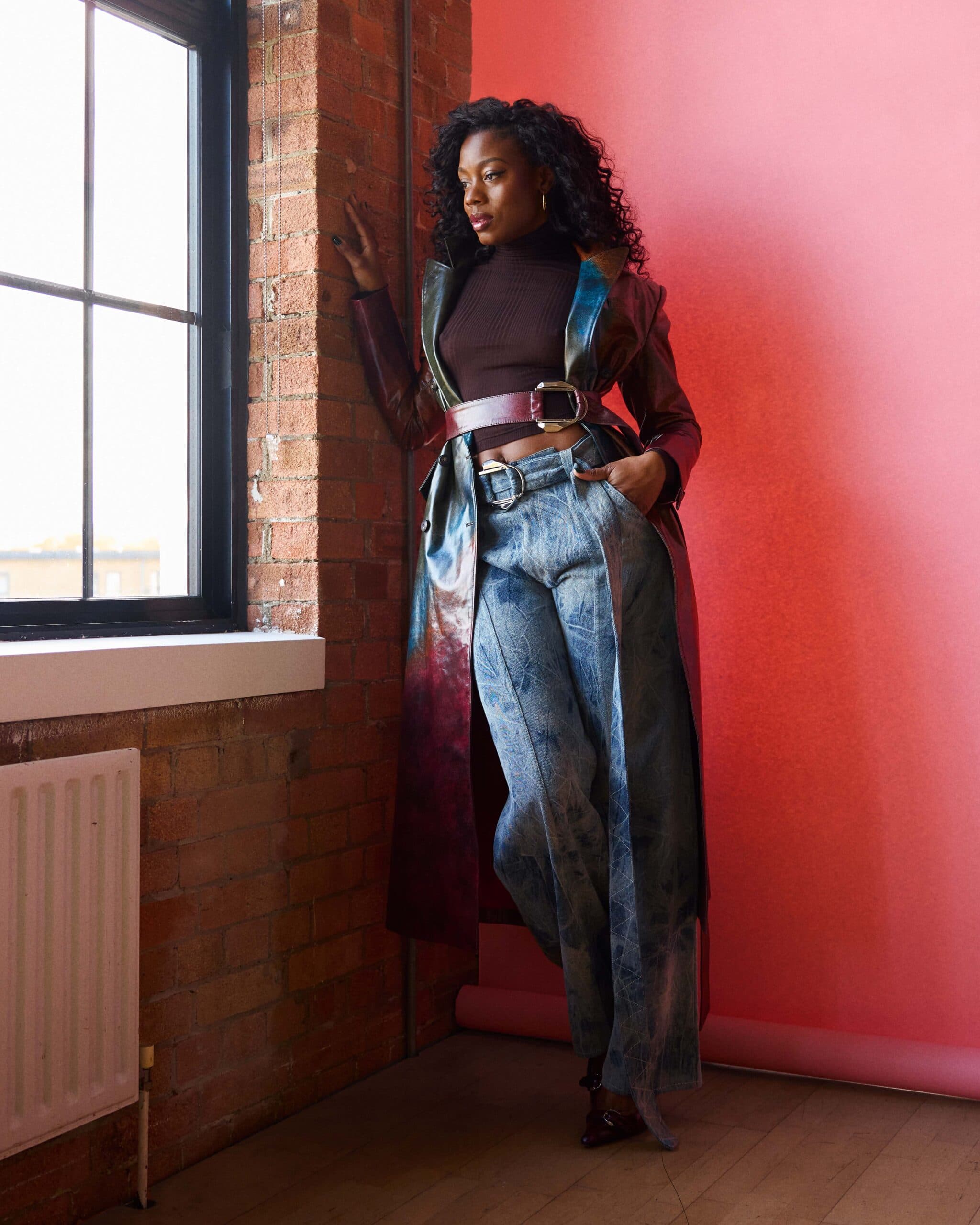
Although DaCosta is now an acclaimed Hollywood director, she has never stopped making films that ask the fundamental question: why is it that people do what they do? Whether it’s Hedda — based on Henrik Ibsen’s play, Hedda Gabler — which sees the female lead (Tessa Thompson) herd her co- stars like cattle to their complete unraveling, or Ralph Fiennes standing alone at the end of the world in 28 Years Later, her films don’t only have us questioning the characters’ motives. They make us turn that question back onto ourselves: why do we do what we do? Known first for Candyman (2021), a political horror about a ghost-like killer set in a Chicago housing project, and The Marvels, which became the highest grossing film directed by a Black woman, DaCosta has cemented herself as a young, successful female in Hollywood. But more significantly, in a way, she’s created a new genre of film — one that horrifies audiences by turning the movie screen into a mirror. One that introduces the ultimate terrifying premise of introspection.
Her October 2025 release Hedda left plenty of room for DaCosta herself to reflect. Written by DaCosta in 2018, the film wasn’t shot until 2024. I ask if the story changed much over the course of six years, evolving with the times, subtly incorporating narratives around contemporary social issues. The answer is no. Not just because it’s a period piece, but because the issues women were tackling both in the film’s 1950s setting and in 2018 are, in the director’s words, “perennial”. The needle, she affirms, has moved very little. “When I wrote the script, [President] Trump was halfway through his first term in office,” DaCosta recalls. “And I’d just finished making a movie about abortion access in America, which now — and I cannot believe I’m saying this — is so much worse than it was back then.” The conversations plaguing Hedda are, similarly, those around being a woman trying to find a sense of freedom and agency in a world that tells you don’t deserve it. So, yes, DaCosta is right. The needle has moved very little.
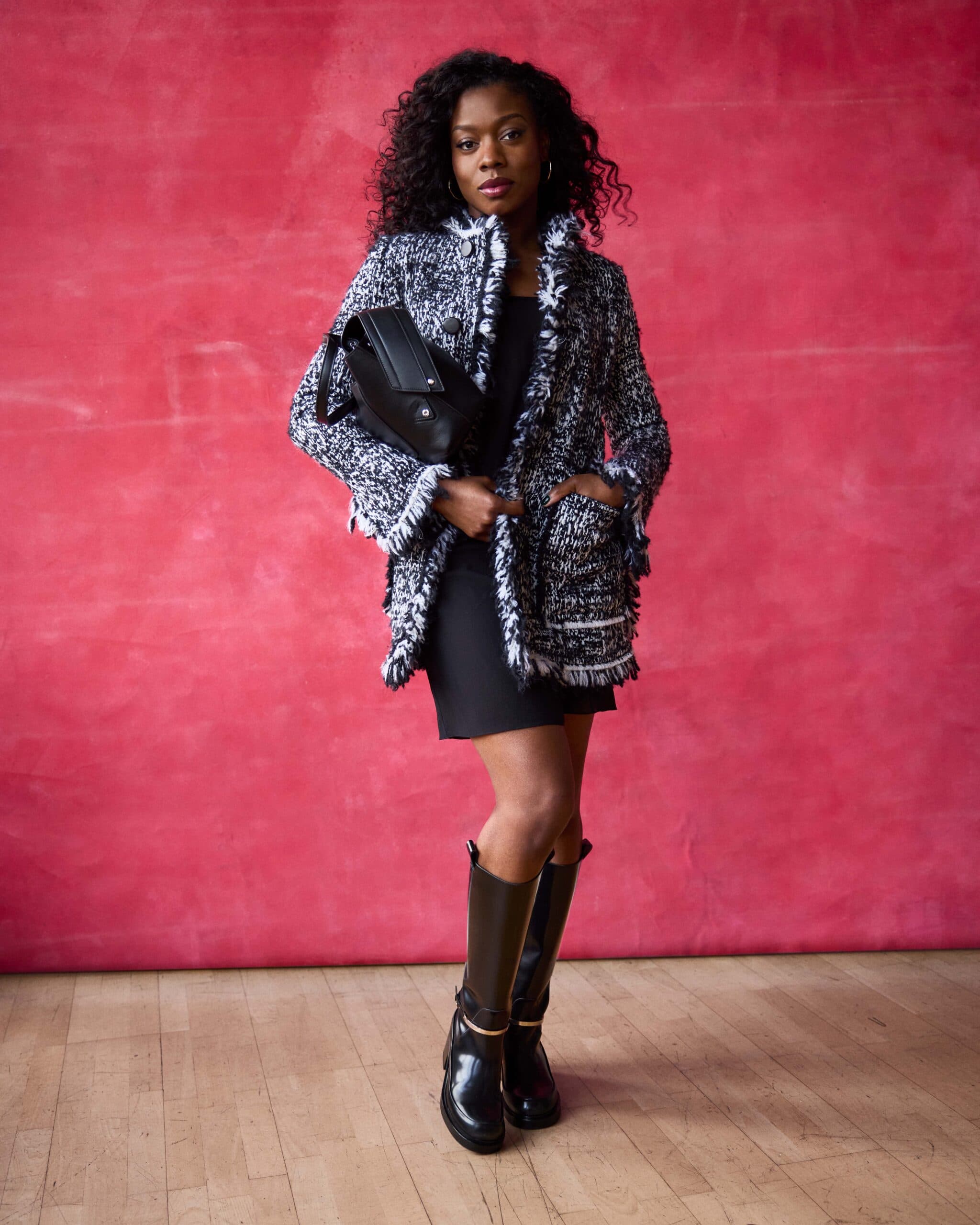
It’s evident that these conversations are, unfortunately, not going to pass us by for a long time. But how do we even begin to discuss women’s rights, social issues and politics in an impactful way when they’re so often swallowed up by the zeitgeist vacuum known as social media — too often discussed only in unending reels, TikToks and short- form commentary? The short answer is: the shock factor. “Both Hedda and 28 Years Later are horrifying audiences in order to get them to look inwards at their humanity,” says DaCosta. “They’re two different genres but they both discuss social issues, just through different lenses. Both a bit horror and a bit fiction.” The formats are indeed different. Hedda takes place in a mid-century English estate and sees the protagonist turn the psychological torment of her entrapping, loveless marriage onto those around her. Meanwhile, 28 Years Later: The Bone Temple tackles themes of cults, brainwashing and a “Rage Virus” in a post-apocalyptic world. But in both, the parallels with the modern world — which doesn’t feel too far from post- apocalyptic at times — aren’t difficult to spot.
As a person who tells stories for a living, and whose work depends on an audience watching it, paying for it and responding to it, a director must have a nuanced way of communicating their message. “I have a specific way of reaching people, whereas for an activist, it’s a completely different thing,” DaCosta affirms. “Same for a politician or a journalist. But the key thing across all of it is about pushing humanity forward.” The way the director has honed her own means of communication is by being an audience member. “As a viewer, I love it when I think, What the fuck is going on here?” she says. “There’s so much media, so many films, so many TV shows, and most of them are incredibly formulaic because they want to make sure people watch it. And the best way to ensure that is to copy a success.” While DaCosta, of course, also aspires to create successes, more than anything else, she wants her work to get people talking.
“They’re horrifying audiences in order to get them to look inwards at their humanity.”
Getting people talking is a mantra well applied to DaCosta’s work both on and off the screen. The Marvels (2023), for example, was the highest-grossing film directed by a Black woman — one who, at the time, was just in her early thirties. “Someone asked me the other week: As a Black woman director, can you give me any advice for dealing with prejudice in the industry? And I was like, I don’t have to give you advice because you’ve lived with prejudice in your life. You’re learning how to deal with it.” Fortunately, DaCosta’s success means she’s now able to be more selective about the environment in which she works — but that isn’t to say it hasn’t been a battle getting there. “I’ve now gotten to a place, after a lot of struggle and work, where I choose who I work with. And I work with them again because they’re incredibly talented, but also they’re respectful.”
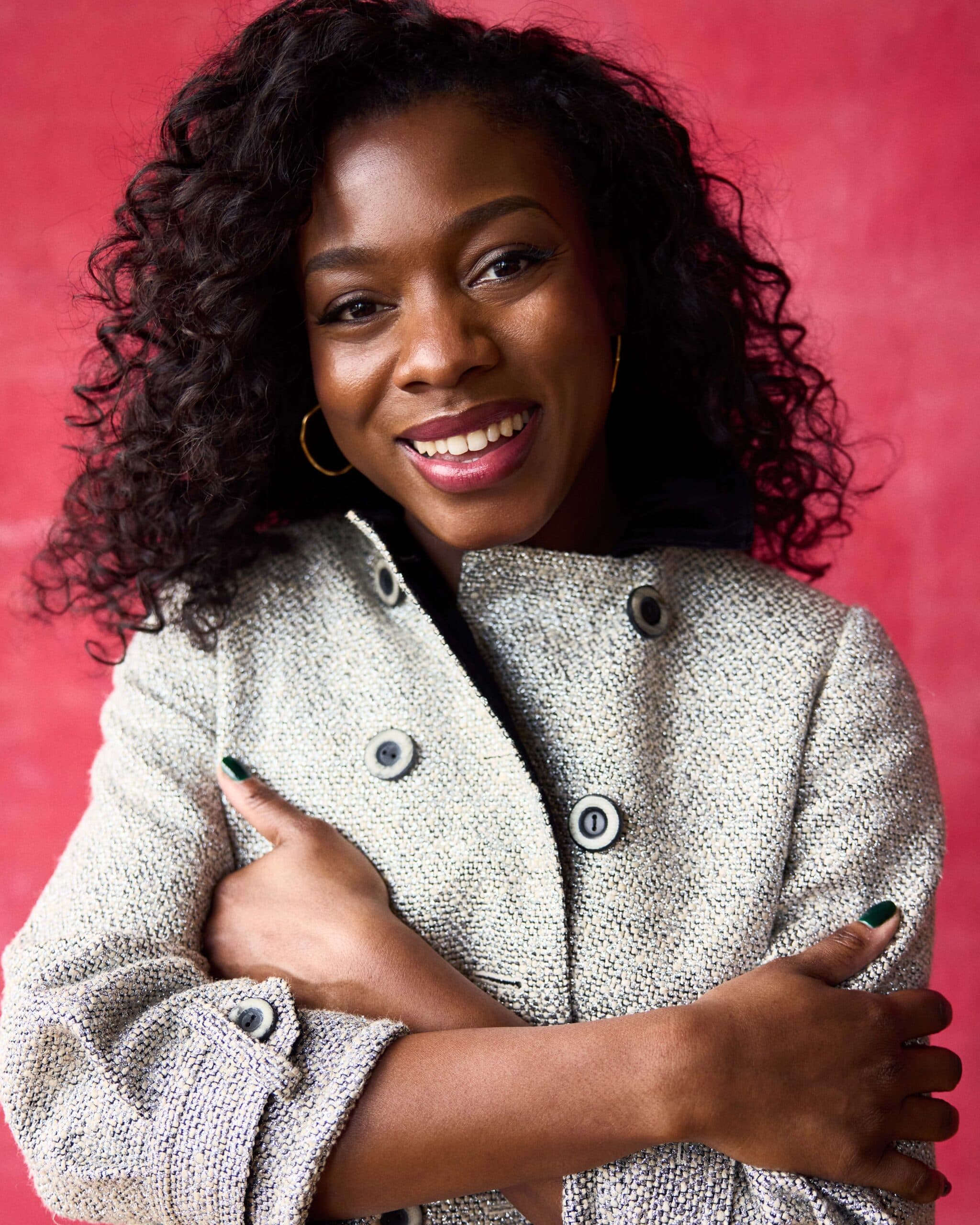
Respect for culture is another thread that runs through the director’s work — something that’s on display in 28 Years Later, as DaCosta, whose father is British, pays homage to her own English heritage. “I’m the second non-British director of a 28 film, and it absolutely has the same [British, political] commentary as the rest of the films,” she effuses. “What I love about these movies is that they’re so British. So, absolutely, that’s one of the things I really wanted to make sure stayed — this place and this legacy, the post-industrial decay of the north, the assumptions we make about the foundations upon which our society exists. In this movie, they all go away and they really have to question, What are we actually?”
As far as the inevitable social commentary in both of DaCosta’s 2025 films goes, each, in their own way, tackles the struggle between power and humanity — the internal war being waged inside every person. One, a deadly zombie infected with a virus. The other, Hedda, a bi-racial, illegitimate daughter of a British colonel, usurping power dynamics. “It’s more existential than [contemporary political commentary],” says DaCosta. “And that’s the commonality between Hedda and 28. They both ask us to look at ourselves as a human race. In the movie, [Dr. Kelson (Ralph Fiennes)] says, Memento Mori, Memento Amoris. ‘Remember we must die, remember we must love.’ And not to be highfalutin, but we tend to forget that on a daily basis. We’re going to die, guys. Is that really what we want to leave behind? Is this really how we want to behave?”
As we speak, 28 Years Later is in the final stages of editing and colour-grading, and Hedda is playing in cinemas across the UK and US. So what’s next for DaCosta? Fortunately for fans of her edgy, thrilling social commentary, the director is working on her televised version of Southern Bastards. Based on the comic series created in 2015 discussing America’s deep south, football and, of course, crime, the series goes into production next year. And seeing the way DaCosta’s face lights up talking about it — and the way her dog, Maude, is pogo-jumping up and down in front of her laptop screen — it’s going to be something to look forward to. But, equally, there’s no doubt that the southern- fried noir will boil down to the question that permanently lives at the forefront of the director’s mind: “What the fuck is going on here?”
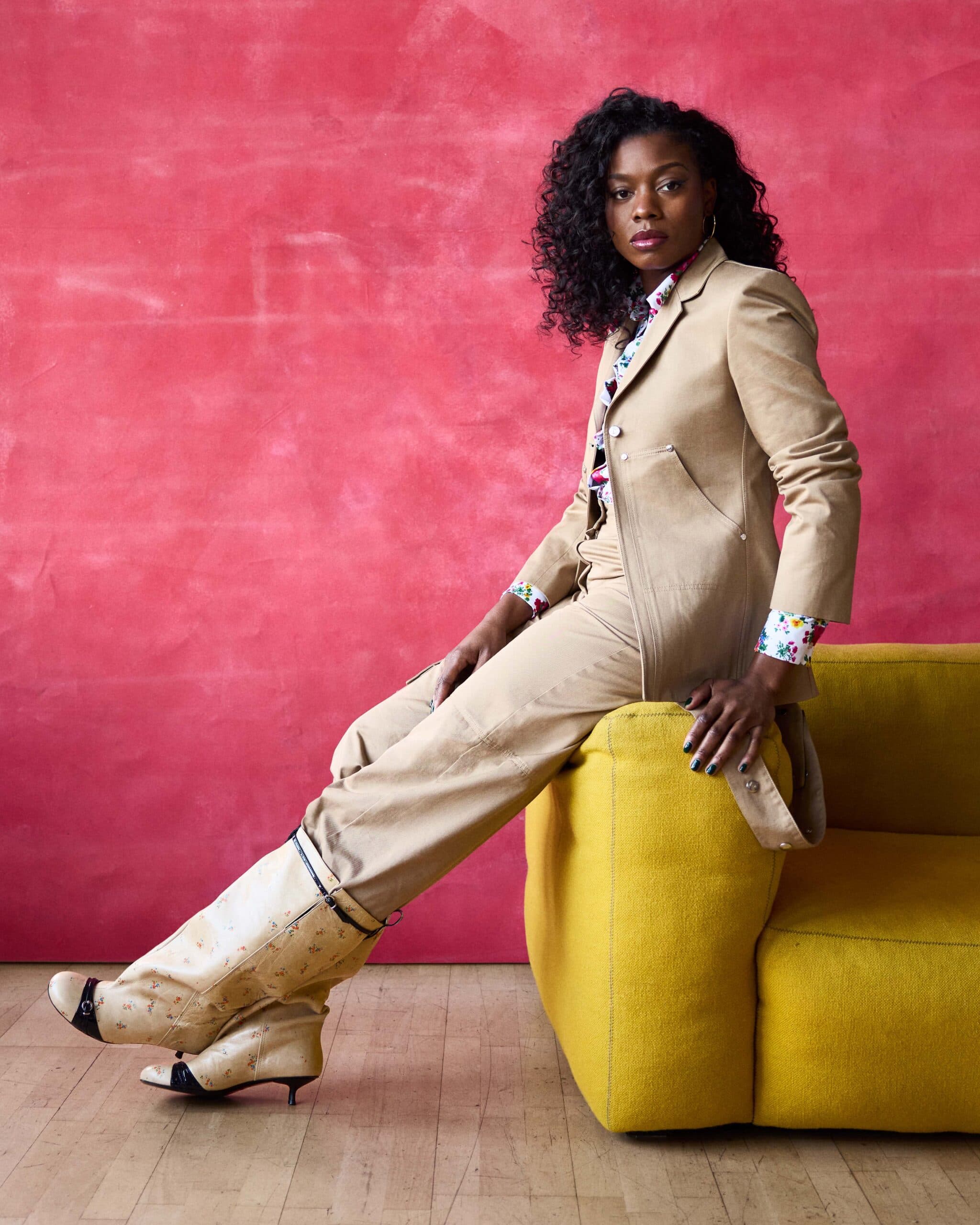
- PhotographerJordan Rossi
- Fashion DirectorMarco Antonio
- WriterCamille Bavera
- Make-Up ArtistHila Karmand at Arch The Agency using VIEVE
- Hair StylistJames Catalano at The Wall Group using DYSON
- Photographer's AssistantPiotr Rulka
- Retouching Alice Constance