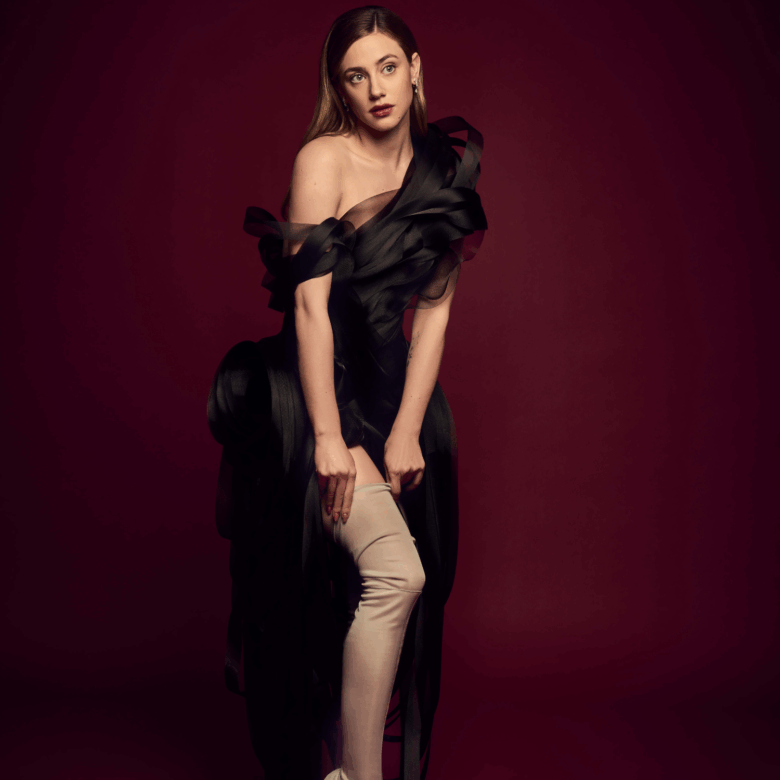
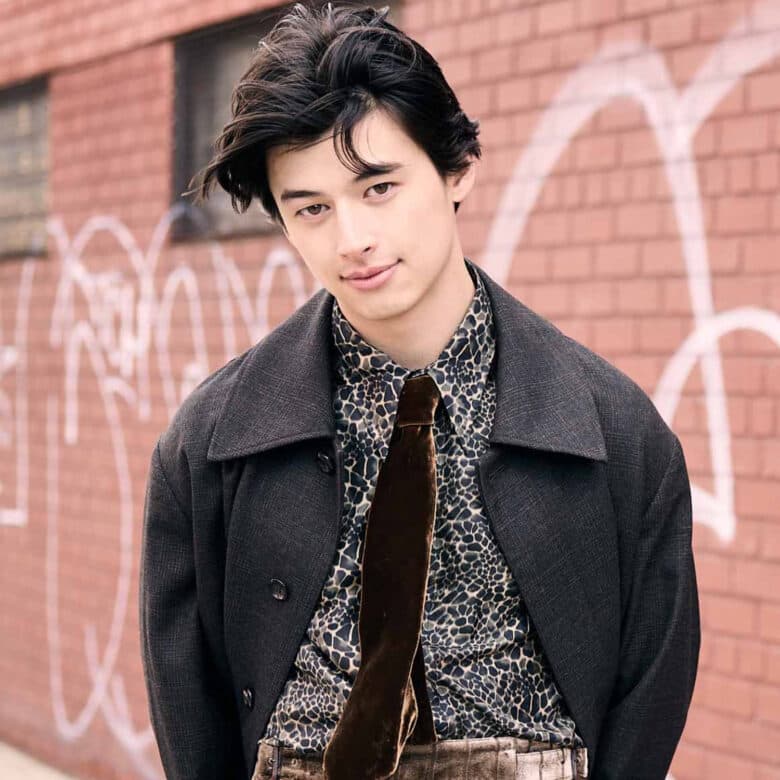
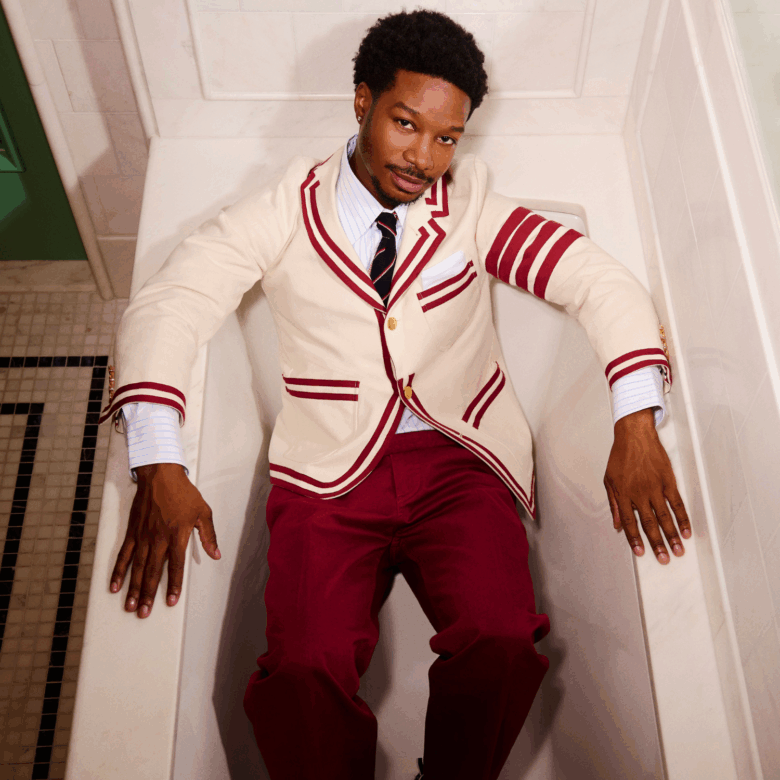
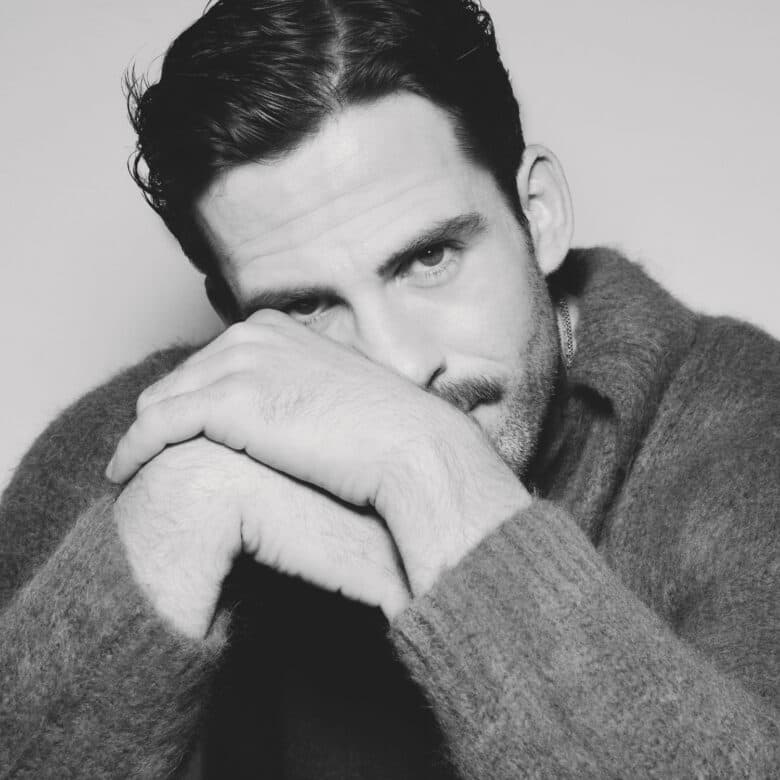
Reda Elazouar is here to take risks
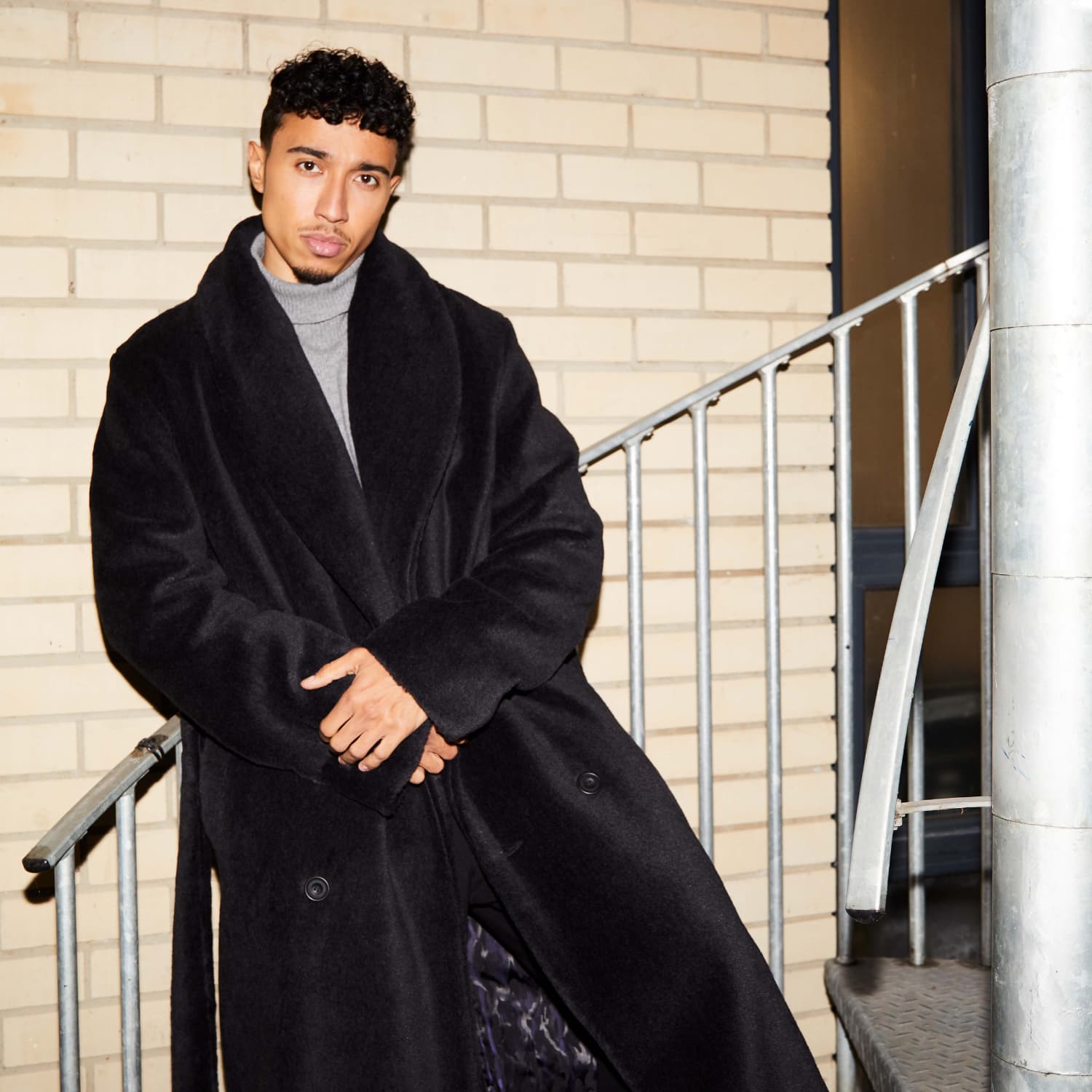
“Comfort is where dreams go to die.” Reda Elazouar says the words softly, but it lands like a declaration. Only minutes into our conversation, it’s clear — his vision for the future is razor sharp, his path as an actor less a stroke of luck than a deliberate act of creation. With all this intention, then, it’s hard to believe that acting wasn’t always the plan. In fact, the Sex Education star’s first penchant for performance came in the form of magic. He spent a lot of his childhood doing tricks, honing impressions and performing for whoever would stand still long enough to listen. Now, at twenty-six, his goals look different, but his purpose remains the same: to entertain.
Elazouar joins the call from his London flat, framed by colourful geometric prints and soft afternoon light. There’s an immediate warmth to our conversation as we chat about our mutual love for South London. He and I are speaking one month before his return to screens in The Family Plan 2, the high- octane sequel in which he takes on the role of Omar, the parkour-doing love interest of Nina Morgan (Zoe Colletti). The film itself sees the Morgan family’s Christmas trip go sideways as the past of ex-assassin turned family man, Dan Morgan (Mark Wahlberg), returns to hunt them with a vengeance. There are heists, high-speed car chases, murder plots and even car karaoke as the family (plus an unwitting Omar) try to escape with their lives in an international game of cat and mouse.
Landing the role was a big moment for Elazouar as an actor, but perhaps an even bigger one for him physically. To prepare for filming, production kitted him out with not one but two personal trainers, a nutritionist, as well as a chef who sent meals directly to his doorstep. For five weeks, six days a week, he was trained in precision and power, learning how to put motion at the centre of his work. A strict regime in anyone’s books. “It was one of the most unique experiences I’ve ever had. But I really enjoyed it,” he reassures me. “None of my previous roles had required that kind of physicality.”
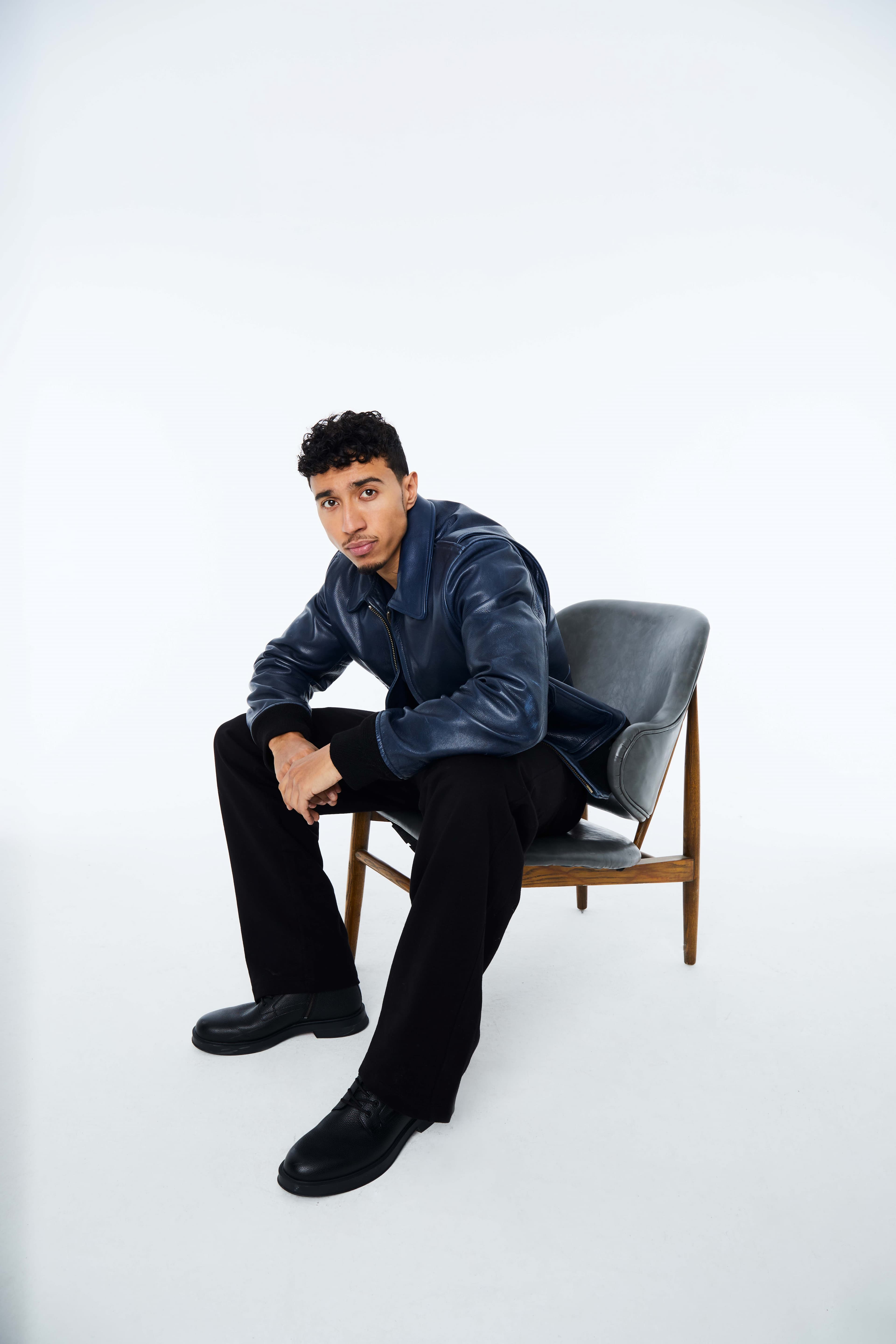
He learnt early on how to transform observation into storytelling. “There are
so many things in South London to pull from creatively,” he says, “I just became an impressionist — I’d mimic strangers. That was probably the first sign I was a performer.” Seeing this love of performing, it was Elazouar’s mum who encouraged him. As a child, he trained in singing, street dancing and beatboxing. It was as a teenager, though, that he found his place on a stage, performing in annual plays at RAaW London. “Once I’d tried acting, that was it. That was my favourite form of expression,” Elazouar tells me.
It was there that perhaps one of the most defining moments in the actor’s career took place — not on a feature film or Netflix special as you might expect, but playing the paraplegic veteran, Ron Kovic, in a stage adaptation of Born On The Fourth Of July. “Oh man, I just couldn’t let that feeling go,” he laughs. “The feeling of being on stage?” I ask him. “The feeling of having the audience in the palm of your hand,” he replies.
That fleeting moment on stage, a split second of capturing and holding the audience’s attention, was enough to change the course of Elazouar’s future forever. Rather than attend university as he’d planned, he pivoted towards a career in the arts. It was a decision that surely required guts, but the actor seems almost impervious to nerves. “That was a decision I went into with one hundred percent conviction,” he tells me. “There were moments when I couldn’t even afford the bus, but it taught me that risk is very important. Always risk it when you can.”
It was only a year after that, in 2020, that Elazouar secured his breakout role as Kidda in Reggie Yates’ 2021 directorial debut, Pirates. As we discuss the project, his whole expression shifts. It’s clear how much the film means to him. “I remember watching Attack the Block when I was younger and thinking,
I want to do a quintessentially London film,” Elazouar explains. “Part of London and a time that hadn’t really been seen on screen before,” he continues. “Garage music was something that was important to so many people, and Reggie lived through it. He cared so deeply about getting it right.”
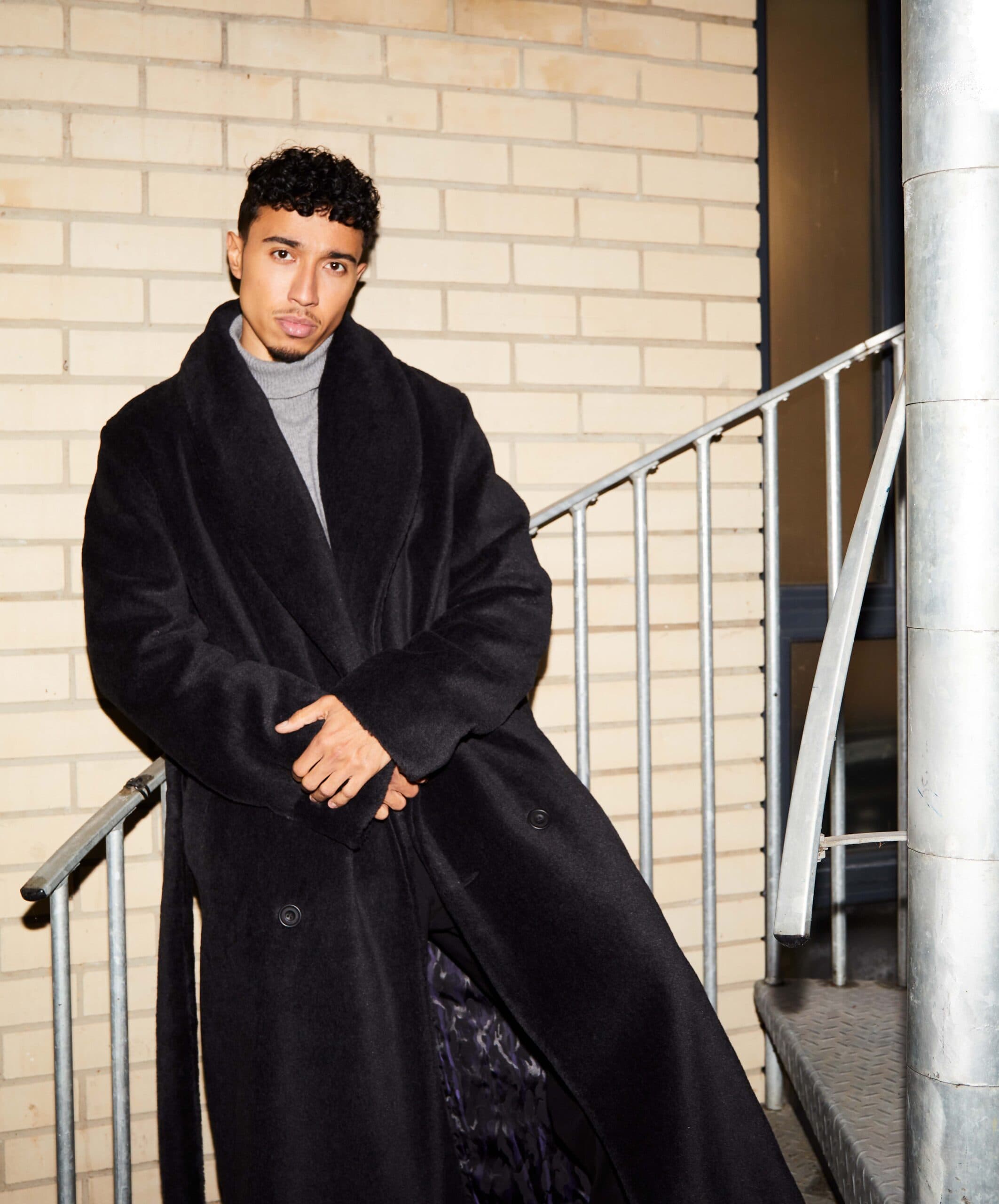
“Something important to so many people” seems to be a theme that underscores Elazouar’s career as a whole. He’s an actor who cares about making art that matters, and, in turn, above all else, he hopes it’s art that resonates. “Hopefully, people who see anything I do — whether that’s writing or acting — come away from it with a level of familiarity. Not with me as a person, but for who my character is. If the character I’m playing echoes in someone else’s brain, then it means I have done my job.” He continues on this wavelength. “Finding a character is almost like playing with a DJ deck,” Elazouar explains. “Everybody, every character, has their own pre-set rhythm. As an actor, it’s about adjusting your own to the point where you and your character intersect.”
The analogy of DJ deck is an interesting one. I wonder if it influences the projects he chooses to take — having to alter your own make-up for each character cannot be an easy task. “It can be difficult,” Elazouar confirms. “It was with my character Beau in Sex Education, for example.” Beau was the emotionally controlling, jealous boyfriend of high-achiever Vivienne Odusanya (Chinenye Ezeudu). “There, I was playing a character who was the complete polar opposite of me. To service that story properly, I had to try and justify this bad-spirited person. I had to die in my mind. It was the most difficult role I’ve done so far.”
It’s a creative challenge that Elazouar in many ways seems to be seeking out. “I’m trying not to be someone who plays it safe with my work,” Elazouar explains. The need to push the confines of genre is one that has long been the goal of many industry greats, but that doesn’t mean it isn’t an intimidating prospect. There’s a security in the familiar that is easy to grow comfortable in. “These great talents, they always talk about fear and reticence,” he says, pausing as if weighing the words, “and they do it anyway. Fear isn’t necessarily a bad thing — it just means you need the courage to overcome it.” It’s with this sense of legacy-building that Elazouar looks towards the future, “When all is said and done,” he concludes. “I’d love for people to say, He’s someone who could have been comfortable but chose not to be. I want to take risks.”
- PhotographerEva Pentel
- StylistSelvester Yiu
- WriterDaisy Dempsey
- Make-Up ArtistJesse Walker using WELEDA
- GroomerEllie Bond using GHD
- Fashion AssistantsTemi Oyewusi, Mia Wheelhouse-Wakeman