Keeley Hawes: Beyond the ingénue

Keeley Hawes is a powerhouse of British drama. For the past four decades, the London-born actor has cemented herself on our screens, morphing into everything from police officers to assassins to government officials. She joins me for a chat on Zoom, calling from a beautifully decorated office in London, botanical prints hanging on the walls behind her and soft lamplight illuminating her face. Hawes is warm, bubbly and constantly giggling. I can’t help but feel immediately comfortable in her presence. We begin by retracing her on-screen successes, roles that, I suggest, have now made the actor synonymous with strong, intriguing and complex characters: Julia, the enigmatic MI5 officer in Bodyguard (2018); Valerie Tozer, the eighties mother navigating her son’s homosexuality in It’s a Sin (2021); Louisa Durrell, the widow creating a new life for her family in The Durrells (2016); and this year, Julie, a mysterious ex-assassin living on a remote island in The Assassin (2025). Hawes attributes the success of these roles to the writers she’s worked with, but also something else: age. “You become more multilayered, the older you get, and you have more experience,” she tells me. “Women and men, but I think especially women, become more complex, and that’s what’s exciting. It gets Richer.”
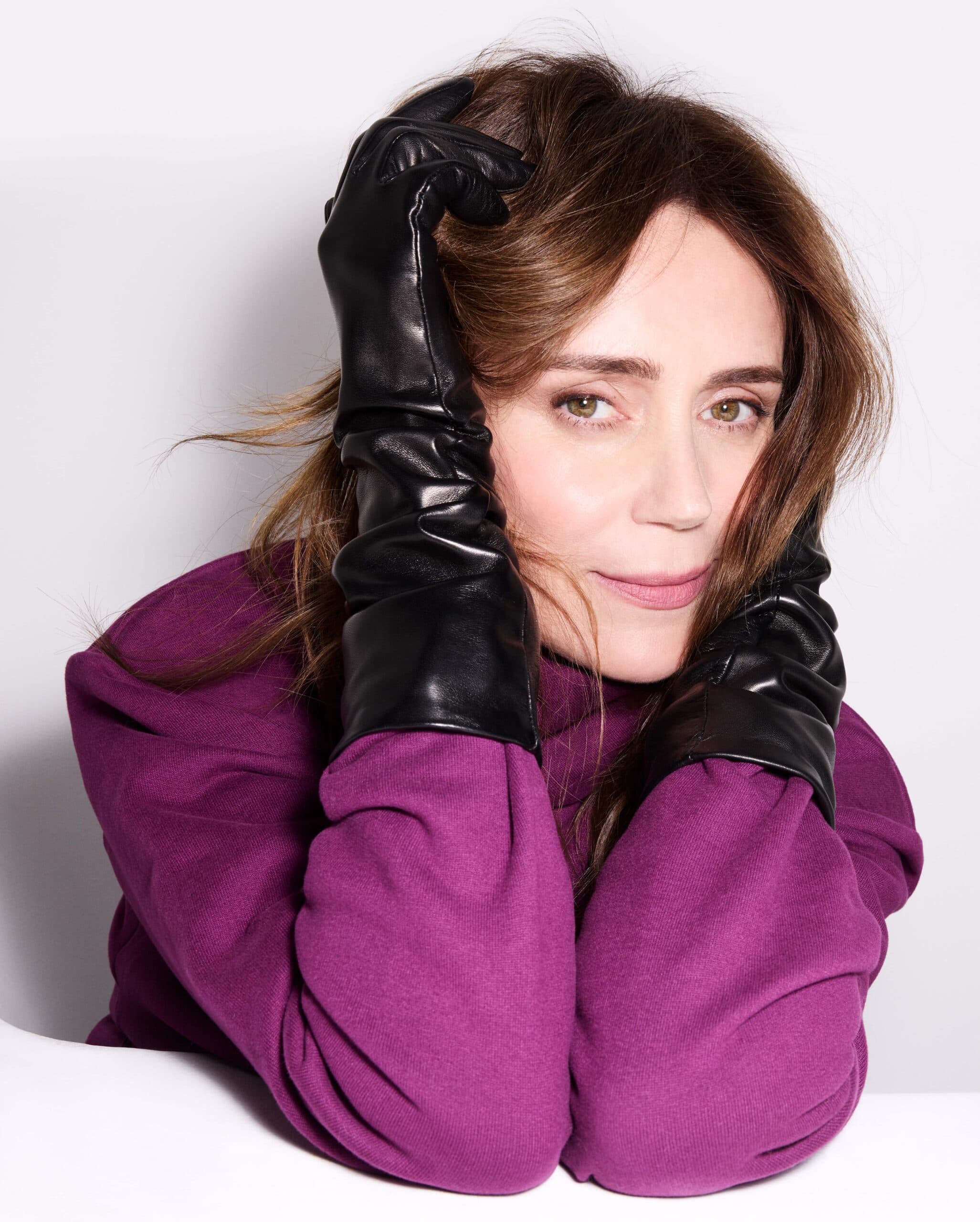
Line of Duty , the police drama Hawes joined in 2014 during its second season, was the catalyst to this revelation. In the show, the actor plays DI Lindsay Denton, an anti-heroine — brittle, lonely and morally ambiguous. “Up to that point, and partly because of my age, I’d been the ingénue. That’s what happens,” she tells me matter-of-factly. “It would be weird to write those roles for someone of forty-five.” Hawes is so noticeably unbothered by this fact that she doesn’t even pause before explaining why Denton was such a welcome change. “I didn’t go out looking for Line of Duty ,” she states. “I auditioned and I got it, but I loved playing her, it was thrilling.” The role was unlike anything audiences had seen her play before, even down to her physical appearance: “makeup-free and dowdy” as Hawes puts it, a layer to her character she found refreshing — and, evidently, humorous. “If anything, it opened people’s eyes to how old I was at the time,” she laughs. I notice Hawes often makes jokes at her own expense, but is quick to heap praise onto seemingly everyone she’s ever worked with. It’s part of her charm.
As with Denton, Hawes’s characters are nuanced — sometimes morally complex — but they are not always likeable. It’s something I wonder about during my research: how does this feel as an actor, spending so much time crafting a persona that could then be hated by audiences? I pose the question to Hawes. Does she concern herself with the likability of these characters, or question how they will be perceived? She pauses. “I don’t really know…” she replies, trailing off for a moment. “No, not really, I definitely didn’t with Lindsay.” After thinking about it for a moment, Hawes puts this down to the fact you can never predict the audience’s reaction. She cites the phenomenal success of Line of Duty and Bodyguard as examples of outcomes nobody could have anticipated. “With those two shows, you question what the secret recipe [is],” she muses. “But if we knew that then every show would get twenty million viewers.” The actor laughs.
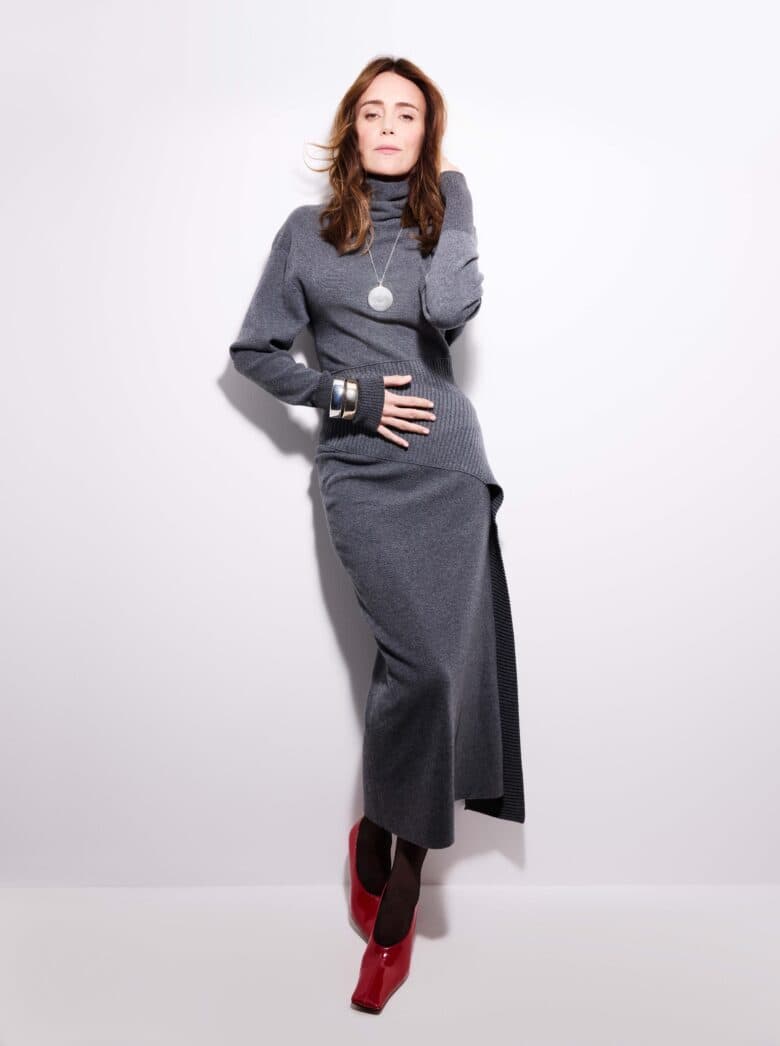
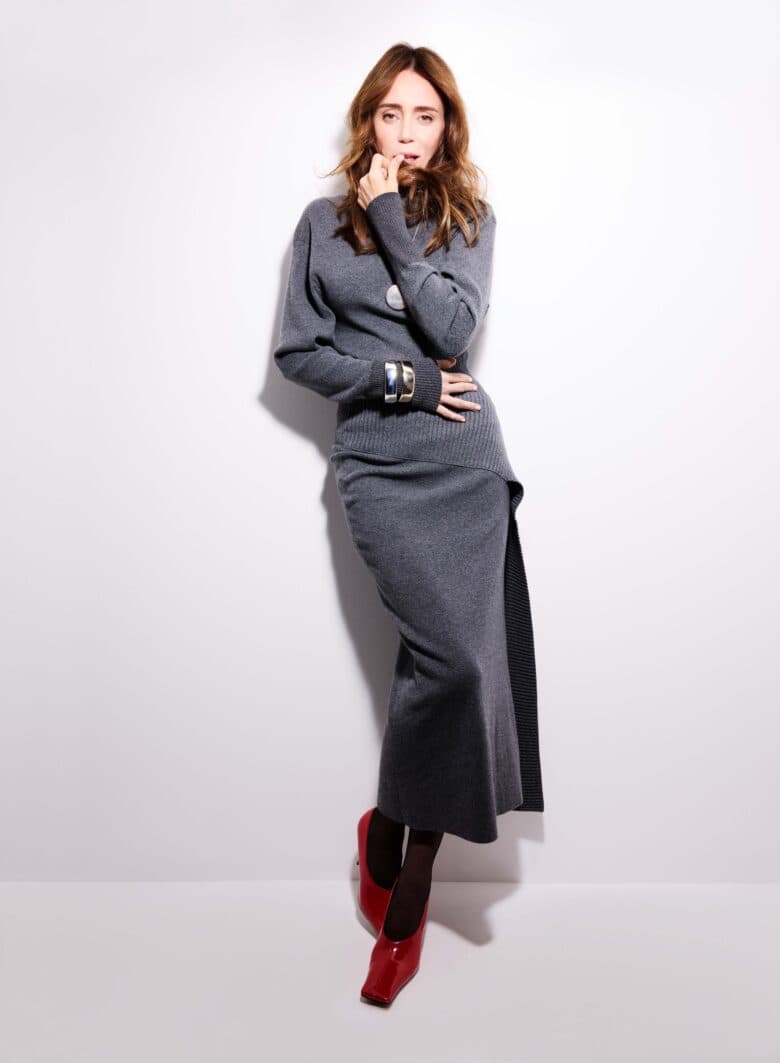
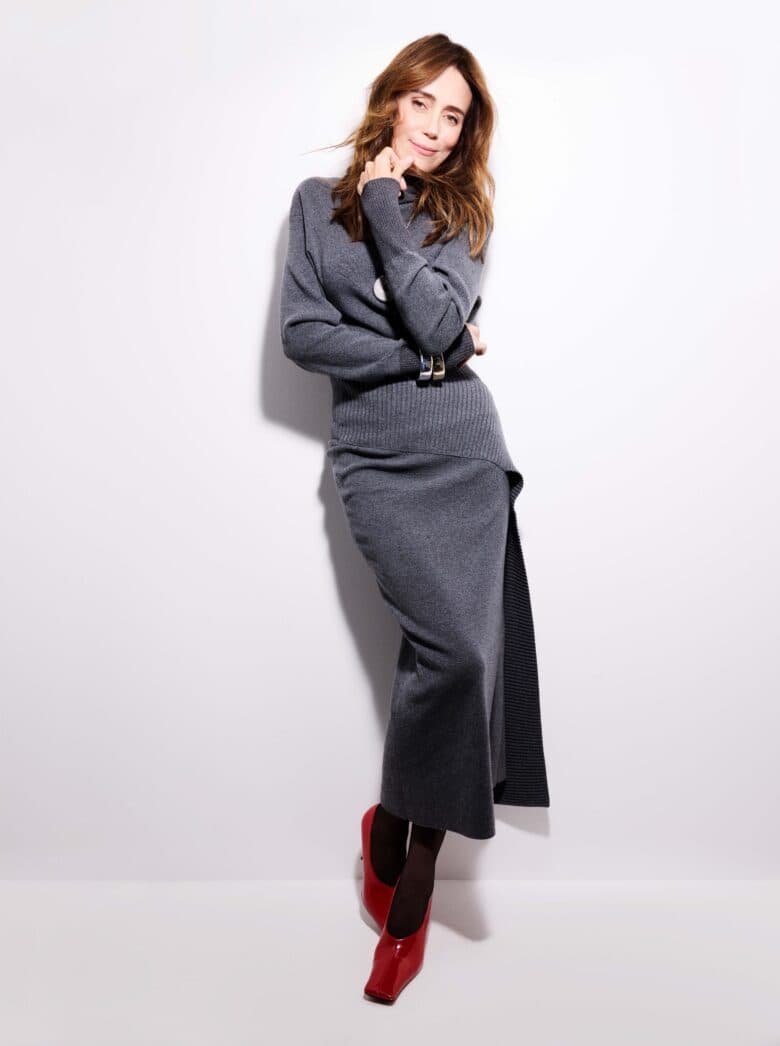
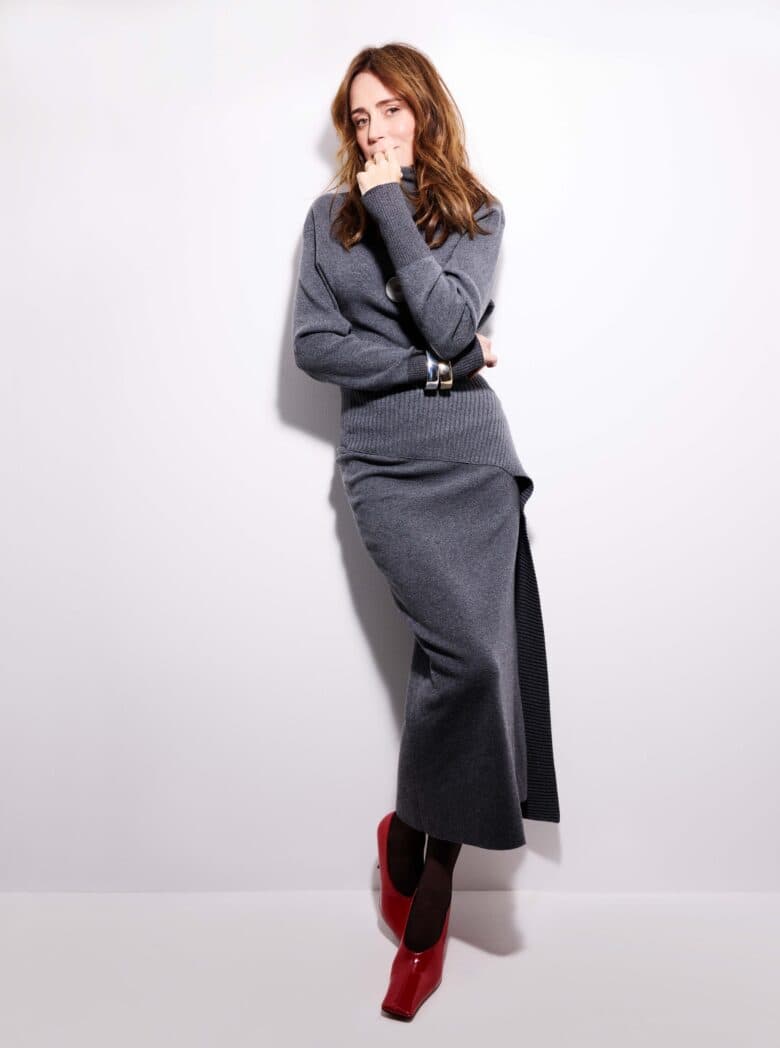
Timing, though, Hawes emphasises, is everything. During the pandemic, Hawes starred in It’s a Sin, a show navigating the lives of five young Londoners during the AIDS crisis. The show received eleven BAFTA nominations and hit almost nineteen million views on All 4. “No one could have predicted that the parallels to Covid would feel so strong — living through a period where you couldn’t touch each other,” she reflects “Suddenly there [was] an understanding of what life would have been like. I think it’s great when that happens — something political can make a show become topical in a way you’d never have anticipated.”
For her next project, Hawes is tackling an entirely different kind of drama. “I went through a little phase of playing the Lindsay Denton types, and I wanted to do something about love — particularly middle-aged love.” It’s a life stage, the actor believes, that often gets overlooked when it comes to a love story. “There isn’t a Normal People for midlife,” she points out. “And yet there’s so much to mine in that age group.” Falling will, perhaps, be an antidote to this. The six-part drama follows a Catholic priest and a nun called Anna whose lives are drawn together by a complex attraction. It’s based on a story creator Jack Thorne told the actor. “A nun and a monk met, only once, at her convent,” Hawes recounts. “Their coats brushed as he was leaving, and she realised she’d fallen in love with him. A week later, she got a letter from him saying the same thing. They eventually left the Church and married.”

I ask Hawes what it was like to play a nun. “Presumably this was the first time?” I offer. She descends into giggles, her warm humour bubbling up as she lets out a sarcastic laugh. “Yes, weirdly, it’s the first time.” Her voice raises an octave as she tries to control her amusement. “How dare no one have cast me as a nun for all these fifty years!” Preparing for the role, Hawes tells me once her laughter has subsided, was challenging — mostly down to one, practical reason. “I mean, you don’t come into contact with nuns on a daily basis!” the actor exclaims. To rectify the issue, a Zoom call was set up between Hawes and a former nun to discuss life in the religious order. “Oh gosh, it was so interesting,” gushes Hawes. “She was so open, very sweet and bright, just a lovely person. That life hadn’t worked out for her in the end, but she had devoted a hell of a lot of it to God, so it was fascinating asking what [that was] like.” The actor pauses long enough for me to reflect on the irony in her word choice. “Especially the idea of going through menopause in a convent!” she effuses. “You don’t have access to brilliant people to help you, both mentally and physically. It may be different now, but lots of women all going through that stage of their lives together must be really hard.”
A crucial aspect of playing Anna was, of course, the wardrobe. It meant Hawes wearing a habit everyday. “It was almost like a costume drama,” Hawes giggles. Humour aside, though, the actor notes how the simplicity of religious clothing meant she could focus solely on her performance. “You’re in make-up for eight minutes, and then off you go. It’s all about the work,” she emphasises. Paralleling her role in Line of Duty , the lack of vanity was freeing for Hawes — even if wearing a wimple (the headdress worn by nuns) felt rather exposing. “You feel like a thumb with eyes,” she laughs. She recalls one instance of filming in a shopping centre in Cardiff. “People’s reactions are fascinating when seeing a nun in an unexpected setting,” she tells me. “Their jaws are swinging open, stunned. But they are always so respectful.”
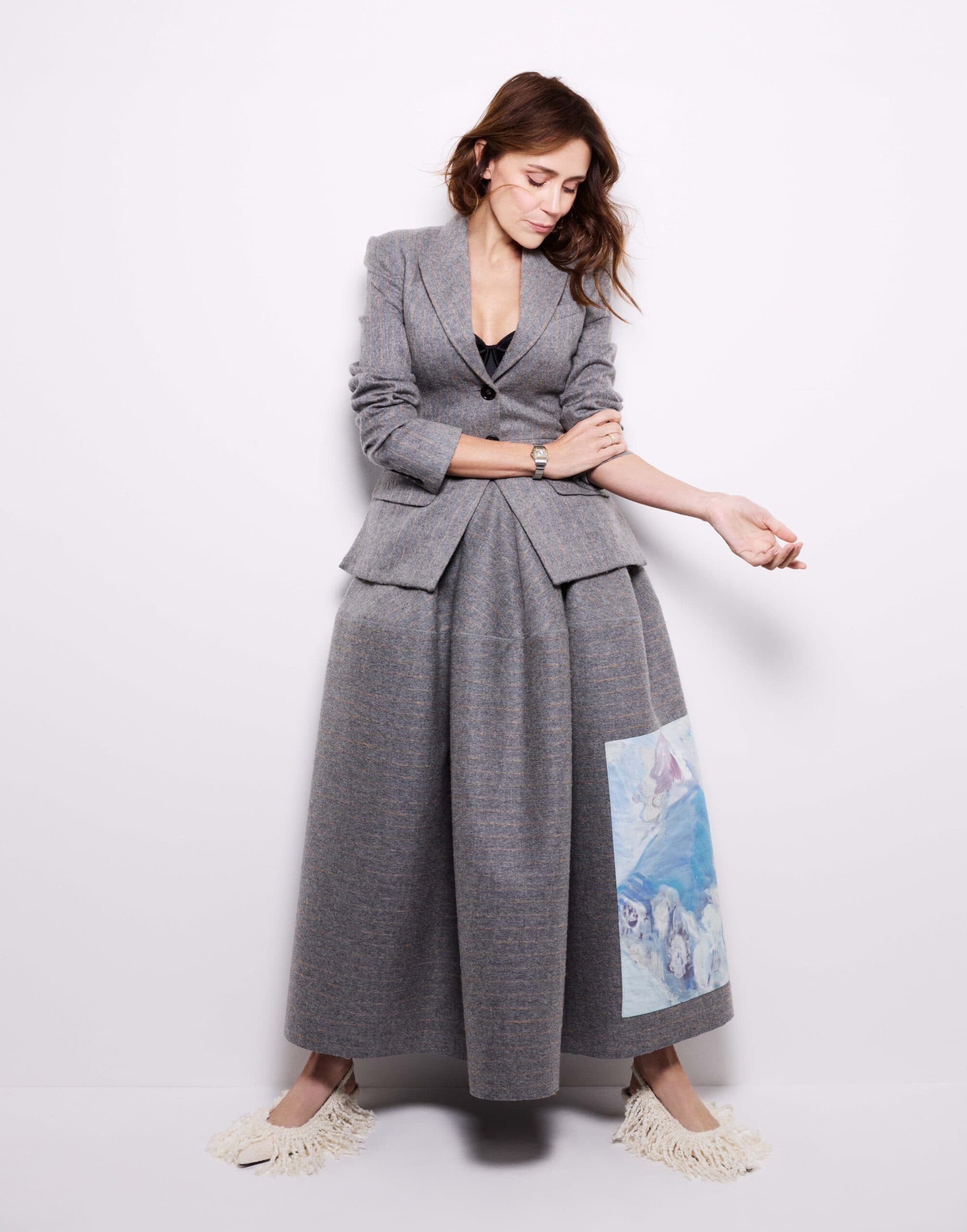
Recently, Hawes has also found herself behind the camera. Having now worked on a few projects, she started by producing on The Durrells, the sun-soaked ITV drama she fronted for four seasons. “It made sense,” she says. “I knew the show so well, and we had a young cast I was very close to. It felt like a natural progression.” It’s a role that’s reshaped her perspective on acting. “It’s changed my view on a lot of things,” she says. “I wish every actor could do it. The amount of work that goes into getting a show made before an actor even sees a script — it can take six years. You have no idea until you’ve been there.” Above the effort, though, money poses a greater issue. “It’s harder than it has been in a long time to get shows made. The money isn’t there,” she laments. The rise of big-budget streaming services means that UK broadcasters struggle to compete, and often projects end up being shelved quickly. “It’s very difficult, but it does give you an appreciation of everything.”
While Hawes relishes her evolving career on both sides of the camera, she isn’t blind to the ominous feeling of the years passing by. The actor tells me how she recently attended the funeral of Sylvia Young, the founder of the theatre school Hawes attended from age nine. On the day, she found herself looking around the room filled with her industry peers and reflecting on her career. “I started really young, I really don’t know anything else,” she concludes. “[Acting] has been part of the fabric of my life [throughout] my formative years. Now, I’m looking at all the girls from my class and it’s funny — we’re all turning fifty next year.” She laughs. “How can you go from nine to fifty? It did make me think, God, I’ve really been at this for a long time.”
- PhotographerRankin
- StylistSandra Solé
- Writer Alice Lambert
- Make-Up ArtistJustine Jenkins using HOURGLASS Cosmetics
- Hair StylistBen Cooke at One Represents using MARIA NILA
- Fashion Assistants Flutur Gerbeshi, Carlota Rodrigues
- RetouchingFTP Digital