Dougray Scott is grateful
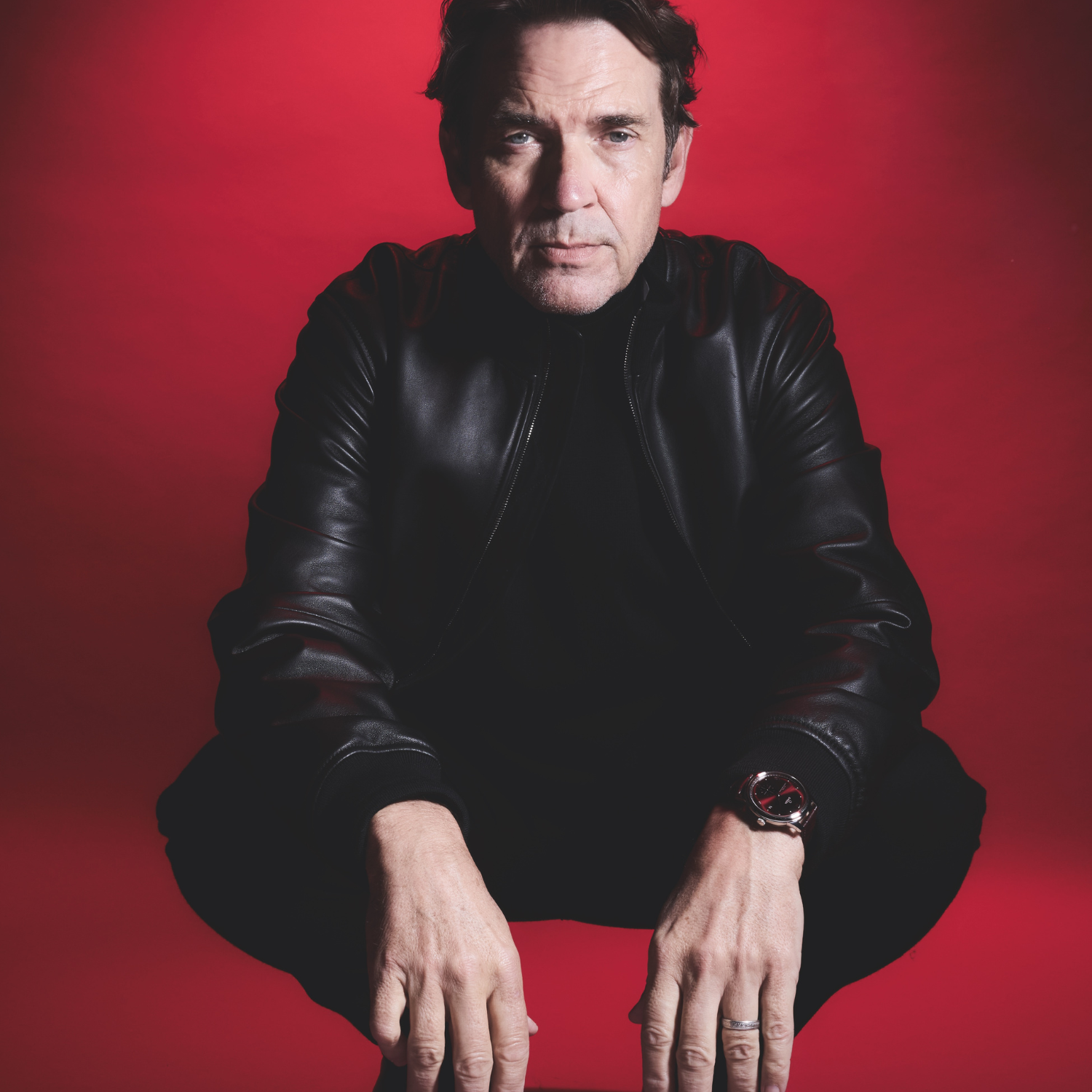
Having enjoyed an acting career stretching over forty years, Dougray Scott is used to long days of photoshoots dragged out by fussy editorial creatives. So when his shoot for this issue of HUNGER lasts only a few hours, the actor is thoroughly impressed. “It all went so quickly!” he reports in his smooth Scottish accent, catching up over Zoom a few days later. Admittedly, Scott’s regional twang has softened over the years after playing plenty of what he dubs “poshies” — Ian Hainsworth in Desperate Housewives, Captain Robert Graves in Regeneration — and from living between London and LA for so long. It’s a life far more glamorous than the one the actor came from. Born to a nurse and a fridge salesman, Scott grew up in Fife, a few miles north of Edinburgh. He shared a room with two of his siblings in the family’s council house, and hadn’t considered acting as a feasible career option. His teachers advised him to get an apprenticeship. That’s until he became transfixed by Arthur Miller after discovering the playwright in his school’s library — a role he’d later play in My Week With Marilyn. From there, Scott attended the Royal Welsh College of Music & Drama in Cardiff, and soon secured work in regional theatre, British television and film. That’s until Hollywood came calling.
On the other side of the pond, Scott secured his breakout role as Prince Henry in Ever After, the 1998 retelling of Cinderella that saw him star opposite Drew Barrymore. Reportedly, Tom Cruise hosted a private screening and immediately pinned Scott as Sean Ambrose, the man who would later rival Ethan Hunt in Mission: Impossible II. Everything was going right — up to when M:I2’s filming schedule ran into weather delays. Scott was forced to bow out of the role of Wolverine in X-Men in a part that catapulted Hugh Jackman into fame. He also later came close to landing the titular role in James Bond, only to be edged out by Daniel Craig. As I’m researching Scott ahead of our interview, I learn that he’s often asked by reporters about these so-called ‘missed opportunities’, and on every occasion the actor is consistently diplomatic. It makes sense — none of them have hindered his success. From his Emmy-winning turn as the shark-like detective Ray Lennox in Irvine Welsh’s Crime, to launching his own production company, Buccaneer Scotland, in 2021, Scott has carved out a career defined not by what ifs, but a clear passion for his industry. That sense of zeal is just as apparent in our conversation.
Now approaching sixty, Scott shows no sign of slowing down. His latest work in ITV’s The Hack sees the actor step into the shoes of former Prime Minister Gordon Brown. Then there’s Summerwater. Airing on Channel 4 this November, Scott finds himself in the more sinister role of David Campell, a doctor embroiled in the inter-family drama of a loch-side holiday park. Needless to say, Scott bears no resemblance to Campell as he speaks to me from his North London home. He’s relaxed and talkative, a few laugh lines and creases a sign of his geniality. Scott’s camera is on tracking mode, making sure his clean-shaven face and pushed-back hair remain neatly centre-frame, flanked by a sleek black book case and a black ceramic lamp. I notice that the actor’s v-neck top, thick-rimmed glasses and dress watch are also black. There’s no need to ask what his favourite colour is. He does, however, volunteer some other titbits about the man behind the screen. Outside of film sets, Scott admits his life is quite “boring” — mostly made up of reading and gym sessions. So, while I have Friday night plans looming and am conscious not to run over our hour-long interview slot, he’s in no hurry to end the conversation. Scott, I learn, is an open book, eager to discuss his upcoming projects, his family and his extreme fondness for Gordon Brown. The actor talks with a steady cadence, thoughtfully gesticulating as he finds his way through each sentence, searching for the right words. “Hopefully you’ll make me look intelligent,” he jokes. I tell him that won’t be a problem.
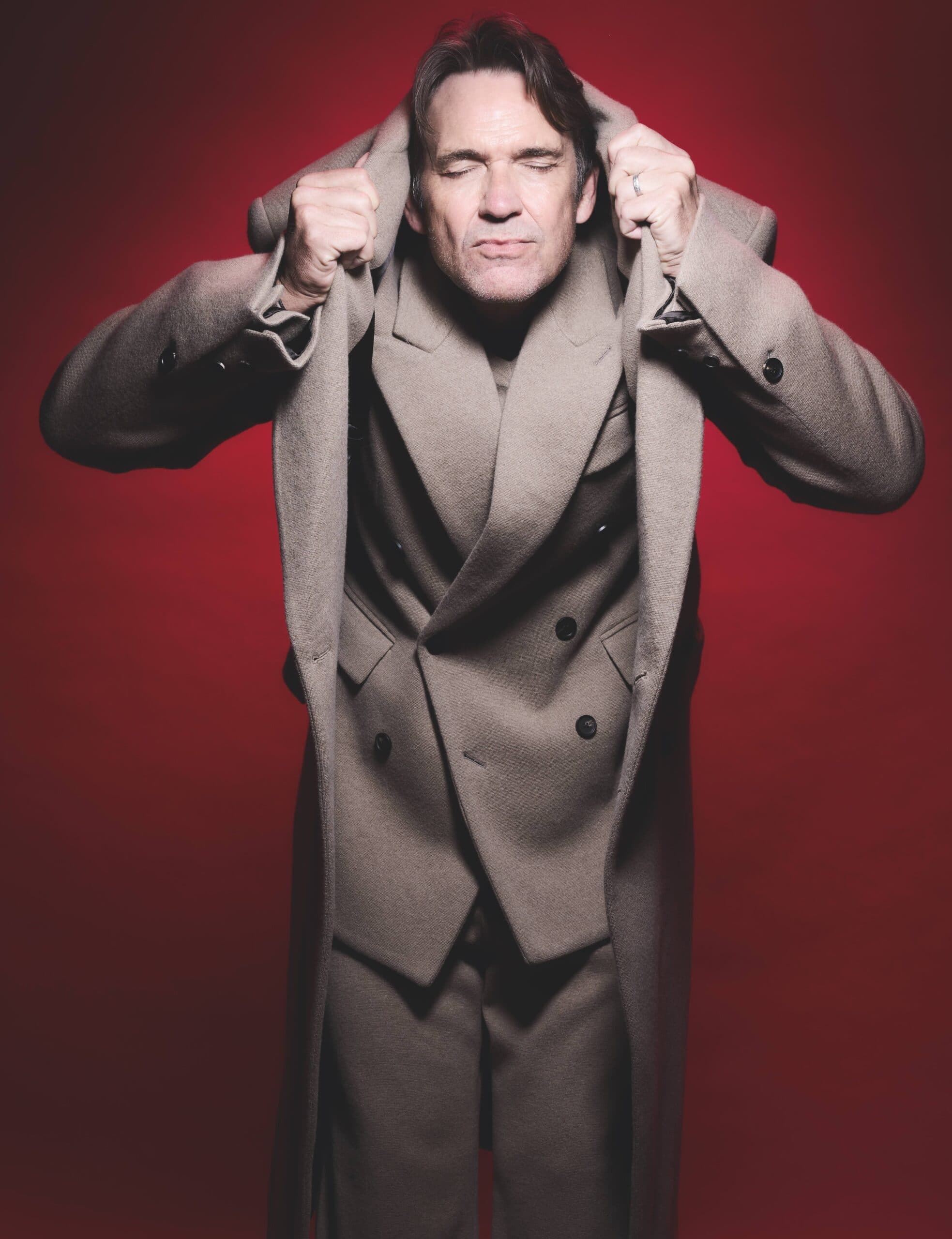
Hannah Bentley: You’ve had a packed year between The Crow Girl, Sherlock & Daughter, Netflix’s My Oxford Year, and now the upcoming The Invisible and Crookhaven. But most recently, you stepped into Gordon Brown’s shoes for The Hack. Beyond the prosthetics, how did you embody the ex-PM?
Dougray Scott: The first thing to say is that I love Gordon Brown. He’s obviously not in favour of an independent Scotland, whereas I am, but, you know, I’ve been Labour all my life. And I think he’s a selfless, unique politician — he’s got a charity when most politicians in his shoes would go off and do book tours and make tens of millions of pounds. But he’s not interested in that. All he wants to do is help other people. So it was really important for me to get the character right. Comedians have done real broad-stroked caricatures of him before, but you can’t do that when you’re doing a serious drama. As well as spending four hours in the make-up chair every day and wearing a suit — Gordon’s on the larger side compared to me — I read his books, his biography and watched all his speeches in the House of Commons — and hours of footage. But there wasn’t enough of him walking. I needed to see how he walked. So I went to see him give a speech at Westminster Hall about his charity, which lasted two hours. Afterwards, we spoke and went upstairs to his office and, you know, he’s talking and I’m just looking at him and his mannerisms. After the show came out I got a very nice email from his wife, Sarah. She was very complimentary about my portrayal of Gordon. She thought I’d got him — got the heart of him.
“I’ve certainly learnt, the older I’ve got, to really live in the present and to be appreciative.”
HB: You’re also starring in a new series called Summerwater, which airs in November on Channel 4. Your character, David, is a doctor who’s visiting the holiday park with his wife. Without giving too much away, he’s a dark, melancholic man. How did you prepare for the role?
DS: I found him quite funny because he’s not physically imposing [and has] a posh Scottish voice. But when he goes up against other people in the Summerwater camp, he’s kind of ferocious. I enjoyed being inside his skin. He’s a very complex character. He’s a doctor who’s taken the hippocratic oath, but his wife has dementia and wants to end her life. His first thought is, What about me? How am I going to cope without you? And this sounds bad, but he reminded me a lot of my mother. She had a great sense of self and, I say this in a very loving way, was slightly narcissistic. My father had Parkinson’s, and part of Parkinson’s is dementia. When that aspect of the disease was kicking in, it was all about how it affected her, not my father. So when I read the script, I just thought about her. I had a lot of memories and characteristics to draw on.
HB: There’s a tense scene where David repeatedly hits himself. I found it quite emotional. David might be narcissistic, but do you think he also feels guilty — maybe even hates himself?
DS: It was an interesting journey playing David. That scene evolved from what I was feeling on that particular day of shooting. David has the same name as my brother who was very sick while we were filming, and I travelled to see him during my days off (he passed away not long after we finished shooting). It was an interesting time for me because I felt there was something significant happening with my relationship with my brother. I loved him very much, so it put me in a particularly contemplative place and I felt quite vulnerable. I’m not at all saying this was great because I could use it, but it made me thoughtful and emotionally open. And you can’t mask that. You have to go with it. Not in a masturbatory way, but just living life on life’s terms. Acting is about feeling. It’s a subjective process — a process of discovery. All you can do is be in it.
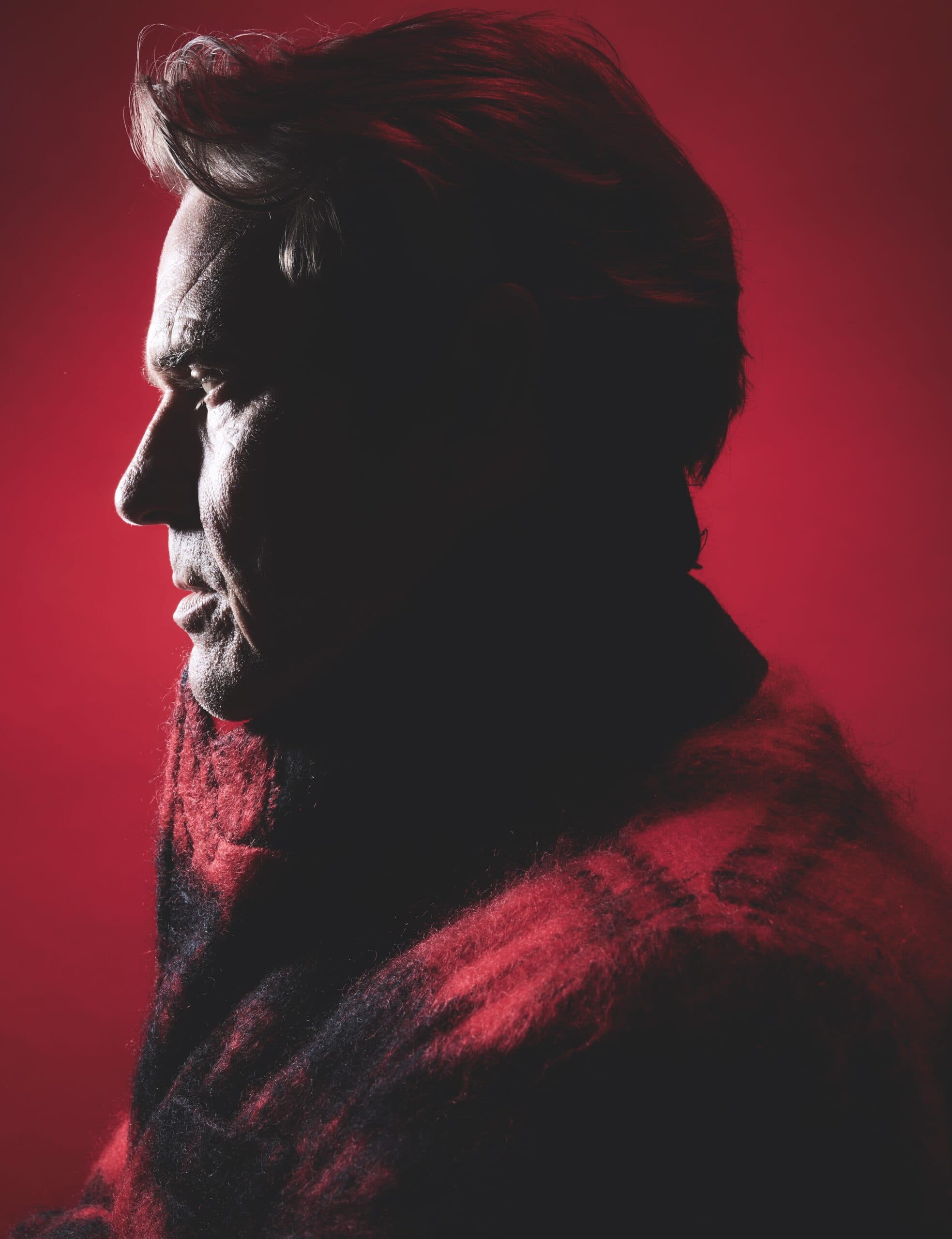
HB: Family has always been an important part of your life, especially your dad who encouraged your love of football. I hear you support your local Scottish team Hibernian FC — what else do you like to do in your free time?
DS: I love golf. About twenty years ago I stopped all the things that are bad for you, like drinking and whatever, and I had to find something else to occupy myself with. Golf helped. Like football, it makes me feel connected with my dad. It takes me all the way back to when I was five or six and first started playing it with him. It’s very meditative for me. I don’t get upset on the golf course — it’s kind of spiritual. My mood is pretty steady whether I’m playing great or badly, so I find it really therapeutic. Oh, and I love reading.
HB: Perhaps those quiet moments on the golf course offer you time to reflect. Considering you’ll be sixty by the time this is published — and, of course, on account of your impressive career — have you got any wisdom to share?
DS: I bet you’re thinking to yourself, [his biography] must [have] a typo, because he can’t possibly be sixty. But, you know, age is just a number. I feel vibrant. I’ve certainly learnt, the older I’ve got, to really live in the present and to be appreciative and have gratitude. If you have gratitude in your life,
it makes it so much easier, because your expectations are focused on the smaller things. When I was young, my dad was a fridge salesman for thirty-odd years and he said, “No one wants to buy a fridge from someone who’s depressed. The definition of success is how happy you are — just you remember that.” Isn’t that brilliant? Needless to say, he was a great salesman.
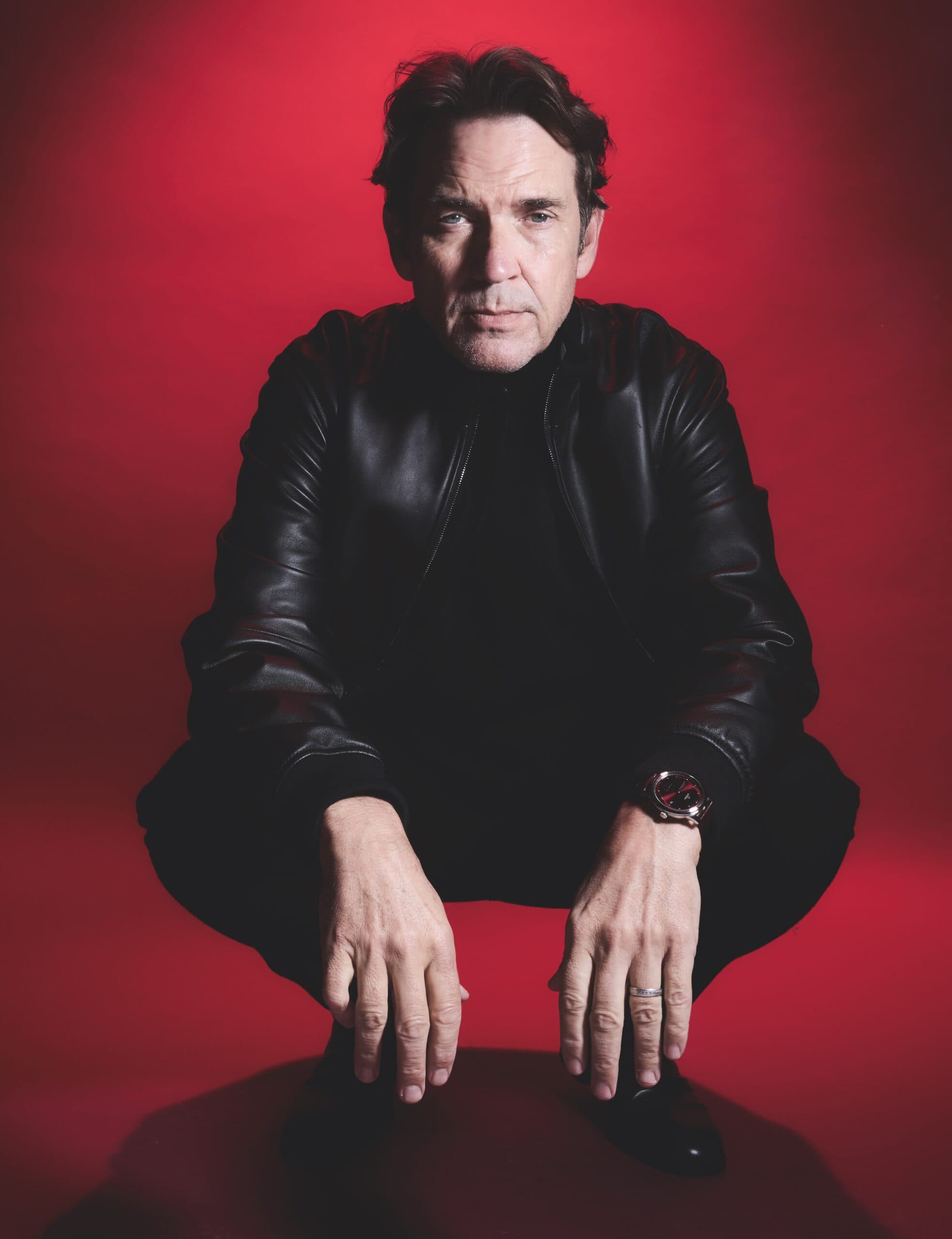
- PhotographerRankin
- StylistArabella Boyce
- WriterHannah Bentley
- GroomerCharley McEwen at The Only Agency using ARMANI Beauty
- Fashion AssistantMei Ling Cooper