Collective Memory is the live-posting app that’s making the internet real again
I won’t lie, AI internet slop is a guilty pleasure of mine. Cartoonish, high-saturation videos asking whether I’d choose a bed made of toothpaste or jelly. Reels stating that being born in January means my hair, in the fictional brainrot world, would be made of spaghetti; my November-born sister’s candyfloss. The relaxation this mind-numbing content provides after a long day of work is, to me, akin to a warm bath or a Pilates class. But this — contentious environmental factors aside — is the ‘harmless’ side of AI on social media. No one believes it’s real. It isn’t spreading fake political news, or making young people feel bad about themselves because of how advanced beauty filters have become.
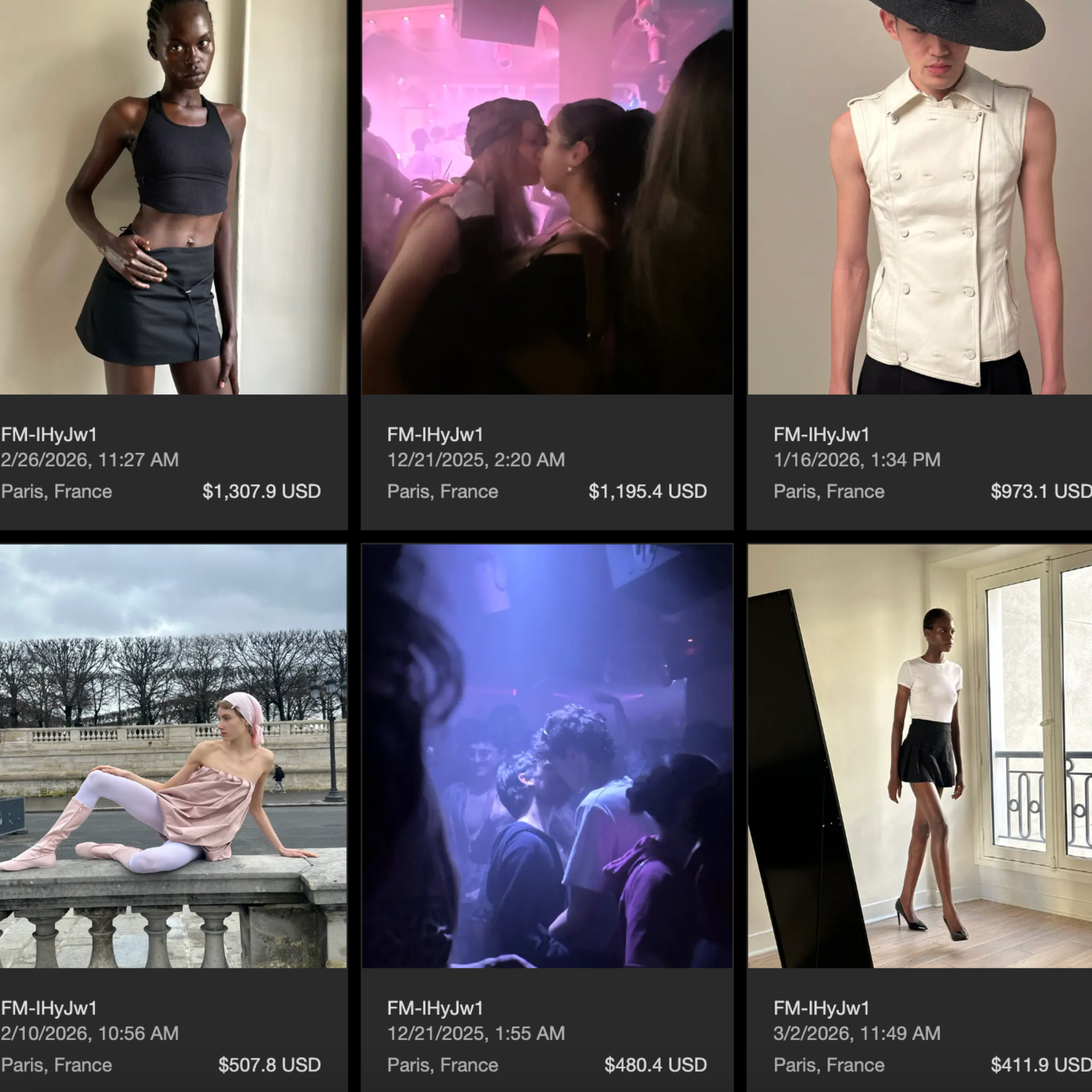
Social media is experiencing a phenomenon that Oxford University’s Dr James Mitchell has dubbed ‘perfection fatigue’. Just look at the ‘2026 is the new 2016’ trend. Gen Zs are craving the days when the only way most people knew how to manipulate a photo was by adding the Valencia filter. It was a time before we could smoothen our skin or lengthen our eyelashes at the tap of a button. That is exactly why, in December 2025 (on the very cusp of the 2016 renaissance), Collective Memory was launched. A rebellion against the false and overly curated nature of mainstream social media, it is a platform that only allows users to post in real time — profile picture and all. There simply isn’t a way to upload media from your camera roll. Everything is shot and posted directly inside the app.

There’s another distinction from other social media platforms, too: there are no hidden algorithms. Where Instagram is becoming increasingly dominated by sponsored content, it is the users of Collective Memory who decide what is worth being seen by others. This happens through a process called ‘staking’, a literal interpretation of the term ‘attention economy’. Within the app, there is a native cryptocurrency called ATTN. Users ‘stake’ their ATTN into Memories (read: posts) that they think matter, whether it’s an on-the-ground news story, or a perfect breakfast. If the post pops off, the staker gains ATTN back. As does the user who posted the content in the first place.
The really interesting thing, though, is that you don’t have to put any money in yourself to earn it (although you can purchase ATTN if you wish). Granted, remuneration on Collective Memory might not be a match for the likes of the TikTok Creator Fund, but it is far more accessible. From posting at London Fashion Week for just one day, I made my way into the top 200 hundred creators on the app and earned a tenner. Not bad for posting some stories from a place I just happened to be at anyway. It was enough to pay for the KFC I (covertly) snaffled up between shows, and more than I’ve earned on any other social media platform as a non-influencer (read: nothing). It was also gratifying to know that the money I earned was a result of real people liking my content, not because of some bogus algorithms.

Something else I have noticed while using Collective Memory is that the creativity and aesthetics don’t suffer because of the live posting. Rather, I find that the feed taps into my appreciation for something a little bit grittier. Something that recalls the less curated approach increasingly seen by It-girls online — perhaps not on their grids, but at least, for now, on their stories. As I write this article, Iris Law has just posted an Instagram story of her unmade bed. That is exactly the kind of content that would work perfectly on Collective Memory. A little edgy and artistic, and very real. Already part of the community, members like fashion photographer Nomolase, beauty influencer Milayamo, model Kiko and fashion writer Alex are showing how it’s done.
But it runs deeper than aesthetics. We’re living in a world where political content is both increasingly censored and decreasingly reliable. Only a few days ago at the BRIT Awards, ITV redacted the statement of Max Bassin, from International Artist of the Year winner, Geese. He used his speech to call for a free Palestine and to declare, “Fuck ICE”. Contrastingly, Collective Memory creators like NY1234 are using the platform to live-post from anti-ICE protests. It’s a testament to how reality can be used for the greater good, while censorship and fake news only contributes to the global political crisis unfolding around us.

Whether in the realm of politics, fashion, lifestyle, or something else entirely, it’s this element of candour that makes Collective Memory unique. For those who are less digitally inclined, it is a platform that might take a little bit of getting used to; it requires setting up a crypto wallet and understanding the in-app token system. But, once you’ve got your head around that, Collective Memory is all gain, no loss. It is a way to post and consume real content, and earn money while you’re at it. But, most importantly, it’s an active statement against the current state of mainstream social media, where perfection is worth more than truth.
You can download Collective Memory here.
- WriterScarlett Coughlan
- Banner Image CreditNomolase / Collective Memory