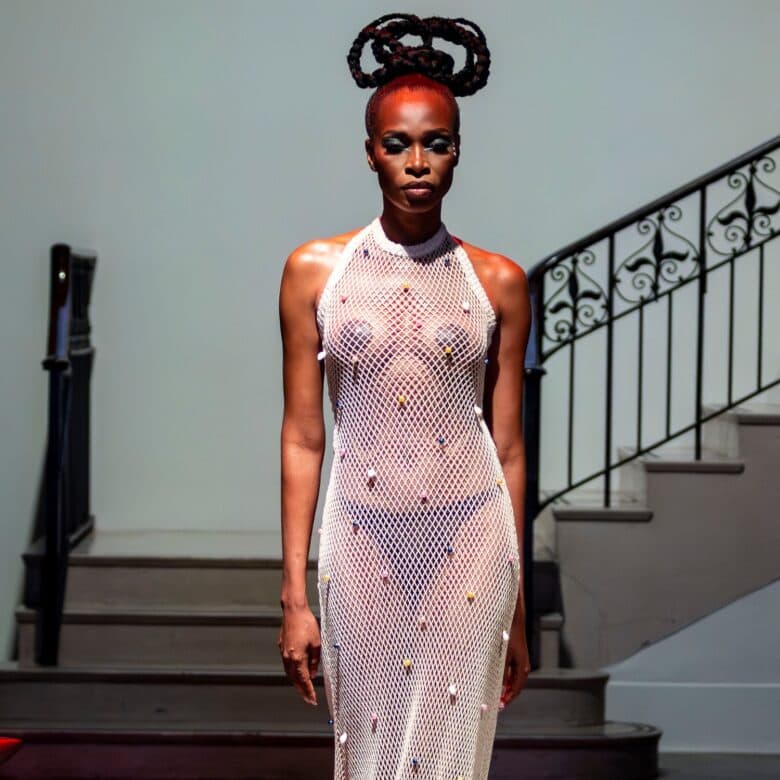
Our favourite shows from London Fashion Week FW 26/27
Annie’s
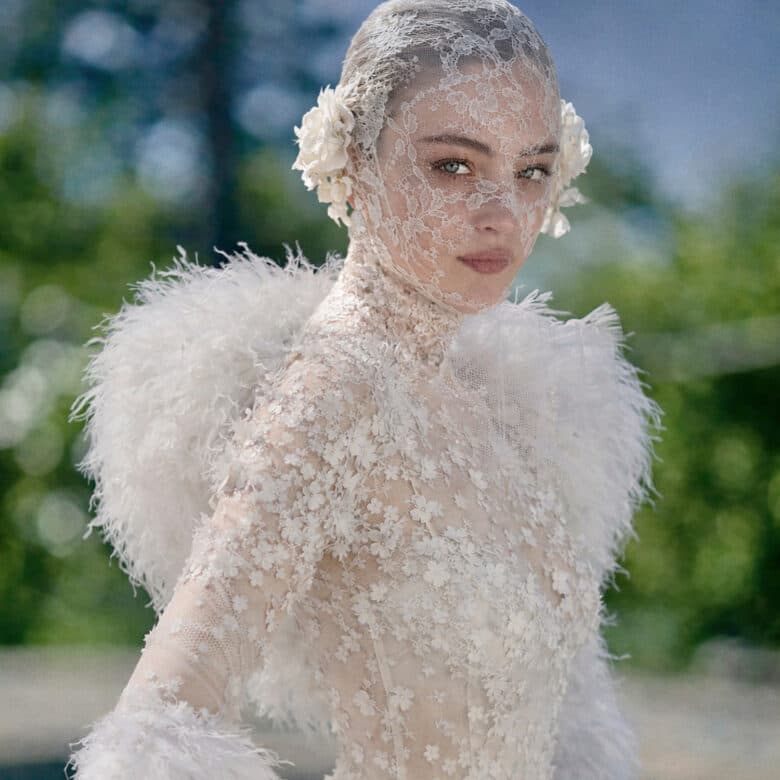
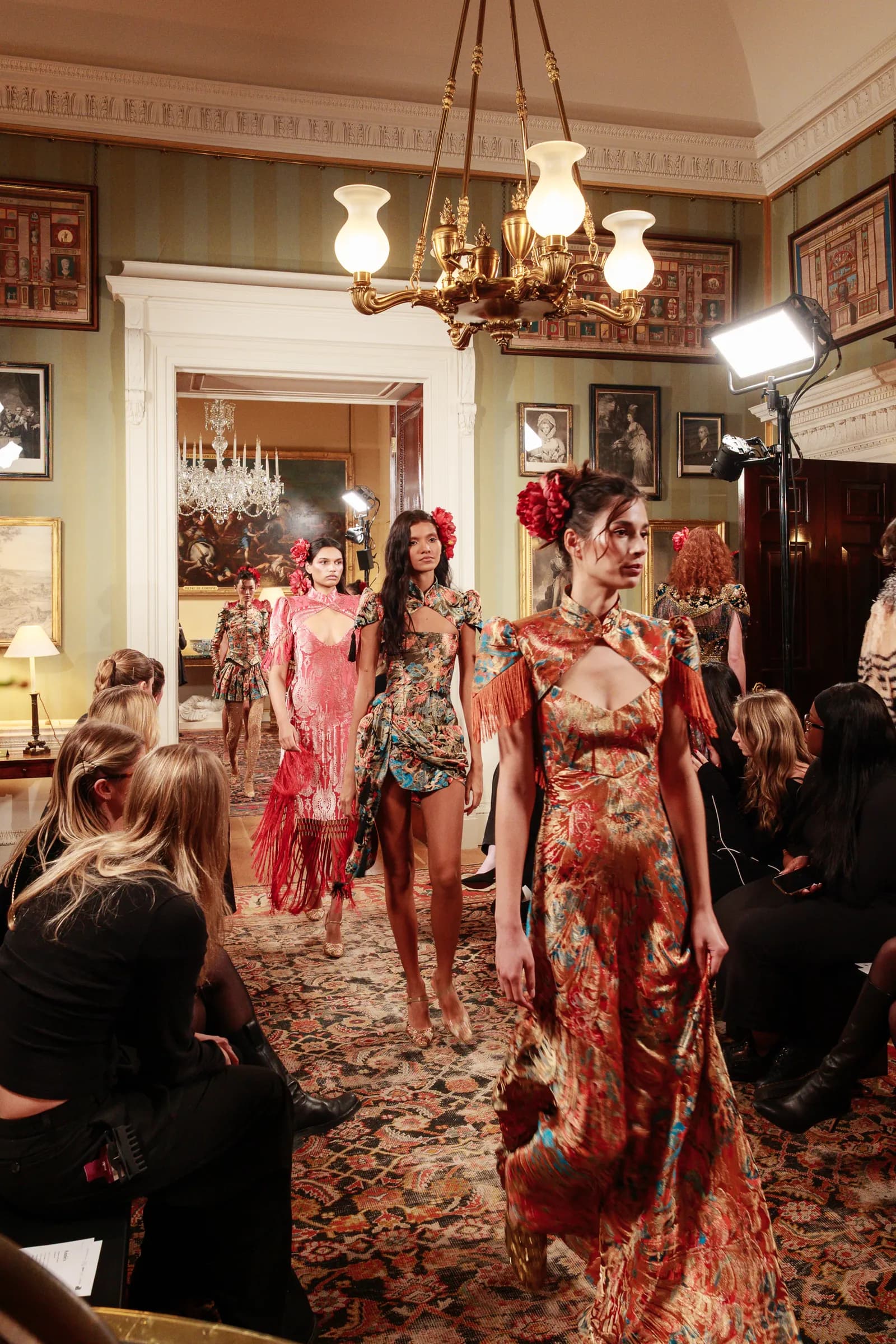
Previously recognised as Annie’s Ibizia, the Autumn/Winter 2026 season marked a pivotal transition for the fashion label, as it unveiled its latest collection, Return to Self, under a newly refined name: Annies. With the new name came a distinct creative shift. It marked the first time Annie Doble peppered the runway with shoes and tailored trousers alongside their signature heirloom-inspired pieces, elevated by gleaming jacquards and lavishly embellished sheer dresses. Taking to Spencer House, models paraded down the runway as unapologetically loud as ever. Hues of fuchsia and oxblood intertwined with saffron, gold and copper adornments, while midnight blue, teal and deep navy tones were woven seamlessly through lamé. Echoes of Annie’s Ibiza home nestled in Dalt Vila were present throughout. Think: hydrangeas and floral prints. However, fresh sources of inspiration — from nineteenth-century Venetian wallpaper to early twentieth-century vases — were intricately infused into the delicate embroidery and playful tasselled details of the dresses. These details extended to the footwear, where delicate hand-stitched threads traced the straps and embroidered glass beadwork lent a jewelled finish. In an era where the naked dress reigns supreme, Annie’s delivered a masterful interpretation. Crafted from champagne-hued threads, the sheer maxi featured intricate lace embroidery, while a feather boa was draped around the neck. A bold red flower tucked into the model’s hair added a note of romance — a warm-weather flourish that paid homage to where it all began for the brand.
Maria Sarabi
Dreaming Eli
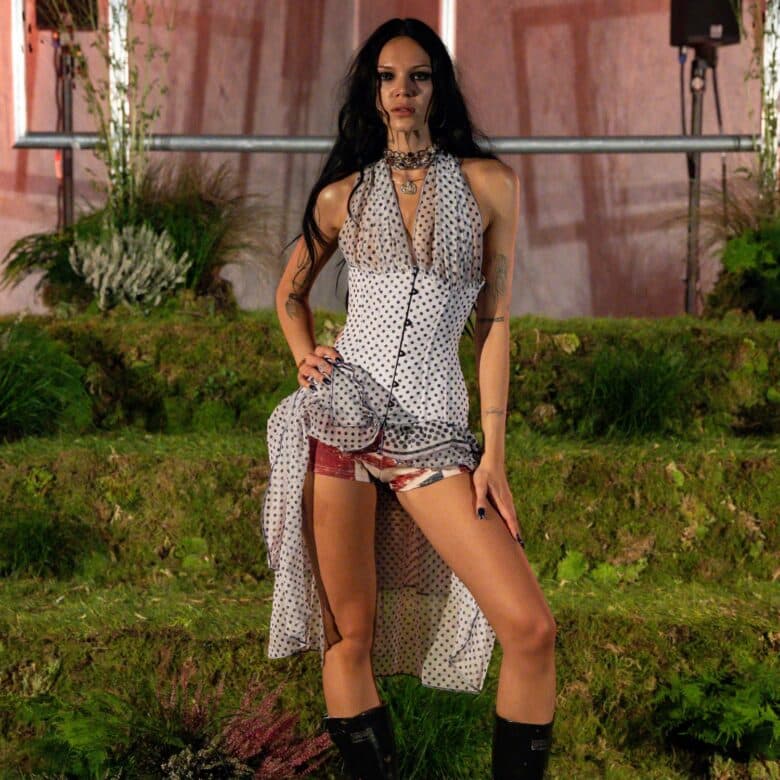
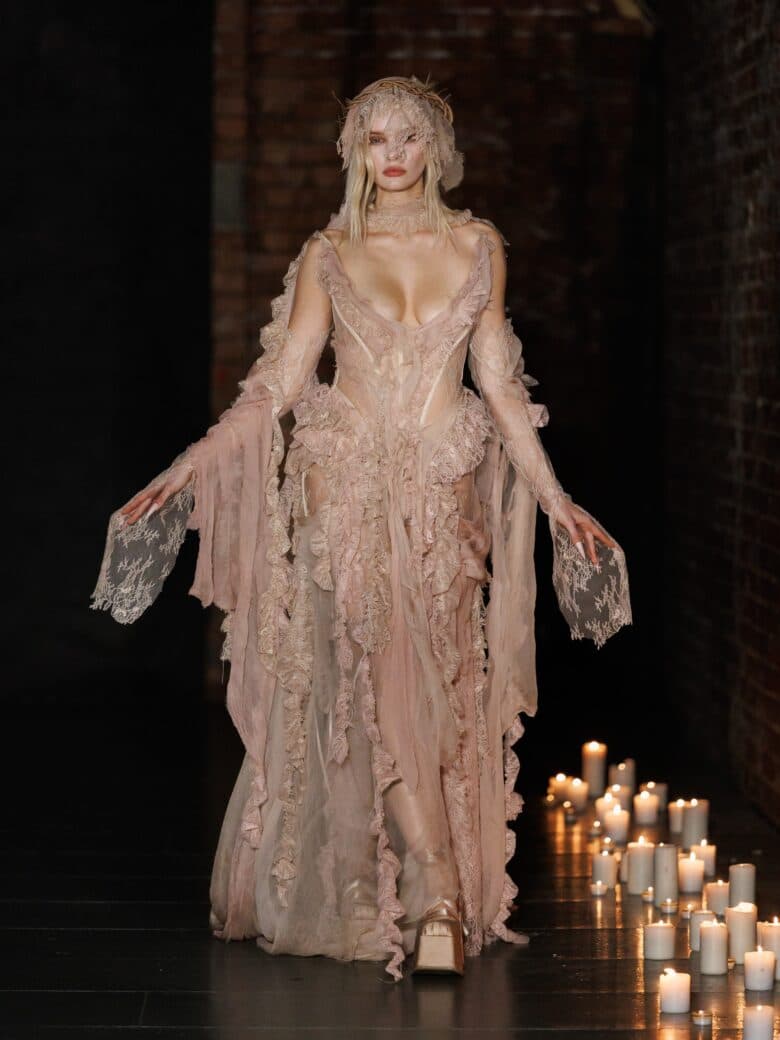
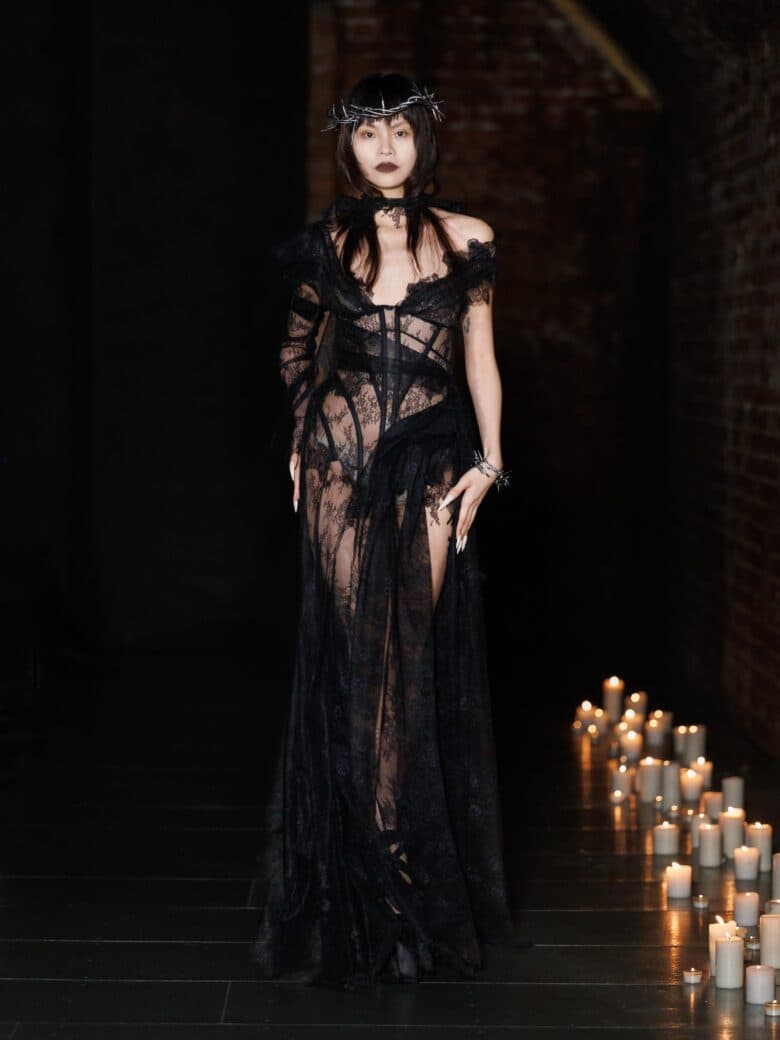
For AW26, Dreaming Eli founder Elisa Trombatore brought her most personal collection yet to the runway. The show, titled The Court of the Maddest, Merriest Things Alive, pays homage to Trombatore and her longtime friend and collaborator, art director Arian De Vos. The collection’s central thesis, “love outside of love”, is a meditation on female friendship as “the glue of life”. Rather than marking it as the antithesis of romantic love, however, the collection draws on Trombatore and De Vos’s shared obsession with creepiness, raw beauty and sexual freedom — themes that are romanticised on the runway. Initially, there’s a gentle colour palette of nudes, pinks and creams, paired with delicate laces and ribbons. Yet, the collection thrives in contrast, and is sharpened right back up again with black, distressed, sometimes burnt materials, set off by barbed jewellery and headpieces. As for the title of the show: each look embodies a distinct character within a reimagined court setting. It is a place where principles are governed not by hierarchy, but by female alliance and the unexpectedly unifying factor of dichotomy. From gothic, black-lace gowns to bustiers adorned with pearls and pleated silks, Dreaming Eli’s AW26 collection is for every woman, from the Marie Antoinettes to the Maleficents of the world. It evokes the beauty of difference, and the magic of women uniting, not despite it, but through it.
Scarlett Coughlan
Hector Maclean
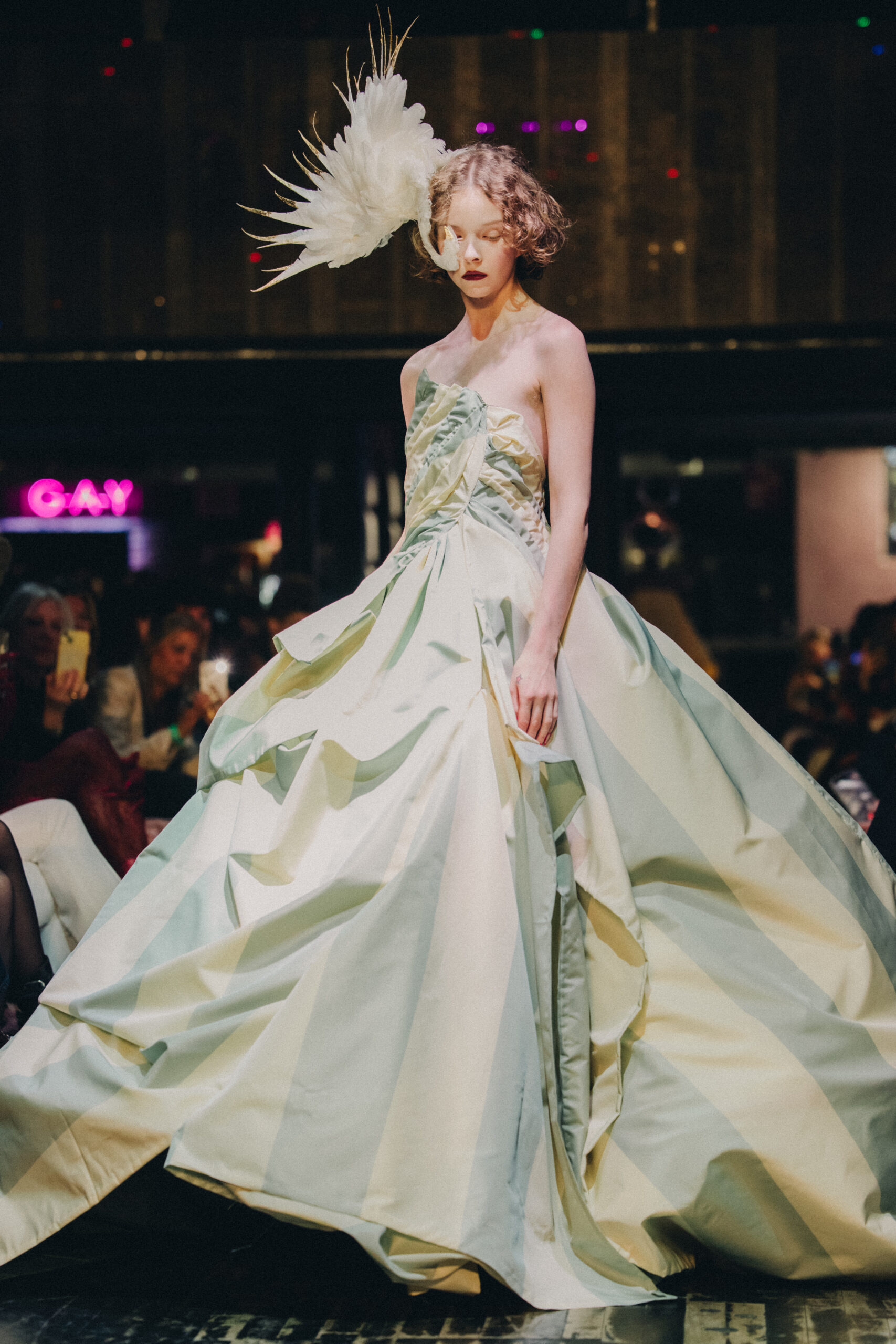
For his AW26 collection, Hector Maclean took inspiration from his grandmother, Leokadia Osko. Escape chronicles the resilience and loss faced by Osko, who was displaced from Poland during WWII, but the presentation was anything but solemn. Taking place in London’s campest and most celebratory venue, Heaven nightclub, models playfully bit the glass fruit they carried (a homage to the fruit stall where Maclean’s grandfather would visit Osko in the refugee camp they were placed in), as a club remix of ‘War’ by Edwin Starr rounded up the catwalk. As for the clothes themselves, the influence of the designer’s history working with Vivienne Westwood was present in the experimental use of drapery and merging of soft materials with tailored fabrics. The influence of Maclean’s grandmother was also felt throughout the collection’s materiality and silhouettes, including a dress made of doilies and tailored military jackets.
Lucy Wragg
Labrum London
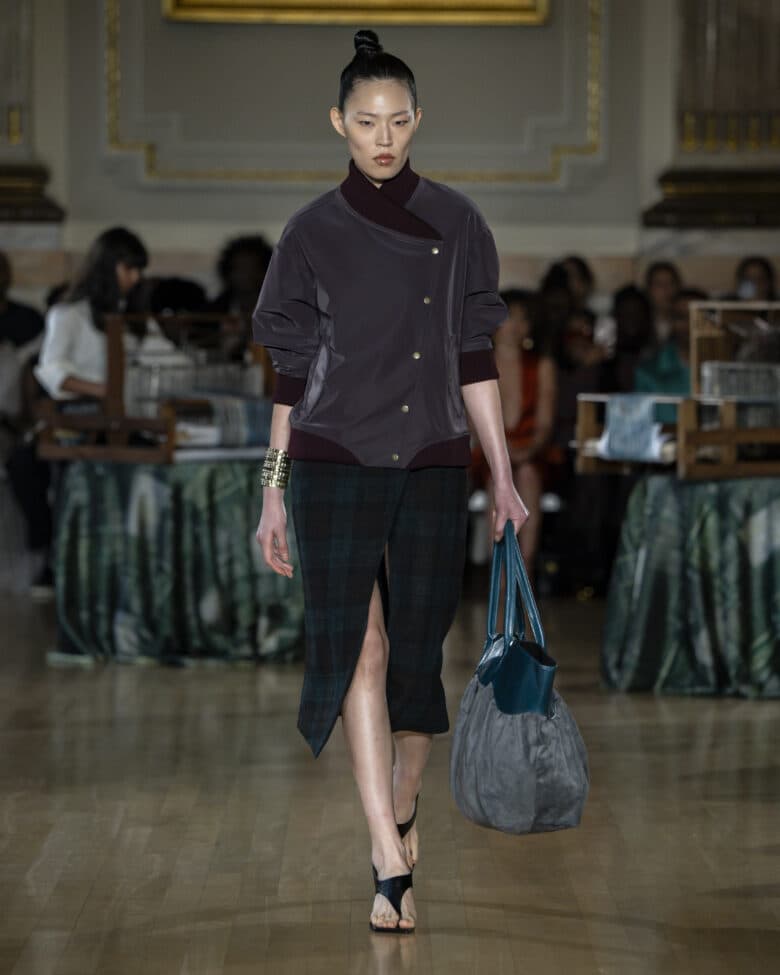
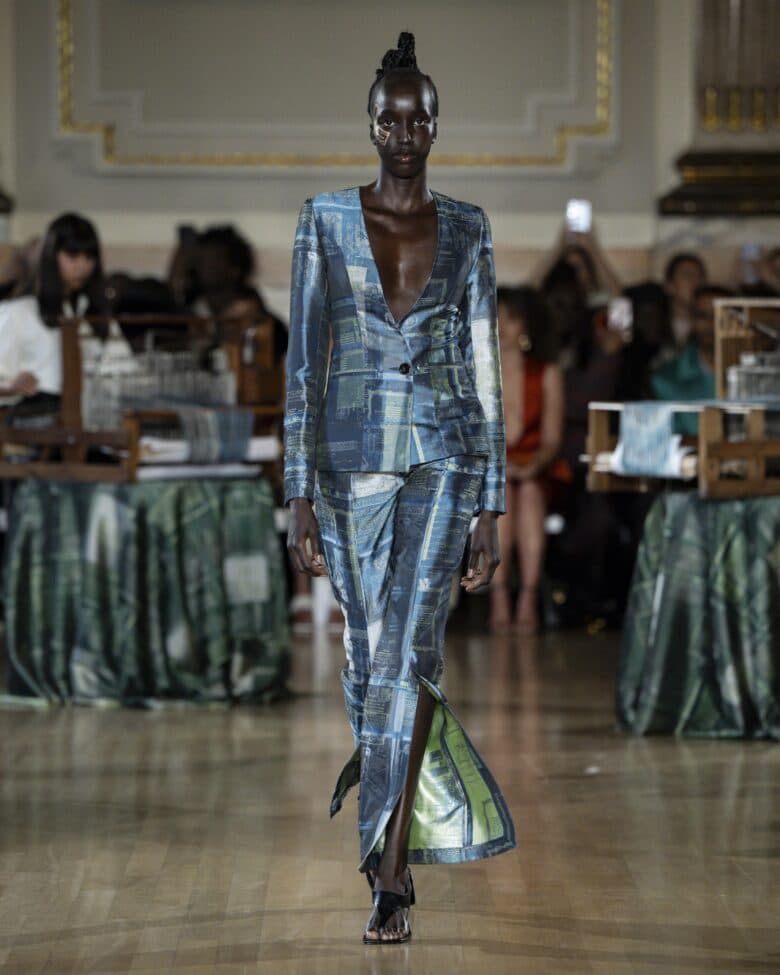
Behind every garment lies a story that begins with the very threads that created it. And for Labrum London’s creative director, Foday Dumbuya, that’s a story worth telling. Upon arrival at his show, which was staged in London’s Great Hall, guests were greeted by two handlooms where weavers skillfully interlaced yarn. Then came the show’s opening poem, narrated by Yomi Sode, that told a story about culture and the migration of textiles. It’s a story that resonates with Dumbuya himself, whose life journey, which traces back from Sierra Leone to Cyprus and London, lives inside this work. This was a testimony that was hard to miss on the runway, where craft took form in elongated coats with funnel collars, embroidered suits, Chinese silks and sarong skirts in the brand’s reimagined signature passport fabric: a textile laser etched into Japanese indigo denim. But the cultural references did not end with the clothes. Dumbuya paired looks with crocheted bags that celebrated Sierra Leonean raffia craft, hand-shaped brass sculptural earrings in collaboration with bespoke designer Florence West and a cowrie shell crochet grid worn as a headpiece. This was a collection for the diaspora. A true visual banquet of culture travelling through clothes.
Maria Papakleanthous
Chopova Lowena
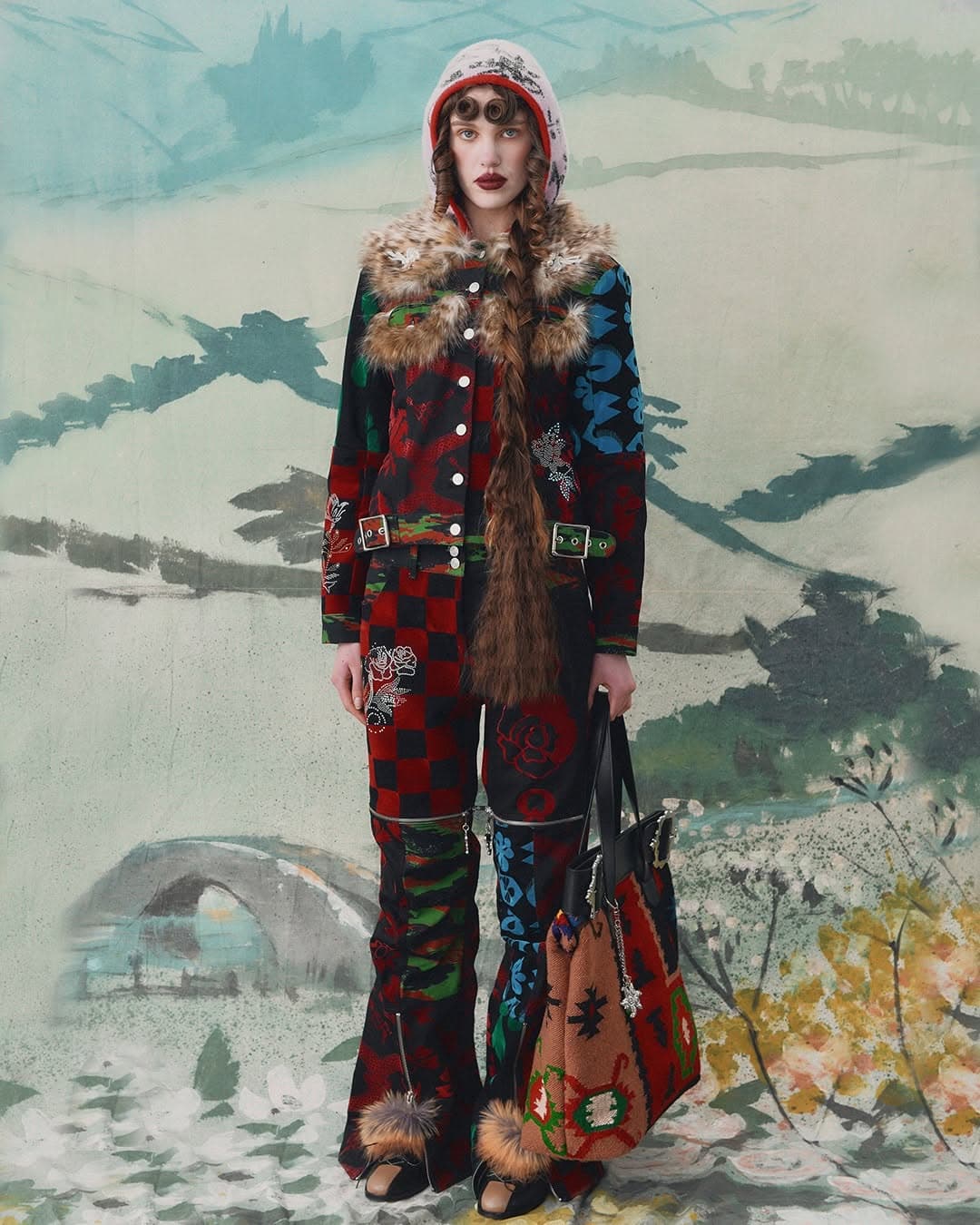
Chopova Lowena unveiled its AW26 collection within the fittingly historic nineteenth-century Crafts Council building. While the brand has long been championed for its upcycled folkloric textiles, playful prints and signature carabiner skirts, it was Regency-era silhouettes fused with Argyle knits and kilts that defined the Too Ripe and Ready by Half collection. Islington was transported to a bygone era, where mannequins were dressed in basque-waist corset gowns made from rich upholstery textiles. The pieces featured whimsical beaded bows cascading down the bodice, flowing into puffed skirts layered with fabric and finished with a delicate overlay of blue tulle. Deadstock fabrics from previous collections were combined with plaids, florals and knits, all adorning bubble-sleeve dresses with crisp, preppy collars. Menswear followed a similar path, pairing striped rugby tops embellished with silver brooches and layered under bomber jackets. The presentation also introduced the brand’s new intimates line. But in true Chopova Lowena fashion, the tees, bras and knickers were anything but ordinary. Each piece appeared in bold hues, adorned with miniature poems and artistic prints that made them wearable statements in themselves.
Maria Sarabi
Sinead Gorey
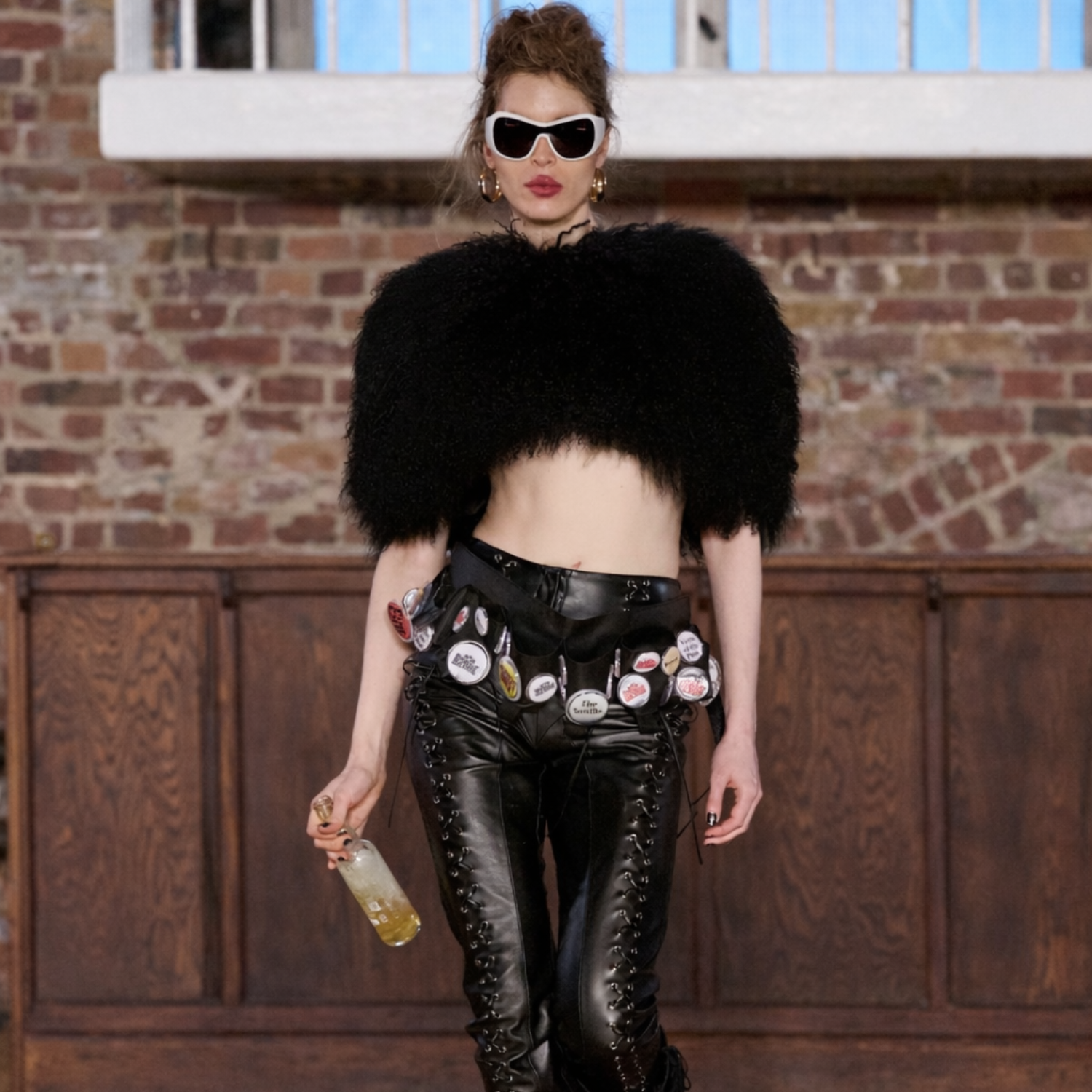
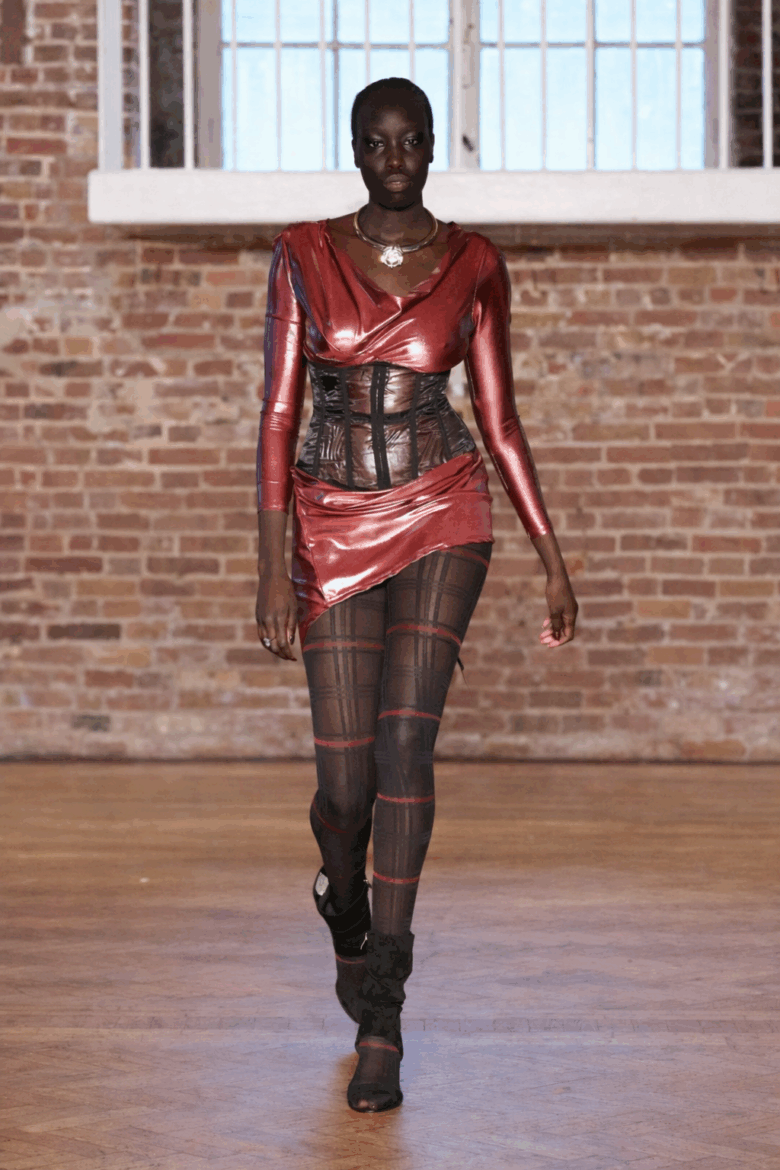
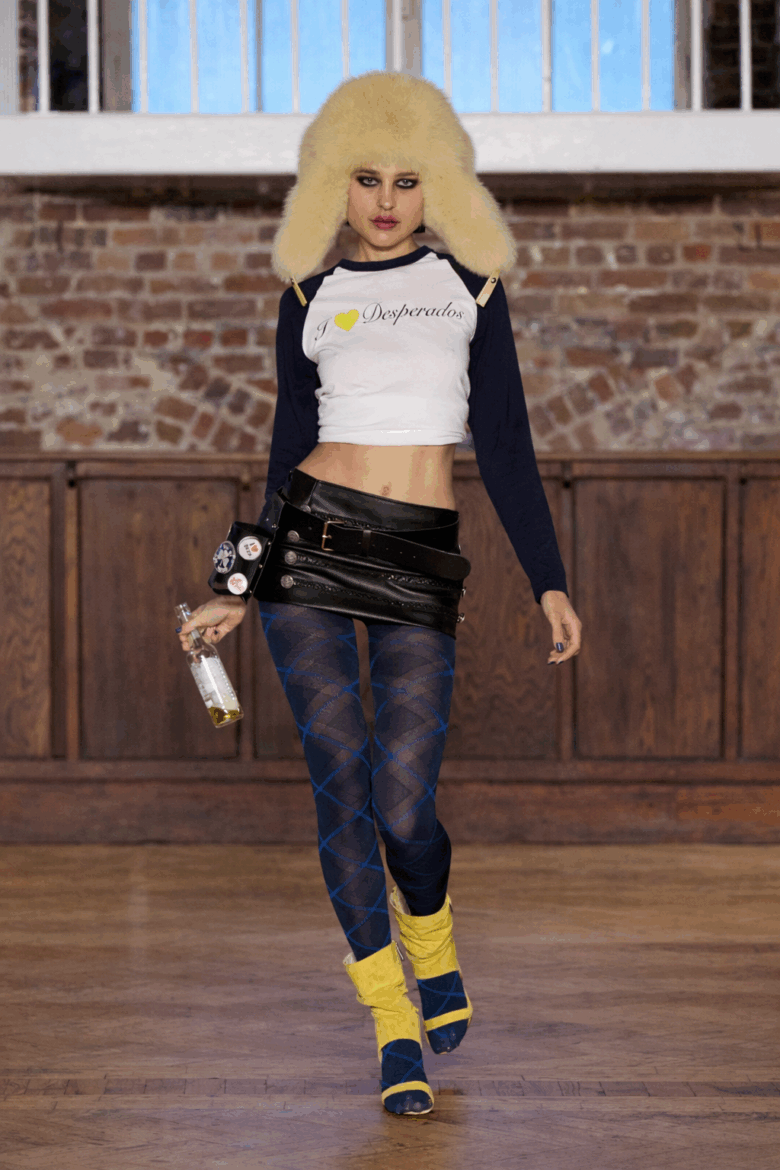
For AW26, Sinead Gorey graduated from the presentation format she adopted last season to a full runway spectacle. Yet, it was no ordinary catwalk. While SS26 saw her models in a Glastonbury-esque setting, this time, the London-based designer took things to the pub. The ‘party girl’ theme is a bit of a throughline for Gorey, you’ll notice. “Nothing beats being wedged round a sticky table with your girls on a Friday, pint in hand, pretending you’re good at pool,” the designer wrote in her show notes. “Maybe it’s the half-Irish thing, maybe it’s just in my DNA.” As a half-Irish person myself, I can confirm that a penchant for the pub is, indeed, genetic. And the show recreated the cherished setting perfectly. VIP guests were seated on pub stools, while two pool tables flanked either side of the room. In the middle, as though lounging on a sticky bar, sat edgy It-girl Bambi, nonchalantly sipping on a Desperado (the show’s sponsor) and puffing on her vape. It was the perfect background for the collection, which covered the full spectrum of night-out attire. Graphic t-shirts (including an ‘I <3 Desperados’ design) that could be worn down the local on one side, Gorey’s signature corseted dresses and faux-furs on the other. Of course, the combination of feminine sophistication and post-modern grit (think: lycra, studs and fishnets) married the collection. As did the colour palette, which drew from the pub environment with stout black, bitter browns, pool-table green and ’Spoons-carpet burgundy, all elevated by metallics. Once again, Gorey can be crowned queen of the party-girl wardrobe, achieving something to be coveted for a quiet pint, or a club and keys kind of night.
Scarlett Coughlan
Claudia Wang
Taiwanese designer Claudia Wang’s vision is all about embracing the intersection of fashion and technology. Her AW26 Digital Fairytale presentation proved how AI can be used to express creativity, not suppress it. The collection featured AI-generated laces and bows with hand-drawn illustrations of unicorns and botanical motifs printed across robes, slips and other silhouettes inspired by intimacy. The backdrop of an AI-generated unicorn and soft pink lighting beautifully complimented the plush pillow clutches and sleepwear-inspired collection, creating a dreamlike reality, merging the online and physical realms.
Lucy Wragg
- WritersScarlett Coughlan, Maria Papakleanthous, Maria Sarabi, Lucy Wragg