Charlie Jeer is in his feelings
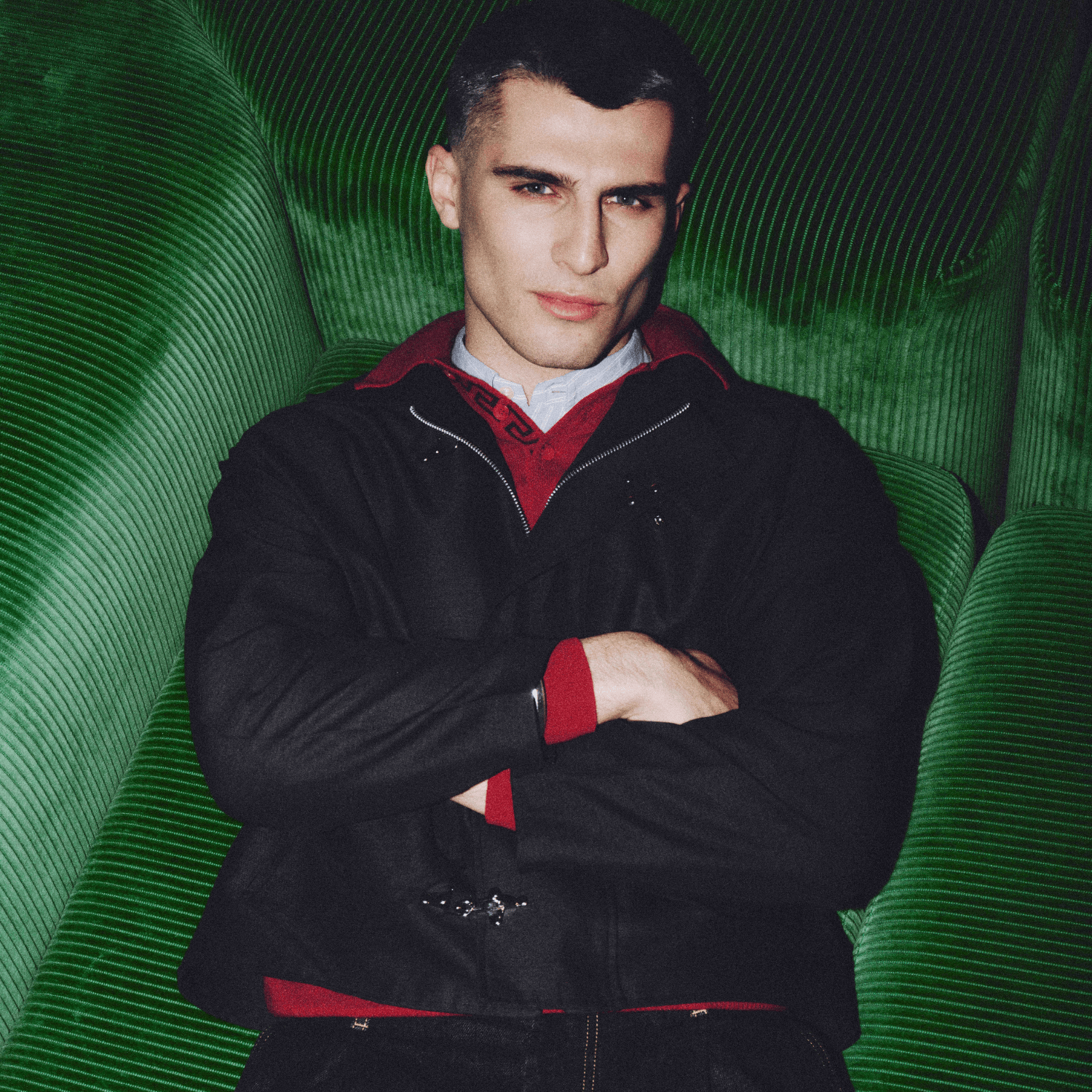
“I’ve just woken up,” Charlie Jeer says unapologetically as he answers my call. “I haven’t even had coffee yet.” He’s not talking about any old cup of Joe — he’s referring to a fresh brew from the newest DeLonghi machine, a birthday gift from his mum, used ritualistically ever since. This is all part of Jeer’s morning rite: coffee, affirmations and gratitude. “The second you’re grateful for what you have, you have so much more.” It would be easy to roll your eyes at a 23-year-old artist talking about abundance before 10am, but when Jeer says, “I try to remember that today is just one part of your life,” it feels like something he’s still learning to master. Something he’s had to repeat to himself over and over.
Maybe that’s because Jeer knows what it feels like to be seen but not understood. Two years ago, a dating show introduced him to millions, amplifying a version of himself that was larger than life and charmingly untamed. One that drew attention, but never quite captured who he really was. Since then, he’s been learning how to hold that image alongside the one who spends hours in a London studio, hunched over a notebook rewriting lyrics, chewing on the end of a pen. “Music is where I can be honest,” he tells me. “There’s something I can say there that I wouldn’t say day-to-day.”
From there, our conversation drifts into sitting with ideas instead of rushing them, including those small acts of preservation, like jotting ideas down at 2am so they don’t disappear, and looking back at something so differently from how you once experienced it that it almost feels like it happened to someone else. That’s the place Everything Is Temporary comes from, signalling the start of a more considered chapter in Jeer’s sound, marked by an EP in which feelings take the lead.

Roisin Teeling: You talk a lot about gratitude. Where does that come from?
Charlie Jeer: I think your mental state is so important. When you put out goodness and gratitude, things come back your way. The second you’re grateful for what you have, you already have so much more. I had a conversation with this really big songwriter and he said to me, ‘There is no destination.’ You’re going to get everything you want — sitting at the Brits, sitting at the Grammys, maybe you’ll have millions, whatever it is. When you get there, you’re still going to feel like there’s more to do. So you have to realise there is no destination. Your destination is today. That’s how I try to start my days.
RT: That idea, that today is the destination, feels connected to Everything Is Temporary. How literal is that title for you?
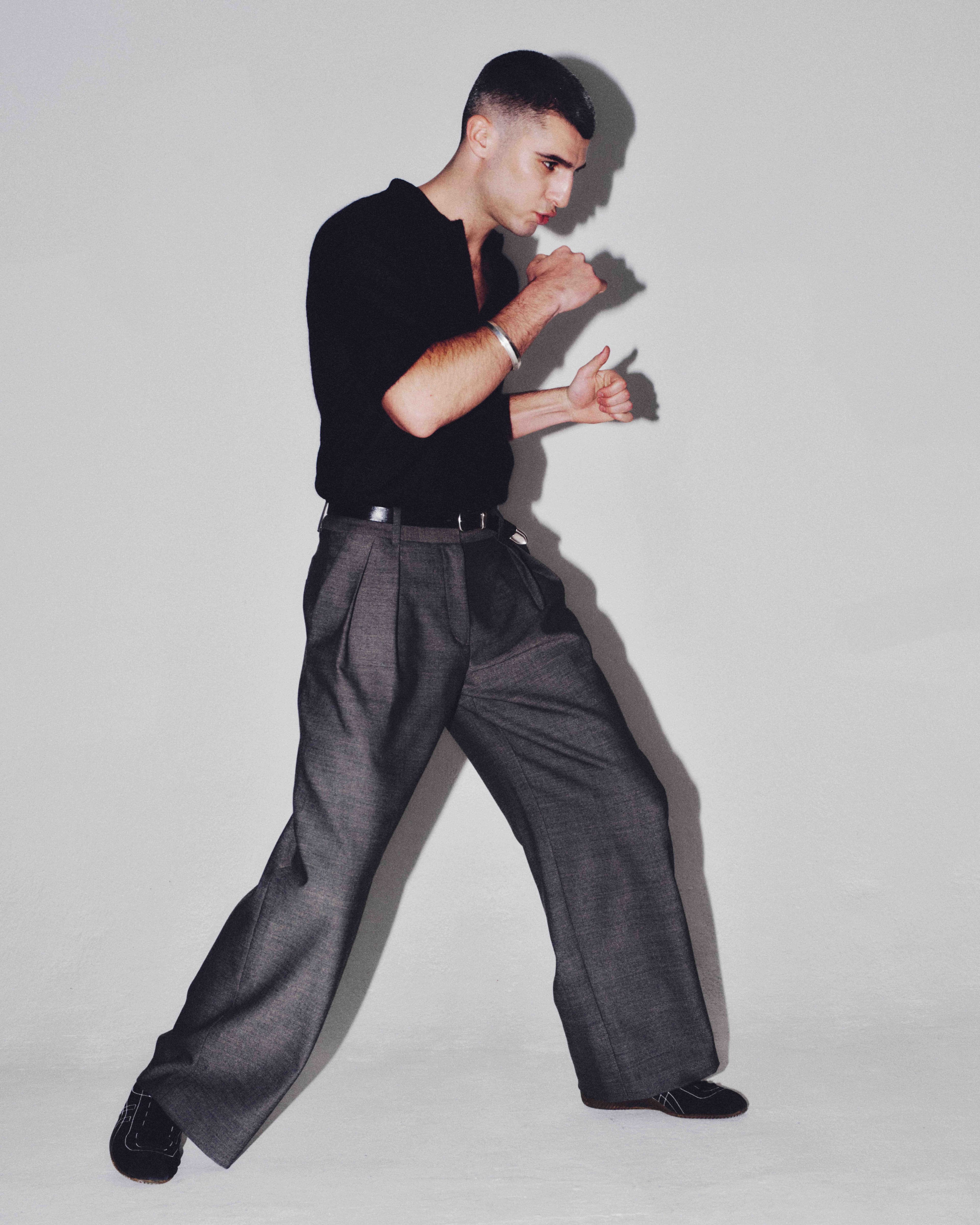
CJ: I remember being in the studio with my producer when I was writing ‘Nobody’. He had a jumper that said ‘Everything is Temporary’ on the back. I looked up and it hit me straight in my heart. I had just released ‘Your Eyes’ and it was going viral. I was writing my second song and I was still unsigned. It felt like an ‘anything could happen’ kind of moment. I was an economics student a year and a half before that and I used to be a doorman. Even then, so much had changed and come and gone in my life. By the time that we finished making the EP, and it came to the name, I was in such a different place. I was thinking, ‘Fuck, what do I call it?’ The title became an acknowledgement of change and how every song on that project is anchored to a specific memory. ‘Her Eyes’ is falling in love. ‘Nobody’ is being in love. ‘Sun Is Gone’ is love ending. ‘I Found Love’ is realising I already had love in my friendships and family. ‘Mona Lisa’ is a new connection. ‘Lucid Dreaming’ is when it’s so over there’s no more closure. It really is a journey and I’ll never forget the past year.
RT: When you listen back now, do any of those songs feel more honest than others?
CJ: ‘Sun Is Gone’ feels more and more honest as I go through life. There’s a lyric, ‘Always got a lot to do, no time to replay.’ I find myself living that. There’s always so much happening that you don’t give yourself time to sit in what you’re feeling. That leads me to make impulsive decisions. And ‘Nobody’ — at the time it felt devotional. But looking back, I can hear the doubt in it. I was so in love, but there was this looming question we tried to ignore of whether it could work. It was a very long distance relationship and we were in different stages of life. I didn’t realise until later that the song isn’t just about loving someone, it’s also about knowing it might not survive.
“The only person you can rely on is you.”
RT: You were also navigating sudden public attention from Too Hot to Handle at that time. Did that affect how you saw yourself?
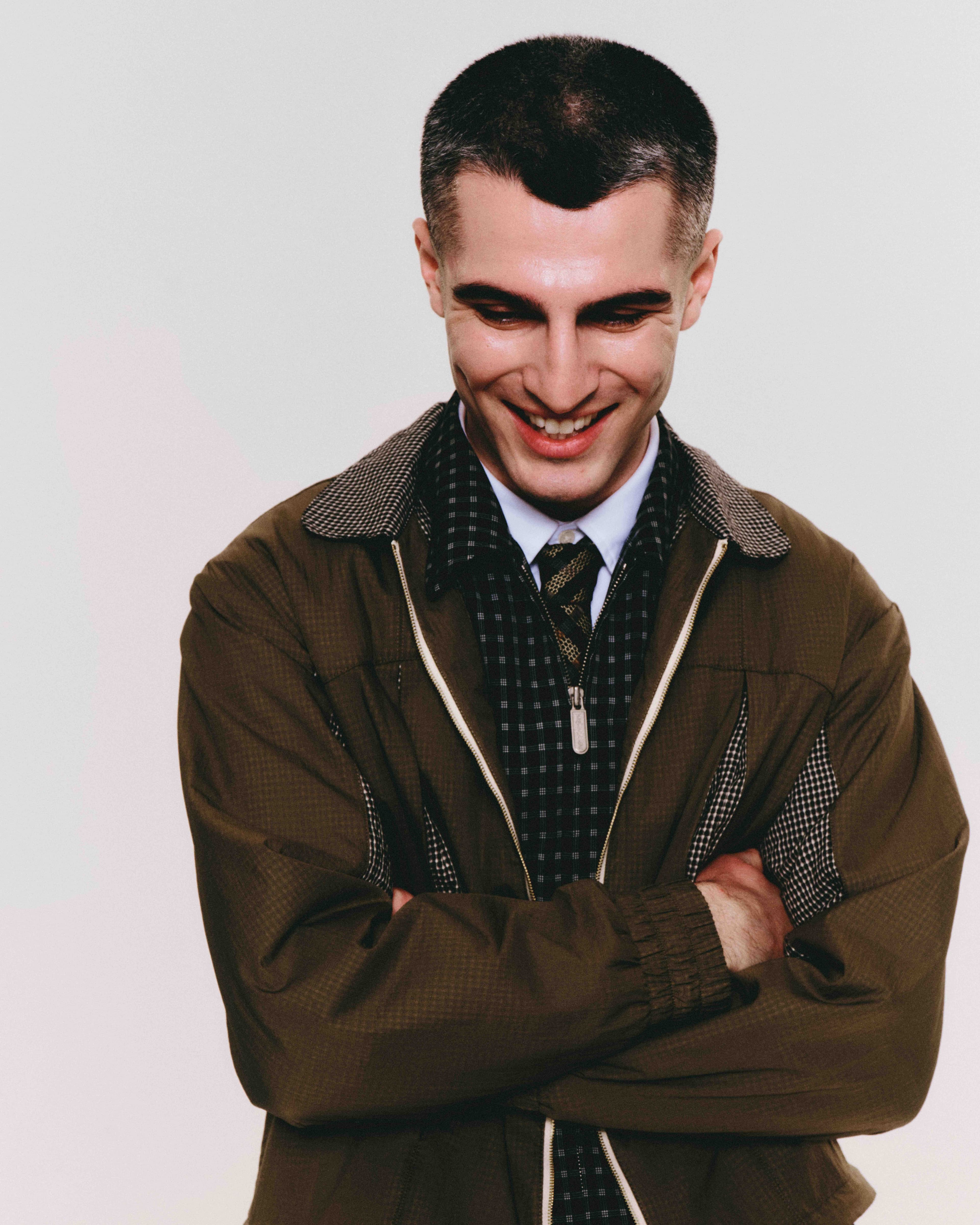
CJ: It was amazing but I was so young and I felt really misunderstood. When you’re seen but not understood, it’s uncomfortable. Especially if you’re liked for how you’re misunderstood. I’m loud. I’m confident. I think people sometimes assume I don’t care, but I care deeply. Music is where I can show that without armour and I can channel something that’s much more true. There’s something I can say in a song that I wouldn’t say in day-to-day conversation. So yeah, there’s a disconnect sometimes between Charlie the person and Charlie the artist. The music is much more vulnerable.
RT: Does that make you a perfectionist with your work?
CJ: Definitely. My new single, I spent a whole day on the first verse. A whole day on the chorus. Then four hours just staring at one line, asking, ‘Is this true?’ Management’s texting, ‘How’s it going?’ And I’m like, ‘Bro, I’m deeping everything.’ I don’t want a line that doesn’t mean something to me. I don’t want to rush music. If it takes two weeks straight in the studio, that’s fine. I want it to feel lived. I just dump everything — words, feelings, random lines. Even if it’s just, ‘‘Violet’ is a sick word’. If I’m in a fragile state of mind, I’ll write exactly how it feels. Then later in the studio, when someone says, ‘What are we writing about today?’, I go back to that. You can’t replicate a real-time emotion by memory, but you can document it. It’s therapeutic, to be honest.
RT: You keep mentioning the truth. Has songwriting changed how you handle relationships?
CJ: There’s a chilling level of accountability that comes with writing. Sometimes I’ll write something and think, ’You’re a dickhead’. Or, ‘That’s really sweet’. It holds a mirror up. I had a situation recently where I was dating someone but told them I wasn’t ready for a relationship. They moved on. I couldn’t blame them because I’d said I wasn’t ready. But writing about it was the first time I admitted to myself that I loved them. I actually wrote in my notes: ‘Next time I love someone, I’ll tell them.’ So, songwriting’s made me more self-aware. I think it’s made me a better person.
RT: Jazz‐house is still a niche lane. Do you feel like you’re building something new?
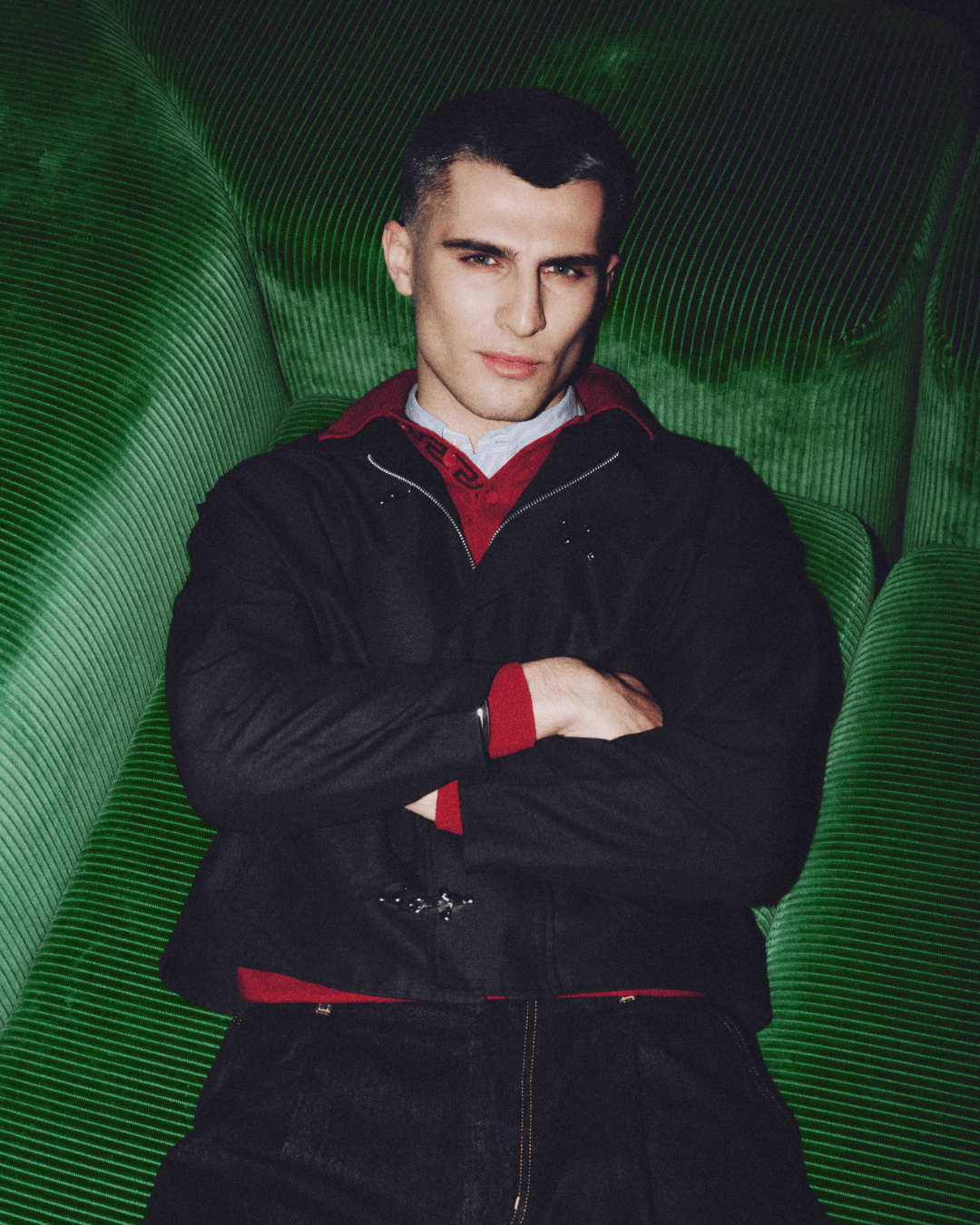
CJ: I’d love to be seen as helping build a genre, but really, I just love music. When I go out with my friends, we’ll go to a proper tech-house, deep-house type of rave. But I also am an instrumentalist, and I love really deep chords. My records have major chords with minor chords hidden in them, and they’re just painful and make you feel something. You can go and you listen to all of this AI music, but it’s running off of blueprints, and it’s running off trends. I think what the music industry, the music scene and what music fans need is individuality and creativity and passion, and those things don’t come by trying to do what other people have done before. Especially with this new song that I’ve written, which is much more vocal forward and has less of a sax line, it still undeniably sounds like a Charlie Jeer song because of the musicality that’s underneath it and the little sax ad libs.
RT: So if everything is really temporary, what are you choosing to hold on to right now?
CJ: I’m choosing to hold on to gratitude. Sometimes I feel really out of touch saying it because I’ve got a lot to be grateful for. There’s stuff that I’m not ready to speak about that has given me an incredible perspective on a lot of things, and through that I’ve learned that you’ve got to be grateful and you got to be happy, and the only person you can rely on is you. Mental health is a massive fucking problem. We’re all fragile, but everyone wants to seem strong. I’m also holding on to my process of making music. I want to be able to spend two weeks straight in the studio rewriting a line for four hours and being nitpicky as fuck over things. I don’t want to rush it. I don’t want to make quick music that you hear which is really shit. My music is dwelled over and the creation of it was an experience which is something I want to carry through, no matter what I’m writing about.
- PhotographerMatt Moorhouse
- StylistMatilda Hardwick
- WriterRoisin Teeling
- GroomerCallie Foulsham using LISA ELDRIDGE Makeup
- Hair StylistThassio Leal using LIVING PROOF and DYSON Beauty
- Photographer's AssistantIgor Hill