Relton Marine are the couple who’ve been making art together for thirty years
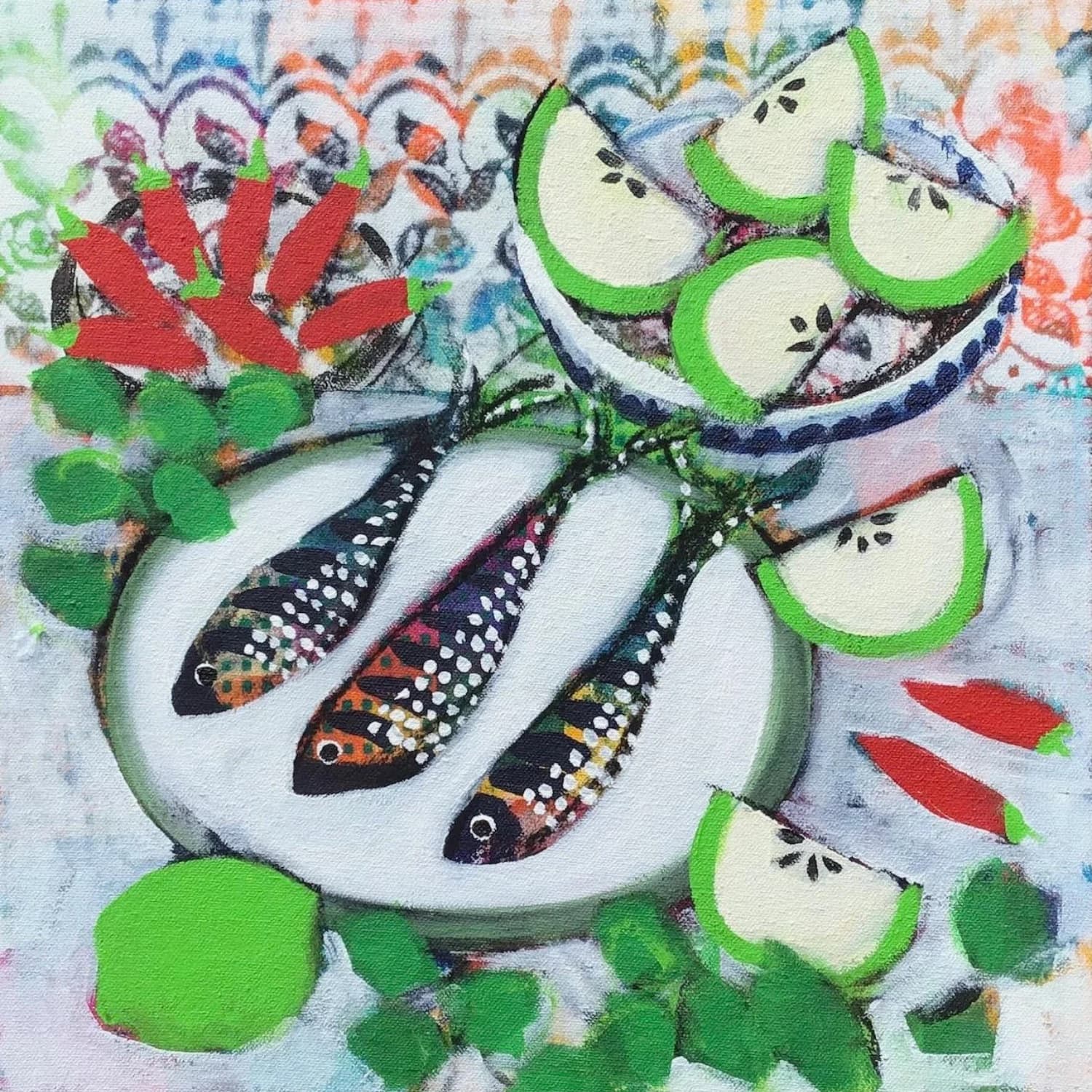
Collaborating as artists and living as a couple is undeniably romantic, but Christine Relton and Tom Marine’s story is one of love for their combined craft as much as one for each other. And it’s a tale that traces a long and unexpected path. Both Relton and Marine headed straight to art college from school, but neither originally pursued a painting career. Relton took up teaching and travelling while Marine found work as a colour proofer for advertisements. It wasn’t until their late thirties that the two met and began a partnership that would culminate in international exhibitions, the ColourBox collective and a garden studio in Yorkshire, where they produce artworks that capture the beauty of the Yorkshire Dales and Indian palaces alike.
Marine’s first steps into collaboration began when a friend asked if he could alter one of the artist’s existing paintings, changing a large section of red for one in blue. “He had a go at it and it worked,” Marine explains. “I thought, Let’s do a painting together. After about two hours we nearly came to blows.” His next, more successful attempt, is something plucked straight from a rom-com. Recently back from Japan, Relton had travelled up to a mutual friend’s town for a birthday party. But with two kids, bringing a rowdy collection of friends back to the host’s house wasn’t feasible. Instead, they went back to Marine’s. Fortunately, Relton had no choice but to join as another of the group had gone to collect a cake — with her keys in his pocket. “We hadn’t even talked to each other,” Marine reminisces. “One of the first things Christine said to me was, Who does the paintings? I explained the story and she said, Can I have a go?” Fortified by a large glass of wine each, the two worked through the night.
The timing was fateful. Marine’s career as a colour proofer was being outsourced to the computer age, and his work with Christine had found a ready audience at a nearby jazz club. “I rang Christine up in London and said, You need to move to Leeds,” Marine recalls. “We’ll see if we can do something with painting. Thirty years later, here we are.”
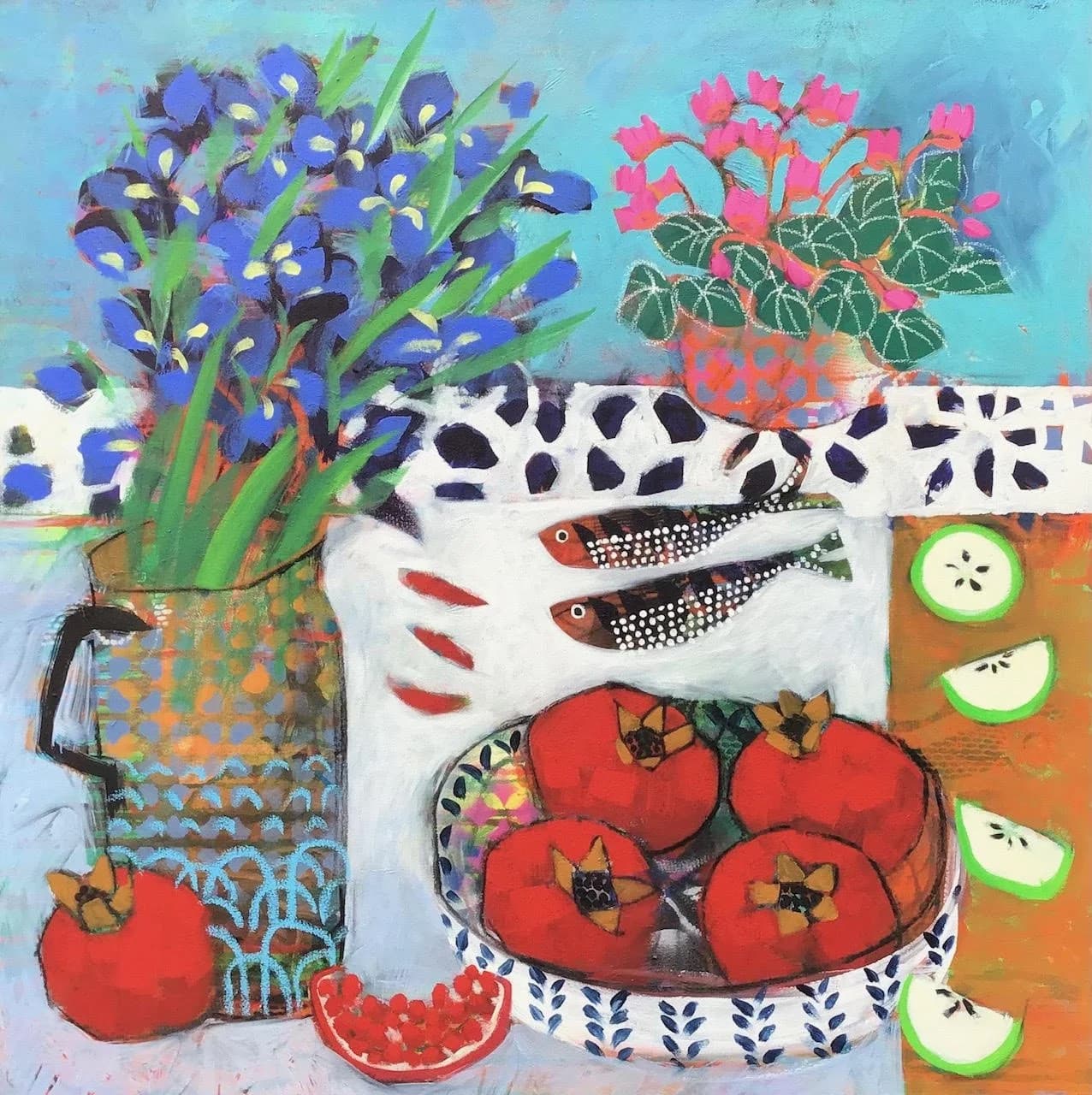
Since then, the pair have been honing their joint process, which sees Marine take on the bulk of underpainting while Relton composes still life and landscape scenes on top. Surprisingly, Relton says collaboration never appealed to her — but now it’s a process she wouldn’t want to be without. “You get surprised by somebody else in a way you can’t possibly do painting on your own,” she says. “Tom’s got very different skills to me. I feel a bit sorry for people who work on their own. It must be challenging in a way.”
Though certainly trying in other ways, Relton and Marine balance each other out with a surefire combination of steady practicality and the enduring creativity of a couple who have been working together for three decades. And their life, it appears, is as balanced a composition as their paintings, with just as much joy.
How much of your collaboration is verbal and how much is an instinctive building on each other’s work?
Christine Relton: Tom likes to talk about it more than me. My favourite thing is when he does an underpainting that’s loose and full of what I call ‘holes’ — space for me to work with. I’m responding to what he’s done. The worst paintings are when I say, “Can I have an underpainting that’s got this or that?” Or, “Can we go with a blue tone?” We have to trust each other. He has to do his thing and then I come and do my thing. It’s very instinctive. The less we talk about it, as far as I’m concerned, the better.
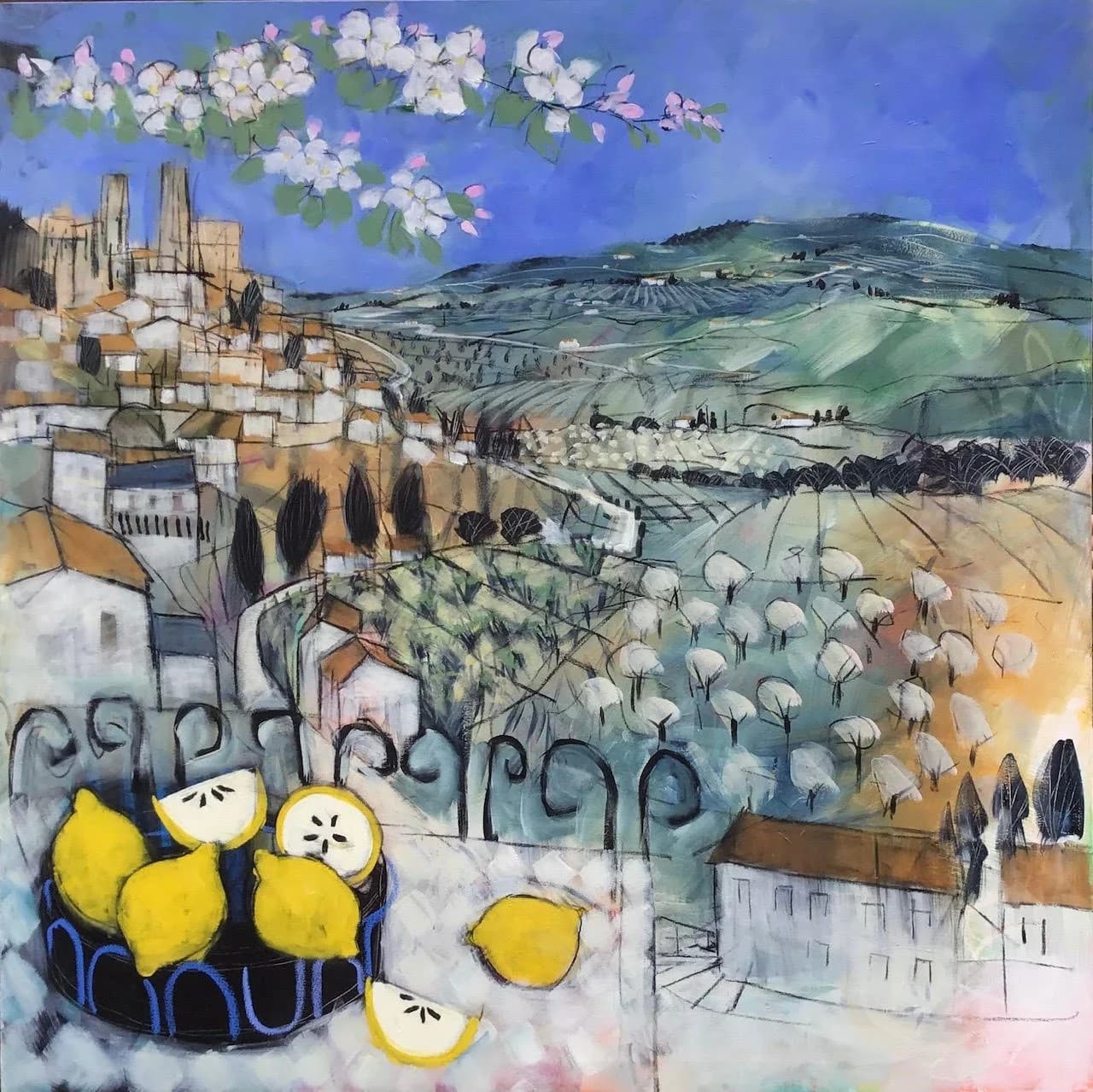
Have you found this process of collaborating blends into your personal life and how you communicate?
CR: What, best not to talk about it? [Laughs.] I’ll tell you what, though: it never stops. One of the things we do when working on a painting is bring it into the house, hang it on the wall to live with it for a bit, then worry about it and take it back out to the studio. It’s a constant conversation where you’re always picking at them. The discussions all come from that.
TM: If they’re not in the studio, they’re all in the house constantly under the microscope, because we got to a point where we realised that people buy a painting and take it home. They don’t take it and stick it under twenty spotlights and charge admission for people to come in and have a look at it. It has to look good in their living room or the bathroom or the kitchen.
You’ve opened up your studio space to other artists and the public. What do you enjoy most about inviting people into your space and, more generally, exhibiting your work?
TM: They can see the process. There’s lots of music, there’s a little area out the back where we have a fire and make our own charcoal, there’s boxes of things like lace we’ve bought from Venice and spray. My latest thing for underpainting is dried food from Chinese supermarkets, all for stencilling. When you do an art fair, a lot of people will look at the painting and say, “What’s that?” And I say, “They’ve mushrooms”, or “it’s rice” or “it’s star anise that I’ve sprayed over.”
CR: If people come into the studio, they get that depth. I think, even with all the different digital options, the idea of us in a wooden studio with brushes and pots of paint, that really speaks to people.
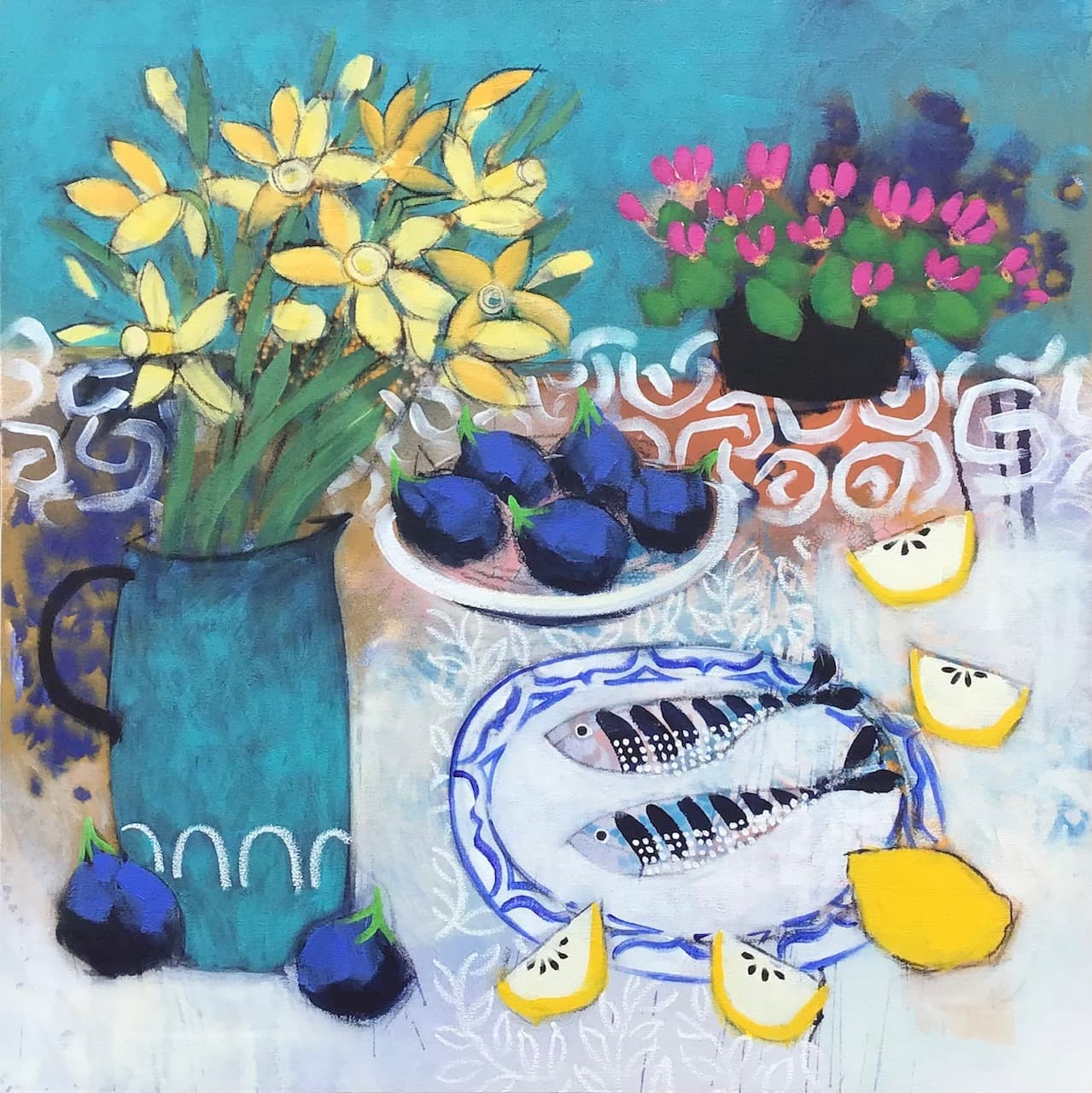
What’s the atmosphere like in the studio when you’re painting?
TM: I like to work at night because the phone’s not ringing, there’s nobody coming round, you’re just on your own. So I’ll put music on, I normally like a glass of red and if I feel [painting], I’ll do it.
CR: If I look out the window, I can see Tom dancing around, waving brushes and listening to his jazz, with the fire roaring behind him. I’m much quieter and calmer. I like listening to music but I like to be by myself, quite focused and quite quiet.
Are there ever any points of contention when collaborating on a painting?
TM: We had an argument after six years about this rule where I would do underpainting and then I would put a little bit of masking tape on the painting, which meant, ‘Don’t paint over this bit because it’s really good’. I’d gone out somewhere one day and it had gone. I looked at Christine and she said, “I know you spent all night doing this pattern along the bottom, but it’s turned into a landscape and I put a wall here and that needs to be a path. It had to go.” It’s not about what you did or what I do, it’s about the painting.
CR: For me, composition is the fascinating thing. You can’t keep little holes. Little notes saying, “Leave this bit”. It’s not going to work. You’ve just got to wait for him to leave.
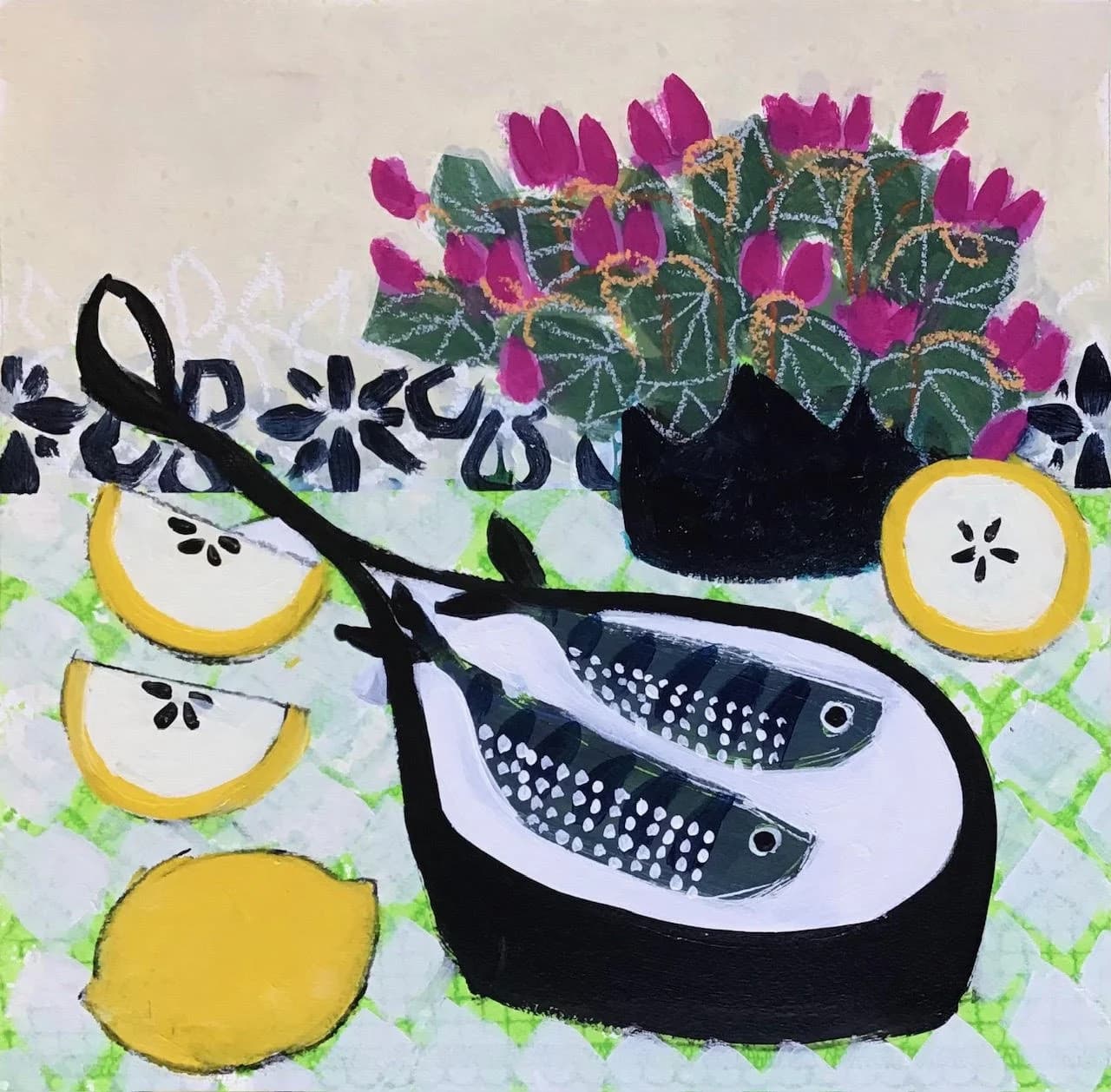
There’s a lot of common themes in your work: sea views, scenes from your travels and local landscapes, as well as still life (with fish often featuring). Why do these subjects particularly appeal to you?
CR: I paint my life and paint our life, and we travel a lot. I collect a lot of ceramics and textiles. A lot of the paintings are just fed by views or images of places that we’ve been or are staying. We always take sketchbooks and paints with us. The still-life imagery are just the ones I find the most fun. I love the fish — I find them amusing — and all the fruit you can scatter through a composition. It comes back to the rigor of composition: they don’t feel like significant imagery in terms of meaning, it’s more shape and colour and how it fits together.
The theme you forefront most clearly is joyfulness. What does that mean when you’re standing in front of the canvas?
CR: It’s a space to make something beautiful and joyous, full of energy and love. Hopefully it gives the people who take these paintings home that same feeling. That’s what painting’s for, to me: hopefully conveying to other people the fun we had making them. I think there’s a place for artist therapy and deep, meaningful political statements — the art world is as big and varied as you want to make it — but, for us personally, it’s about instant impact. No explanation needed. It’s colour, it’s joy, it’s fun. And that’s what we’re after.
Relton Marine will be presenting a brand-new installation at Affordable Art Fair Battersea Spring (4-8 March).
- WriterDaisy Finch