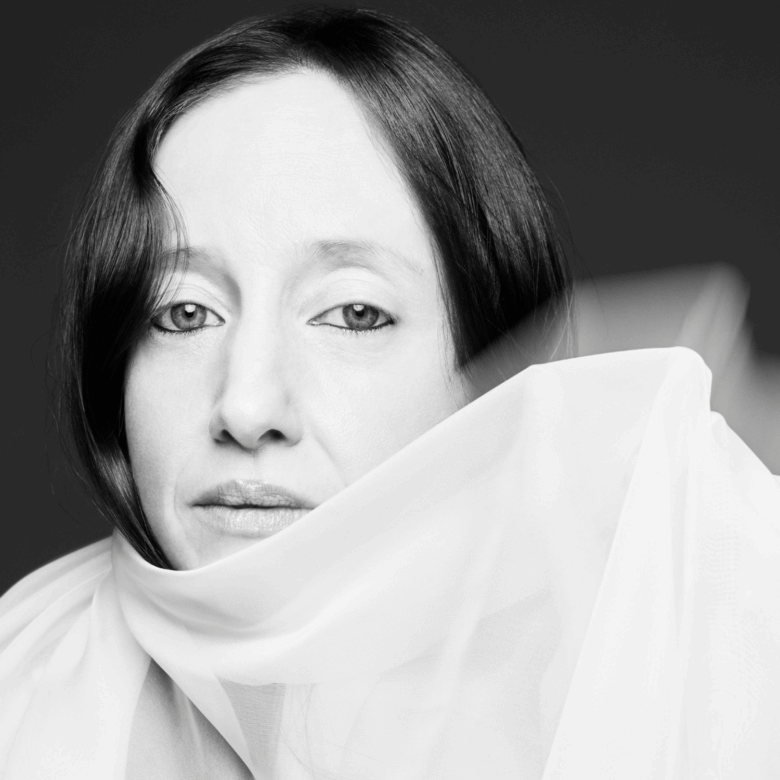
Rosalie Craig is causing a riot
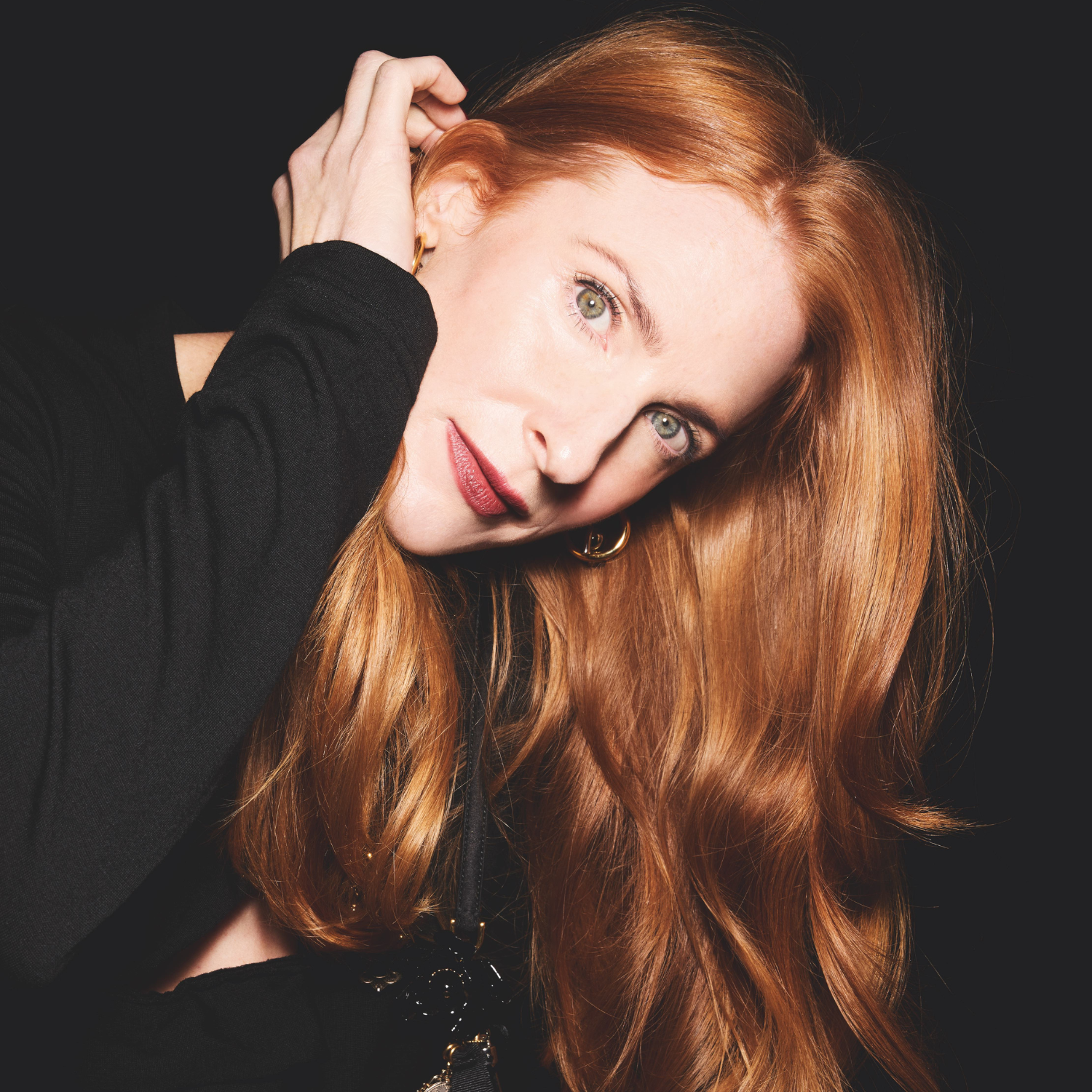
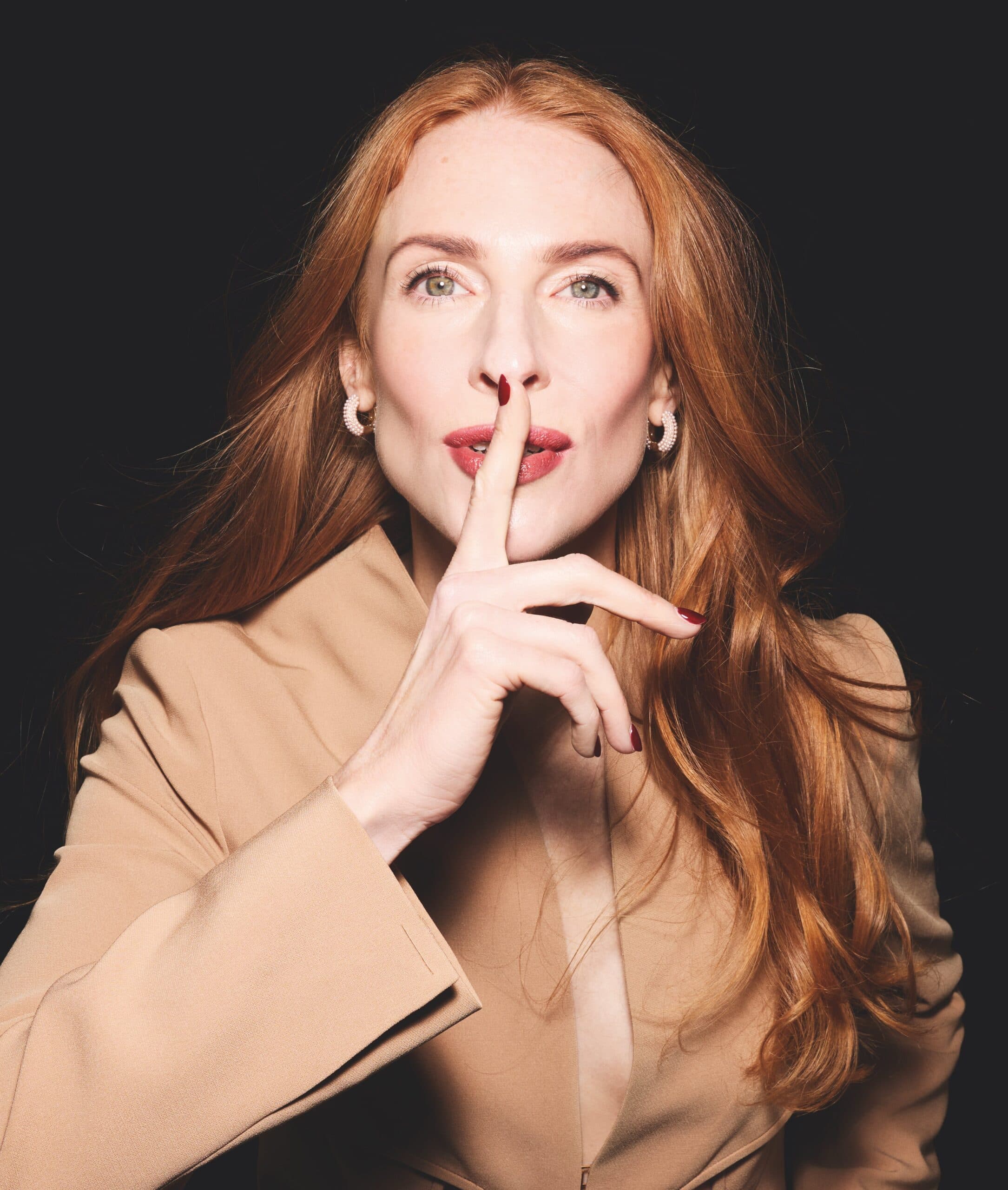
It’s a grey, rain-streaked afternoon in London when Rosalie Craig joins our call, her bright smile and signature red lipstick counteracting the gloom outside. For the British actor, celebrated for her work in musical theatre, her craft has always been an act of courage, a constant dance between fear and discovery. It’s a mindset that has carried Craig through some of the West End’s most daring roles. Having recently taken on the role of June Levant in Good Night, Oscar at the Barbican Theatre, the actor is, perhaps, best known for playing the titular role of Althea in The Light Princess, a performance that demanded rigorous physical training for scenes that saw her lifted and flying across the stage. “I always get asked to play quite strong women or [am set] challenges — like floating on stage for three hours and singing upside down,” she grins.
We delve into the characters Craig has played: women who are complex, many
even tragic. The murdered Lady Macduff in National Theatre Live’s Macbeth. The slighted Polly Peachum in The Threepenny Opera. The ill-fated Liz in Drew Pautz’s short film, Miss (which earned Craig the 2019 award for Best Actress at the British Independent Film Festival). When I ask the actor what makes her say, “I need to play this character”, she pauses for a moment, excavating a satisfying answer. “That’s a really good question,” she finally says, smiling. “Well, I guess it’s usually a part that I’m afraid of. [They’re] usually the things you should be doing because they challenge you.”
“I really recommend smashing up cars and screaming at the top of your lungs. It’s good for the soul.”
While the stage has long been her home, Craig is now bringing the same emotional depth and daring to her performances on screen. In her latest project, Riot Women, Craig channels her fearlessness into Kitty Eckersley, a character shaped by trauma but defined by resilience. The Eckersley is a sharp-tongued, shoplifting freeloader who joins four menopausal women in a punk rock band taking part in a local talent contest. Working alongside the show’s writer, Sally Wainwright, Craig recalls how she immersed herself in the story’s messy beauty: female rage, survival and liberation. At forty-four, she stands at a thrilling point in her career, taking on roles that not only challenge her proficiency in her craft but, equally, her sense of self. “Kitty is an entity of her own,” Craig tells me. “She brings her own climate with her. She never edits herself or changes for anyone, and I think that’s so hard to do in life. She’s the complete opposite of me.” But, for Craig, that’s the whole point of her vocation. “That’s kind of why I became an actor,” she says. “To transform or shapeshift or whatever you want to call it.”
Flore Boitel: When you first read a script, what’s the moment that sets your mind on playing a character?
Rosalie Craig: It’s kind of obvious when you get a good script. It’s like a brilliant book or a movie — you can’t put the book down. But certainly in the case of Riot Women, it just had Sally Wainwright on the front and I thought, Well, that’s all you need to know, really.
FB: How would you describe Kitty in your own words?
RC: I think Kitty is a victim, but she doesn’t behave like one. She’s been through quite a lot in her life and, as a victim of abuse, she’s not shy in coming forward. She hasn’t let that make her invisible or fade. She never edits herself or changes herself for anyone. She’s always just Kitty, and I think that’s so hard to do in life — I definitely can’t do that. I’m a horrible people pleaser, so I find her endlessly fascinating.
FB: How different is Kitty from the other roles you’ve played?
“She never edits herself or changes for anyone, and I think that’s so hard to do in life.”
RC: She’s wildly different from any role I’ve ever played before. I don’t think Sally writes characters that can be repeated. And it’s rare now to be asked to go against type as an actor, which is such a shame, because I think the industry’s become a little too afraid to take risks. It’s certainly in a place where, if you’re literally like a character, the industry responds better than if they’ve got to go on a transformative journey with you. But that’s kind of why I became an actor — to transform or shapeshift or whatever you want to call it.
FB: Tell me more about working with Sally Wainwright on Riot Women.
RC: You sort of have to check yourself to make sure it’s real. But she’s got a really strong work ethic and so do I. I like to feel like I’ve done a day’s work, and I definitely felt like that with Sally. She’s a phenomenal writer. She’s a brilliant director — partly because, if you’re working on set with her on something that she’s created, there’s nobody else who’s going to know it better than her. I found it a real support that she was there on set every day, because if I was going down the wrong track she’d steer me straight back.
FB: What did you find most challenging or liberating about inhabiting her world?
RC: I mean, I think I found it all challenging. I had to bring, like, one hundred and fifty percent every time I walked onto set, which I loved, but it was very tiring. Partly what was liberating was being around all these amazing women every day, and the conversations we’d have. And feeling inspired watching them work. And being very humbled by how incredible they all are. But I also found being in a punk rock band really liberating and, like, getting to be really angry and having this enormous female rage — and it being allowed. Because normally it’s quite an ugly quality for a woman to have. So that was great. I really recommend smashing up cars and screaming at the top of your lungs. It’s good for the soul.
FB: How did it feel to be part of a project that puts women at midlife at its centre?
RC: It was a great way to say, We’re not boring. We’re not beige. Our lives aren’t over. We’ve still got a lot to give and a lot to experience and find out about ourselves. I think that really was one of the biggest takeaways: that you can do anything at any point in your life and it’s up to you how much you’re going to challenge yourself to keep growing as a person, rather than thinking midlife, the end.
FB: You’ve mentioned before that Kitty is “covered in scars but doesn’t count herself a victim”. What do you think we can learn from her resilience?
RC: I guess, that you can keep going. There is hope, there’s another chance. For anyone in any walk of life, if something terrible happens to them, that it’s not the end of them. That through a friendship or somebody seeing you in a better light than you maybe see yourself, there’s a way to navigate the world. Maybe we’re more resilient than we think and she’s definitely not a victim. We find that we are survivors and we do want to choose life.
FB: There’s also a real musical energy to Riot Women. What was it like performing that side of the role as someone with a history of musical theatre?
RC: There’s something really unique about playing a character that’s not in a musical but they sing. It was really liberating for me because it just meant that was another part of her DNA. The fact that she would express herself through music, but it wasn’t in order to move the narrative along or tell a story through a song, [meant] I had to find a reason for Kitty to sing. I had to find a really unique voice for her and not one that I’d use in a normal musical. It was so great to have that challenge. So, for me, as a performer and a musician, I just relished it.
- PhotographerRankin
- StylistMizuki Sakakibara
- WriterFlore Boitel
- Make-Up Artist Justine Jenkins using HOURGLASS Cosmetics
- Hair StylistAinsley Walton at Leftside Creative using BABYLISS PRO and DYSON
- Fashion AssistantEmily Houghton, Reika Yagi, Yuki Yoshioka
- Hair AssistantAllie Harknett