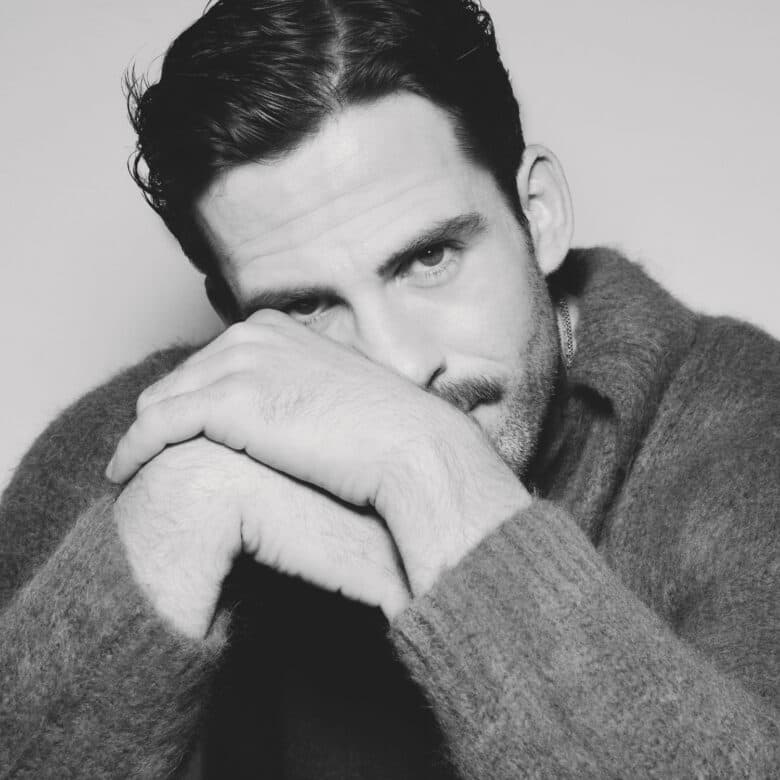
Lamar Johnson is moving with intent
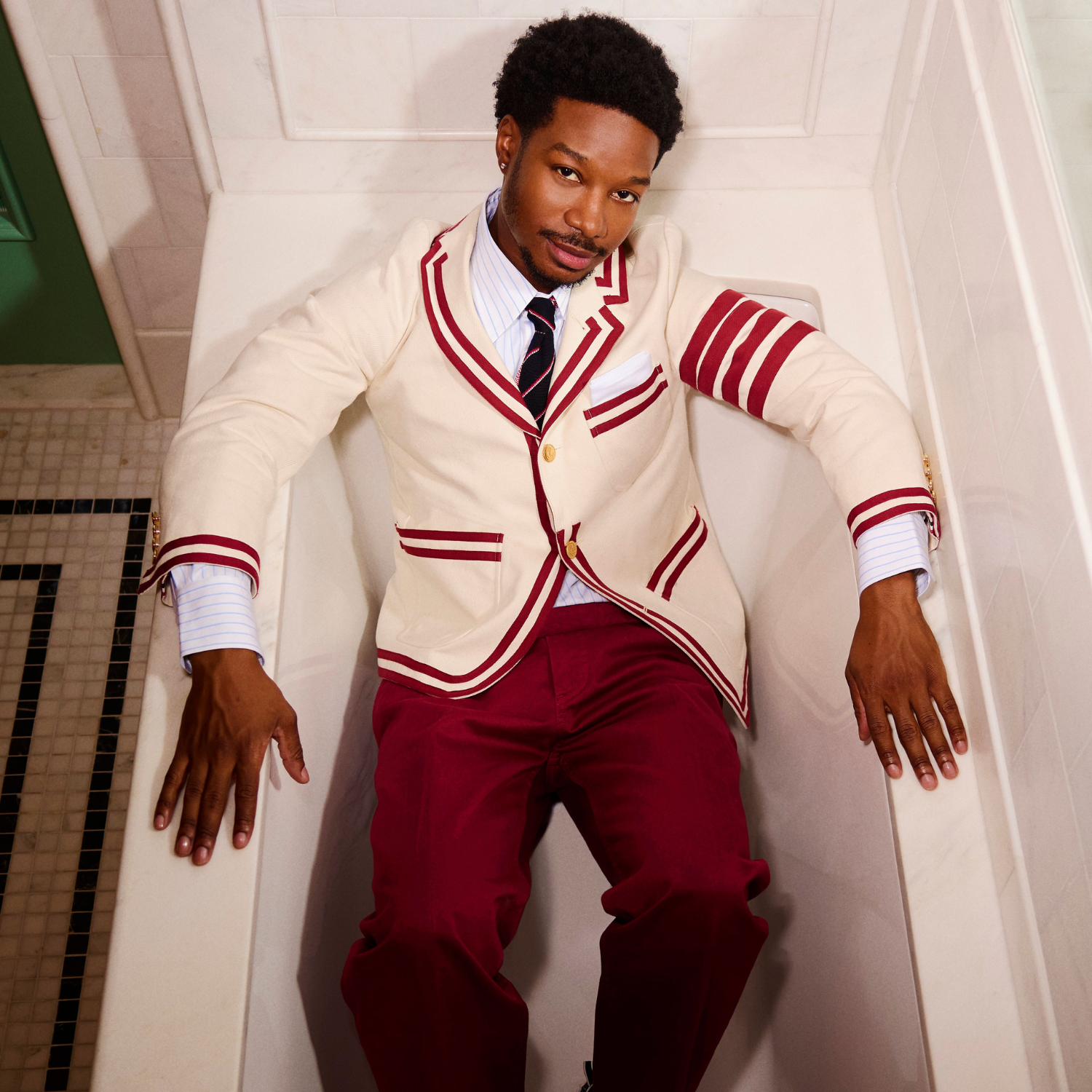
Lamar Johnson is a man who doesn’t back down from a new venture. When we meet over Zoom, he’s instantly warm, asking about my accent, where I’m calling from. His curiosity is genuine. On the screen, he’s dressed simply in a plain white T-shirt and a beanie, his smile reaching his eyes. His laidback appearance matches the cool ease with which the actor speaks, a quiet steadiness that feels miles away from the intensity of his professional roles, spanning a heart-wrenching portrayal of Henry Burrell in The Last of Us to his latest role as Albert Mason in The Abandons, a gritty Western drama. “I enjoy a challenge,” he says, simply. “Because on the other side of that, you grow as a performer.”
As we chat, I realise that sentiment forms something of a throughline in Johnson’s life. The thirty-one-year-old Toronto-born actor and dancer has spent years pushing the boundaries of comfort, guided by curiosity. “I started off as a dancer at a very young age,” he shares. That early rhythm led him to one of his first on-screen moments in the dance film, Honey (2003), before moving to centre stage as West in Canadian series The Next Step. When I ask him to share a memory that made him think, I want to be an actor, Johnson reflects on his childhood. “I watched a commercial of this little Black boy, and I saw him being the lead of this commercial,” he tells me. “He was front and centre. And I was like, Whoa, that’s really cool, I would love for that to be me. I didn’t realise that scene would have planted something in me that would lead me to acting.”
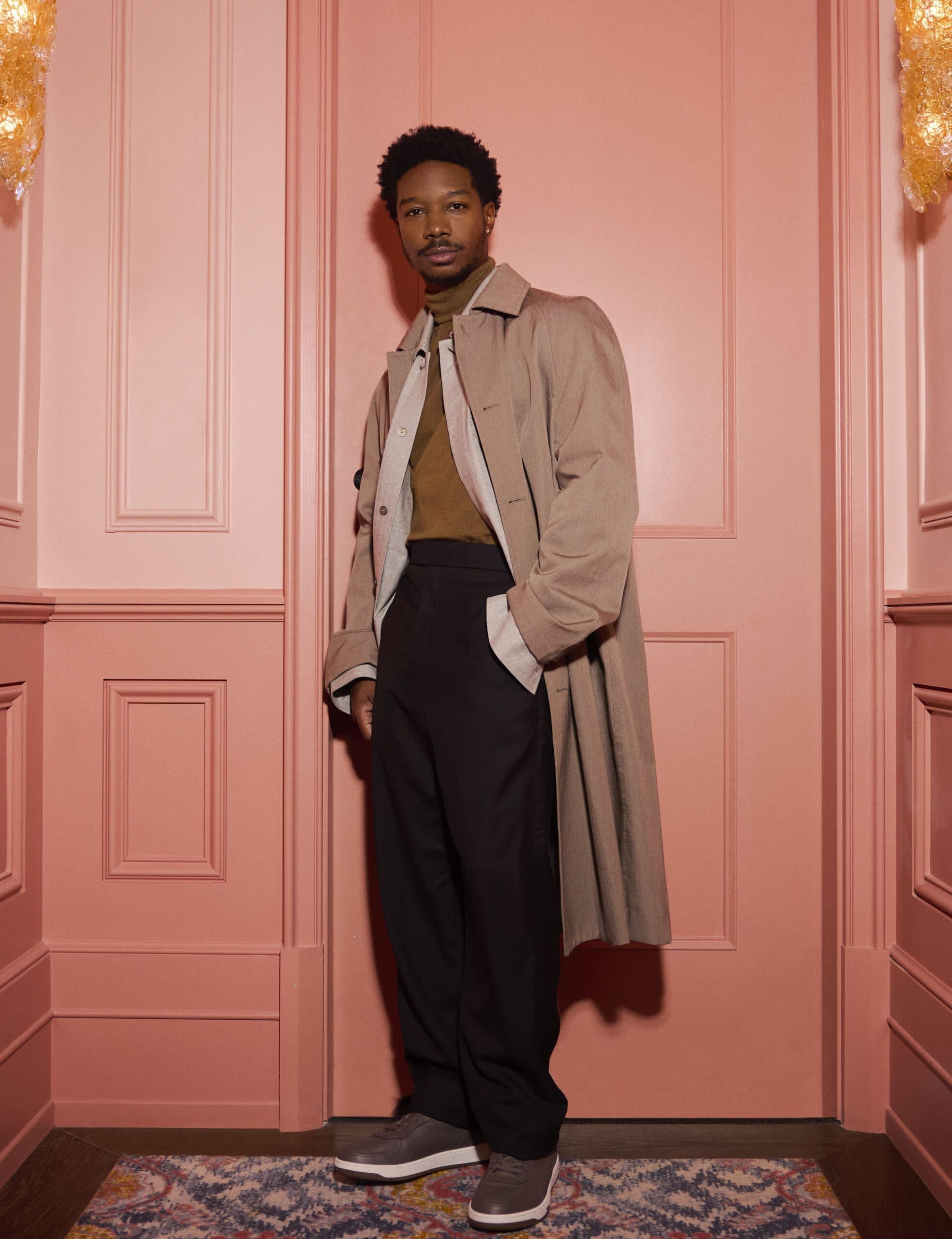
That early memory clearly stayed with Johnson through his teenage years, leading him to a high school theatre programme where he discovered his own passion for acting. “I first fell in love with the stage, you know, I fell in love with theatre. And I loved it so much,” Johnson tells me. His breakthrough came in Deniz Gamze Erguven’s Kings, where he plays Jesse Cooper, one of eight foster kids caught in the chaos of Los Angeles after the Rodney King trial. “Doing that project, being in the same world as Halle Berry and Daniel Craig, was amazing,” he says. “And it just let me know that all of my hard work, all my persistence, everything that I worked towards, was now amounting to something.” He continues: “And not only being a film with these people, but being number three on the call sheet, that was also an amazing thing for me.”
Building on the momentum of his early career, Johnson embraced a role that demanded something entirely different in The Last of Us. His character, Henry Burrell, communicates with his on-screen brother, Sam (Keivonn Woodard), in American Sign Language. “Originally, when I auditioned for it, it didn’t say anything about having to know sign,” he recalls. “So when I got the job, they sent me the script and at the top of my lines, in brackets, it said, ‘In ASL’. And I was like, Wait, what?” Thrown into what he describes as a “crash course”, Johnson worked closely with an ASL director, immersing himself in the language to communicate authentically with Woodard, who, like his character, is deaf. “I think it showed him that I wanted to learn,” Johnson says, describing his efforts to forge that close bond with his castmate beyond the screen. “There was a real determination to get it, so we can talk, we can hang out, we can play games together.” Johnson’s performance marked a turning point in his career, earning him his first Emmy nomination. “I wasn’t sure if the nomination would happen,” he admits, laughing softly. “But when they announced it, I was with my mom. It was a beautiful moment to share with her.”
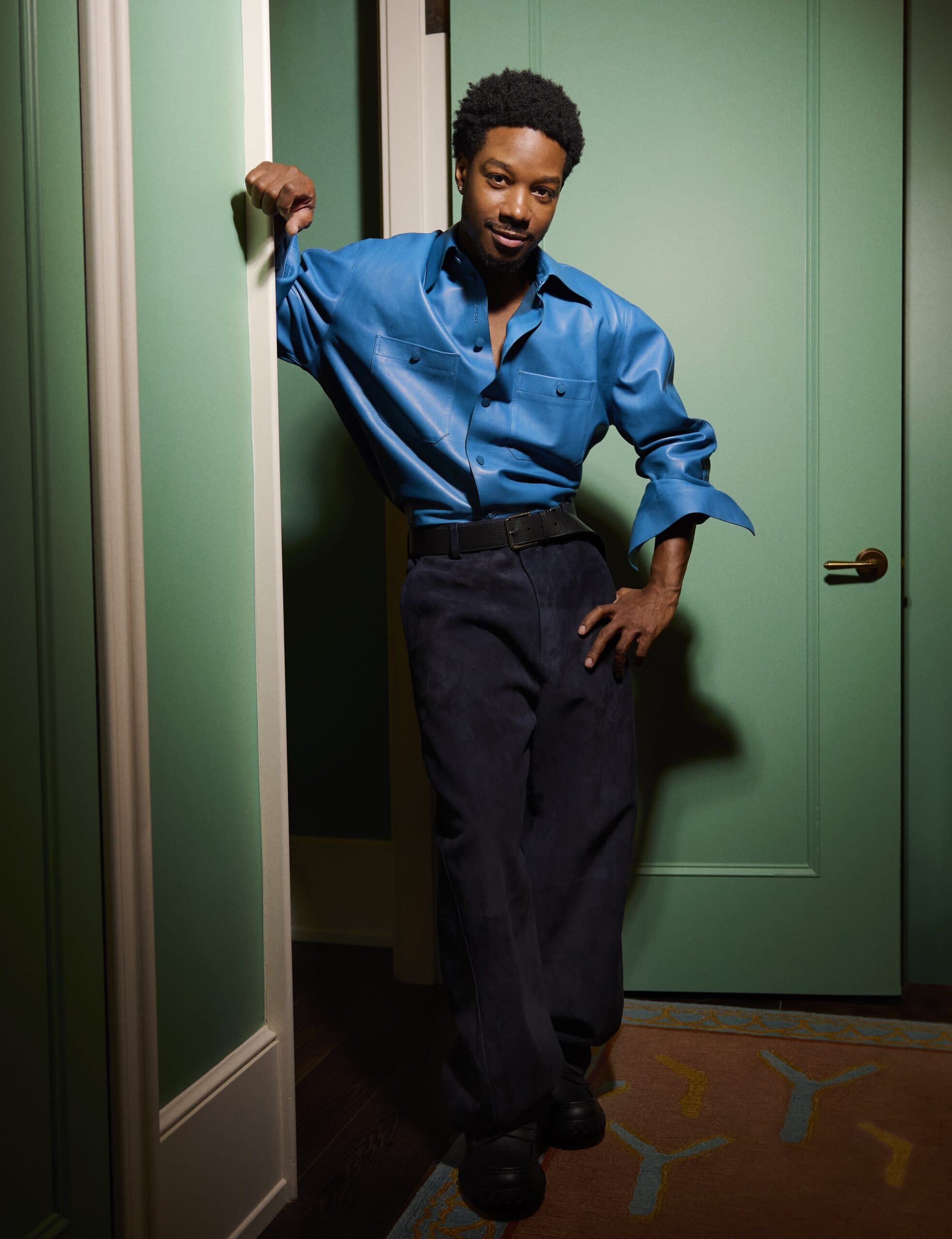
That sense of growth followed him straight into his next role. In Spencer King’s The Wilderness, Johnson took that philosophy into a more literal uncharted terrain: the sun- scorched deserts of Utah. The film follows a group of teens sent to a wilderness therapy programme, where isolation and exposure are believed to cleanse and rebuild. As I listen to Johnson speak about his character, Miles, a boy with dreams of escaping to Thailand, it’s clear the project was an awakening for the actor. “I had no idea these programmes existed,” he says. “Reading the script, I was like, Oh, this is a really cool concept — this idea that these kids get kidnapped in the middle of the night, blindfolded, and then they wake up in the middle of the desert.” After speaking with director Spencer King, Johnson felt the story deepen, its weight hitting him in a way he hadn’t expected. “Spencer communicated to me that he himself actually went to this programme,” he shares. “And then it just opened up for me. When you get to the statistics, there’s over a hundred thousand kids every single year that get admitted into one of these programmes. It’s pretty wild.”
“If it moves me, if it has something to say, if it challenges me, I’ll do it.”
The story’s reality began to take hold as Johnson and the rest of the cast spent weeks immersing themselves in the landscape. “We lived in the desert of Utah for about a month,” Johnson tells me. “It was amazing. We spent some nights under the stars, and saw the Milky Way. It was really, really beautiful out there, even though the film itself can be quite heavy.” So too was embodying his character. Johnson dug deep into Miles’ psychology, searching for humanity beyond the “troubled teen” label. It required both empathy and sensitivity. “I was really just trying to get into the headset of who this person is outside of whatever makes him troubled,” he explains, his voice thoughtful as he reflects on Miles’ nuances. “I think he’s just misunderstood, and there’s a lot of misunderstood kids that I think just need the right people there to listen.”
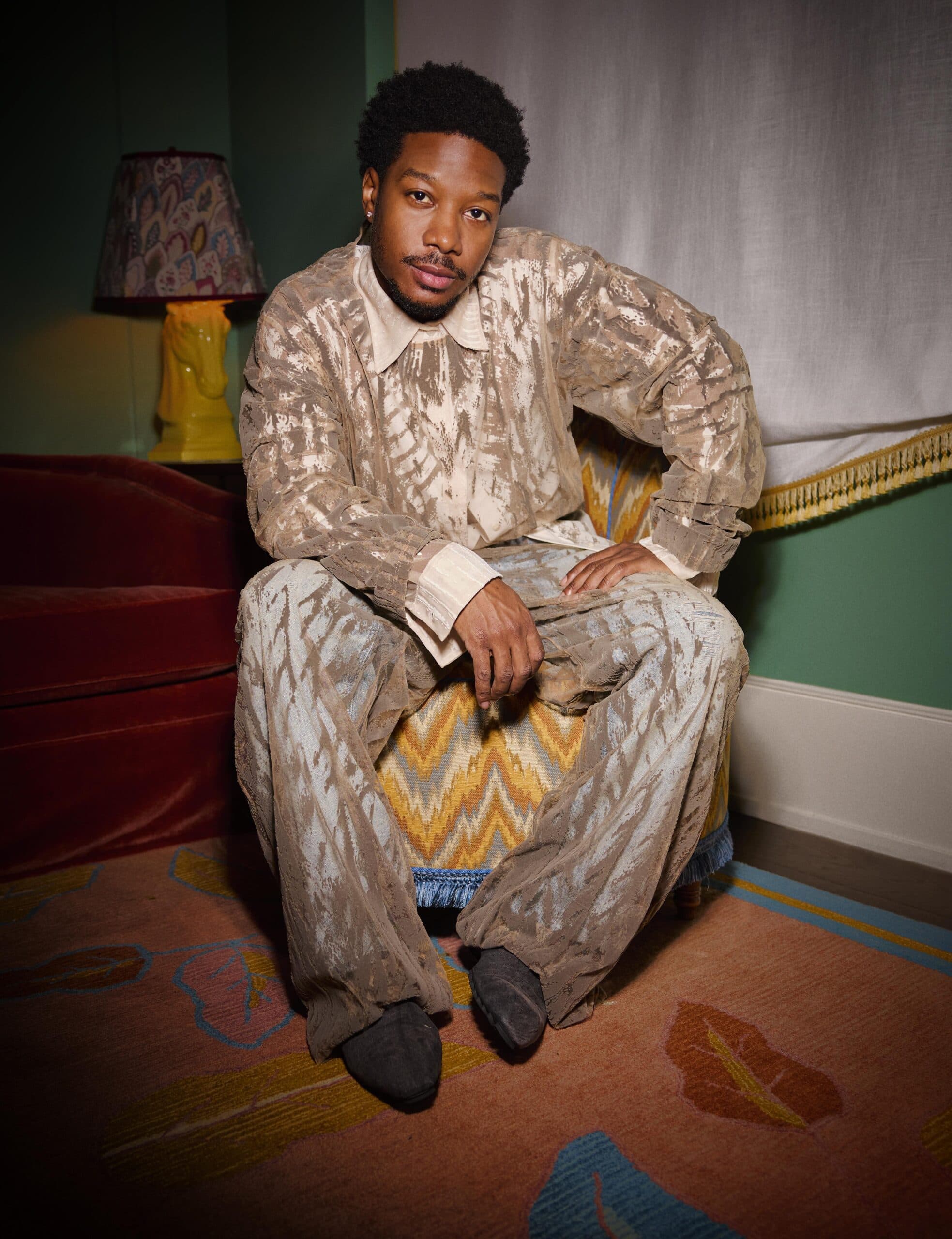
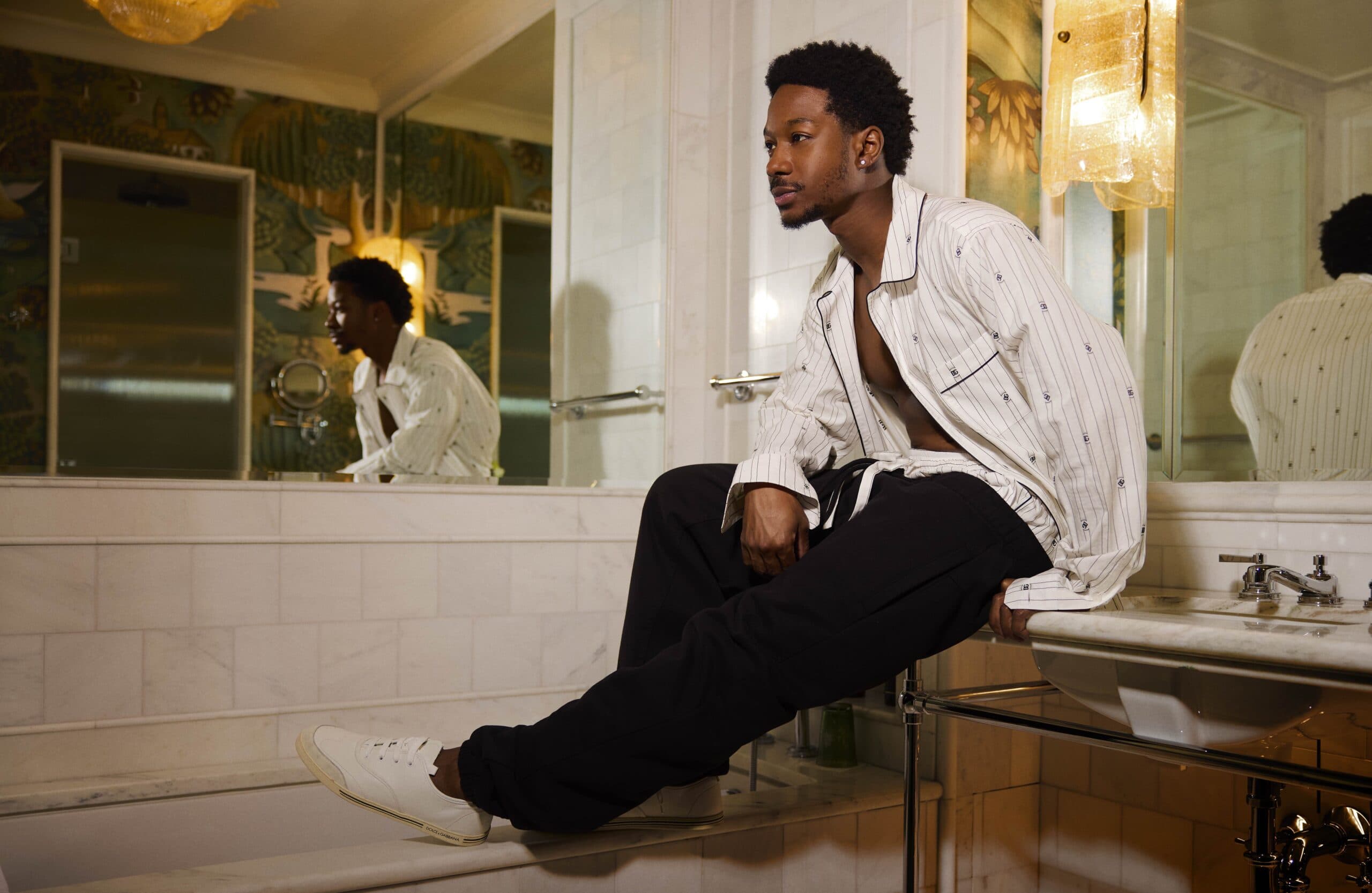
Each role has pushed Johnson into new worlds. His latest takes him to 1850s Washington Territory for The Abandons, the upcoming Netflix series created by Kurt Sutter. Here, he plays Albert Mason, one of several orphans adopted into a found family led by Fiona Nolan (Lena Headey), the family’s matriarch. “She can’t have kids of her own,” Johnson explains, “so she kind of agrees to take on this motherly role of orphans on her way to the Oregon Trail.” “Mason”, he adds, “is educated. His father was a professor. [But] we sort of exist on the fringe.” Protective but unshaken, he is the “cool-headed backbone” of the family, a side that’s revealed right from the offset of the series.
Filming, Johnson tells me, took place in Calgary, Alberta, for seven months, on native reserve land framed by the Rocky Mountains. I ask him what it was like to work out there and Johnson instantly paints the scene for me. “They built a whole town — the set design and decorators were incredible,” he says with genuine admiration. “You could walk into the stores, everything was laid out. I was amazed every single day.” Something else the actor found unbelievable were the new skills he adopted for the role. Before filming began, Johnson spent three weeks in “cowboy camp” learning to ride a horse. “I never would have thought that I would be on a horse, let alone be proficient at it,” he laughs. “My horse’s name was Ace. I really built a beautiful bond with him. Now I can say I can ride, gallop and stop on a mark.”
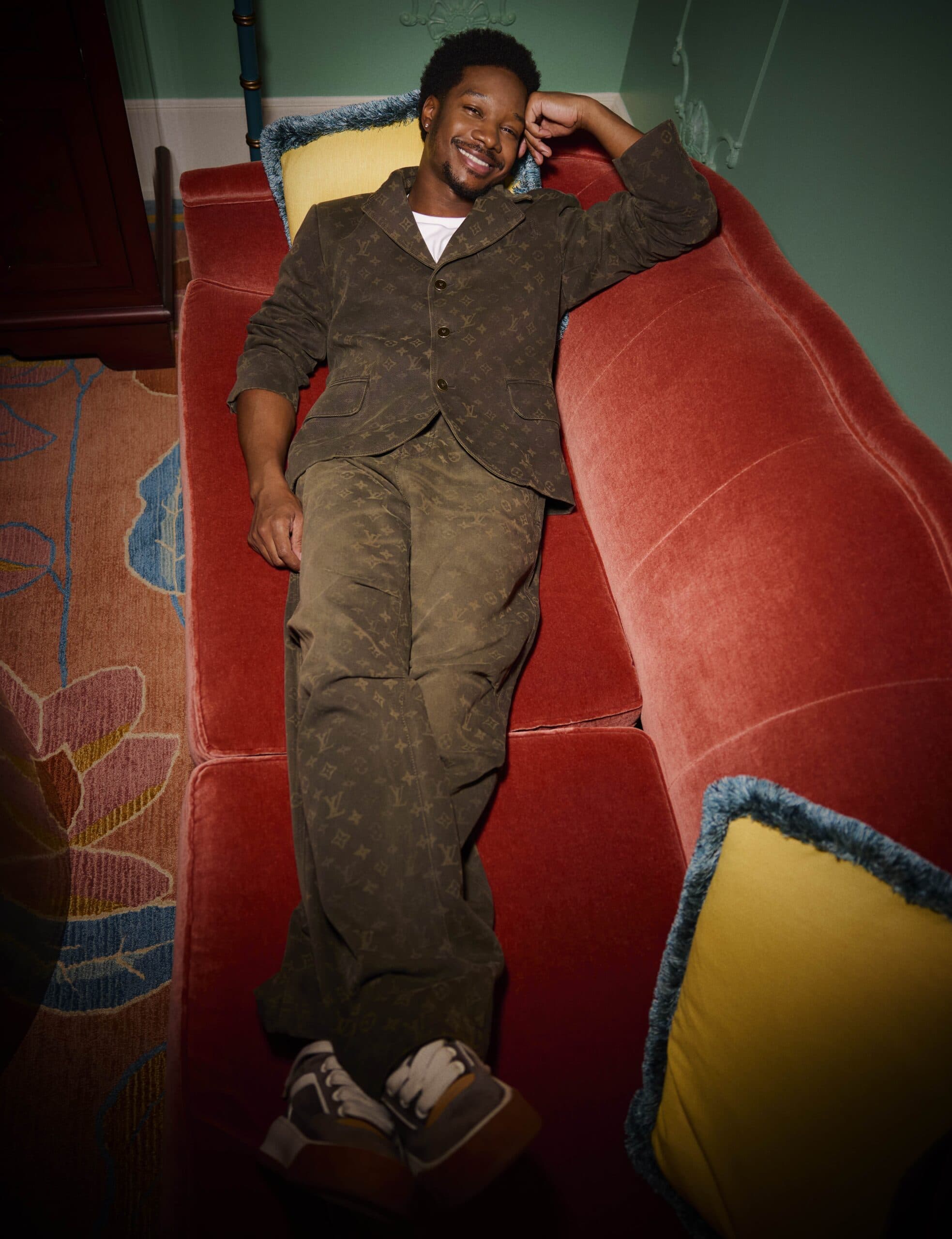
As with all his roles, Johnson approached Mason with careful attention to detail, right down to his accent. Unsure at first of how to root the character, he worked with a dialect coach to pin down the right balance. “I didn’t want to make it overly performative,” he tells me. “It had to feel grounded and truthful to who he is.” And Johnson did just that, bringing authenticity to the eastern accent that defines Mason’s roots. It’s that quest for truth that led Johnson to him in the first place. For him, choosing a role is guided by instinct as much as ambition. “It’s a feeling,” he tells me. “If it moves me, if it has something to say, if it challenges me, I’ll do it.” I can feel the conviction behind each word the actor speaks. “I’m intentional with what I take on. I don’t want to do things just for the sake of it. I want to tell stories that matter.”
Behind the scenes, Johnson also focuses on what matters most to him. Despite the scale of the show, he’s moved most by the closeness of the cast. “We were together for seven months — it really became a family,” he says. “We’d go to someone’s house, we’d cook dinner together, take road trips. You know, it was really beautiful.” For all his intensity on screen, Johnson’s offscreen energy is calm, almost meditative. He talks to me about the importance of decompression in between filming, since, during those periods, he immerses himself in the director’s world as deeply as possible. “I try not to stray too far from it,” Johnson explains. “I try to remain close to the source and to the material so that I can always be living in that world as I’m shooting.” That balance between presence and detachment is something the actor has learned to cultivate over time. “Music is a really big part of decompressing, eating some great food, connecting with my family, my friends, people that ground me.”
But even with his packed schedule and high- profile projects, Johnson still sees himself at the beginning of his journey. “I still haven’t gotten to the pinnacles that I intend to be,” he admits. “I’m grateful for the journey, but I still have so much more to go, I have so much motivation.” That drive extends beyond acting. “I want to start creating my own projects,” he says with conviction. “I think it’s very liberating and gratifying to be able to tell your own [story], as well. I’m a creator all in all. I don’t want to stay in one lane. I have a lot to give.” It’s that same instinct, the ability to navigate complex, layered roles with authenticity, that makes Johnson’s evolution as a creator inevitable. He’s not just telling stories — he’s living them.
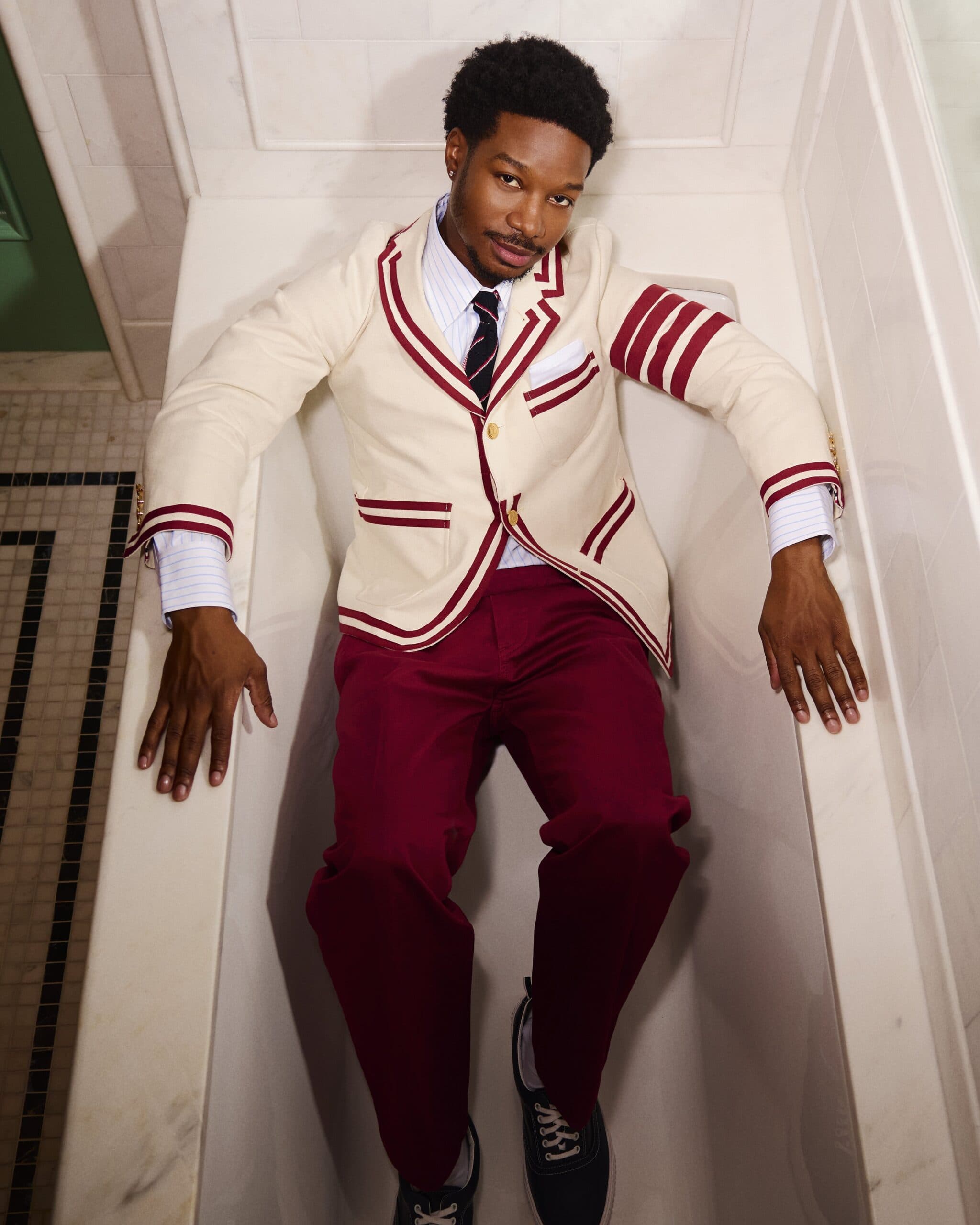
- PhotographerJordan Rossi
- StylistArut Arustamyan
- WriterYasmine Medjoub
- Groomer Brittany Whitfield for The Only Agency using MAKE UP FOR EVER
- Photographer's AssistantCecilie Mengel
- Fashion AssistantAdlet Bermukhamedov
- ProducerPru Ainslie
- RetouchingAlice Constance
- With Thanks Tothe Fifth Avenue Hotel, New York