Dream Big is giving access-led theatre the space it deserves
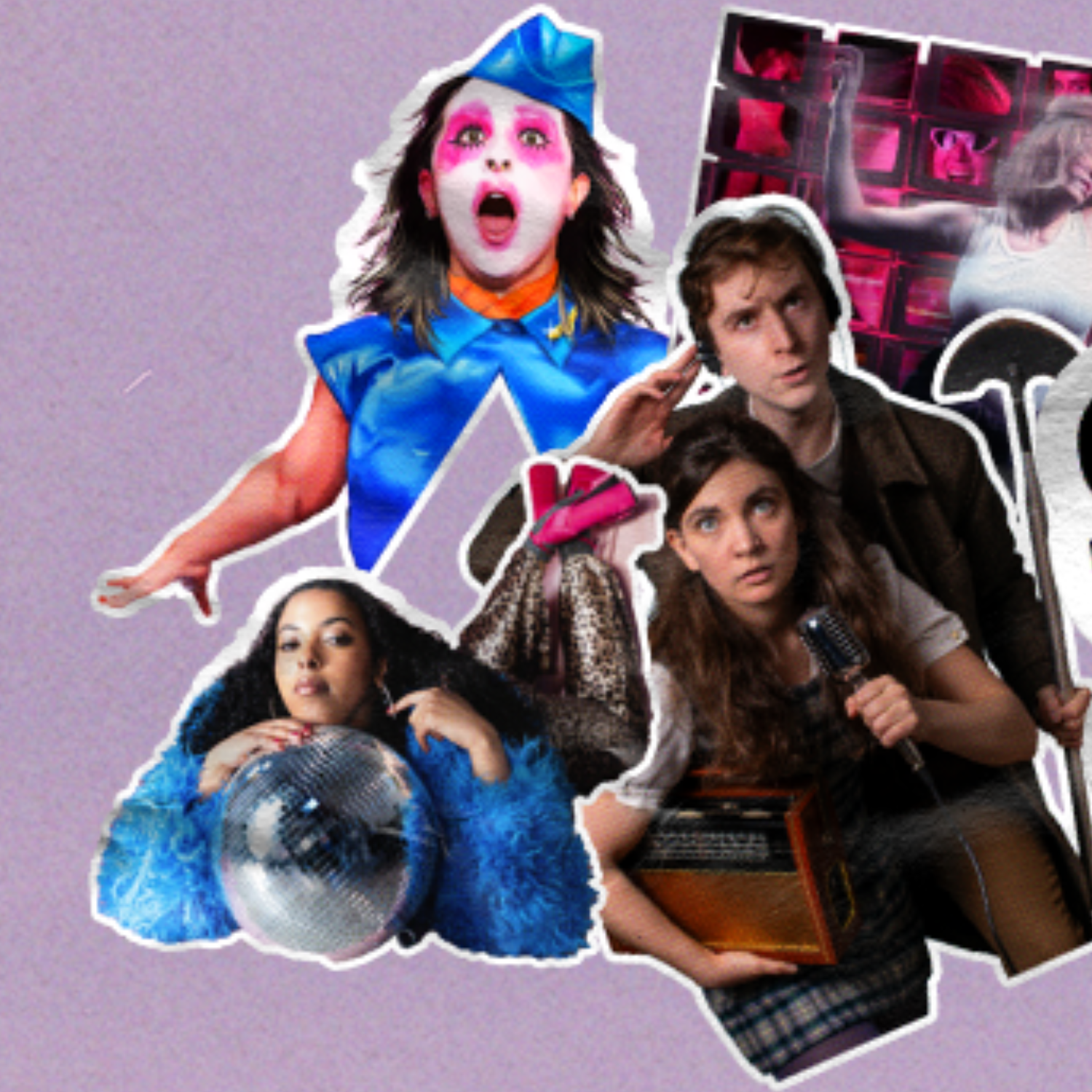
On 6 February, the Pleasance Theatre, working with Camden People’s Theatre (CPT), kicked off their Dream Big festival. Marking a first for both companies, the collaboration invited successful studio-scale productions onto the main stage. For the festival’s first night, the Pleasance welcomed a staged reading of Em Prendergast’s Bury Me – Yerma Reimagined, and a full production of FUSE’s The Only Brown Deaf Man in England, written and performed by Nadeem Islam. Both plays were access-led debuts, penned by emerging artists who seamlessly blended humour and struggle with incredible performances.
Bury Me
Delightfully quick-witted and startling in its sincerity, Bury Me is a queer working-class reimagining of Federico Garcia Lorca’s 1934 tragedy Yerma. Written by Em Prendergast, this debut follows married couple Yerma (Prendergast) and Jane (Sharon Duncan-Brewster) balancing sobriety and infertility. But, when her ex Vix (Sophie Stone) resurfaces with a child in tow, Yerma is thrown into a cycle of envy, addiction, love, and loss.
“Who better knows infertility, how difficult it is to conceive and have babies, than working class dykes,” asks Prendergast. They were inspired to write the play after returning from an Animal Farm tour, when they began experiencing new issues related to their disability and having serious conversations about parenthood with their partner. As such, their reimagining mixes painful realities with queer joy. At times using spoken English, captioning, and British Sign Language, Bury Me balanced what is said, what is understood and what can only be dreamed. With Grace Buckle and Pettra St Hilaire signing for Jane and Yerma, and Jodie Mitchell reading stage directions, interpreting not only bridged audience accessibility, but created a dramatic dissonance between Jane, who is hearing, and BSL-users Yerma and Vix, who are deaf and Deaf respectively.
“I hope we get a full run somewhere,” Prendergast beamed, “so that all the lesbians in London that couldn’t come, can come.” Beyond hoping to stage a full production soon, Prendergast wants to spotlight the challenges faced by sober people, queer people and those trying to conceive. “The charities that I used to get sober don’t exist anymore,” Prendergast clarified, pointing towards ongoing cuts to sobriety programs in the UK.
Between plays, the bar was bustling with guests chatting and signing with the kind of buzz you only get after seeing something absolutely fantastic. As I squeezed my way back to the stage doors for the night’s second performance, I was met with a queue winding down the balcony and round the street. Access-led theatre isn’t just good art, it’s in demand. And audiences, myself included, were hungry for more.
The Only Brown Deaf Man in England
In his disarmingly funny debut, The Only Brown Deaf Man in England, Nadeem Islam more than met these expectations. Weaving together stories from his friends, family, and communities, Islam plays Rajkumar, a Deaf Bengali man growing up in Brick Lane. As the self-proclaimed “number one batsman”, Rajkumar tells his life story, from fleeing the Bangladeshi independence war in 1971 with his mother, to living as a Brown man in Britain after 9/11, all through the lens of cricket. Flowing between BSL and Visual Vernacular, Islam tells a story of hope, love and loss which had audiences laughing and sobbing throughout.
Writing both from personal experience and extensive research, Islam created a striking history of Muslim and Deaf experiences. Through movement and music alone, he brought Brick Lane to life, shaping a vibrant world on an empty stage. “This play is a collection of experiences that haven’t often been shown on stage before. Stories that should have been visible a long time ago,” Islam told me. To bring these stories to life, Islam used Visual Vernacular, an artform which blends storytelling with signing, dance and physical theatre. “Signing tells the story; movement makes you feel it,” Islam explained. “I want the work to be inclusive for everyone, Deaf and hearing, and to show that even through oppression, we still find joy and strength.”
Both plays touched on deafness, racism, gendered expectation, and what it means to find community. “There are all these intersections that I don’t think we realise cross over so often,” mused Ella Carmen Dale, Development Producer at the Pleasance who organised the festival. “Access-led theatre is not just for the audiences we’re targeting,” she elaborated. “Deaf and hard-of-hearing audiences were the community we got in tonight, but there are lots of people who don’t need that access and still had an incredible time.” Dream Big was Pleasance’s answer to a lack of access-led shows in the industry and the difficulty in bringing shows from a studio space to the main stage. Both shows sold out, with the second ending in a standing ovation. Beyond opening the stage to new artists, it made for a damn good night out. “There are so many more people who need access in theatre than we realise and it’s such an exciting art form,” Dale concluded. “Why would we not make work that includes them?”

Night two paired two pieces that couldn’t have felt more different: BUSH (a lesbian romcom for two people and a plant) by Fish in a Dress, and GAMEPLAY by Carmen Collective. Funny and unnerving in completely different ways, they made for an evening that made you aware of your own watching.
The Pleasance did some of the dramaturgy for them. Cabaret tables across the floor, drinks in reach, a balcony curving above, you were able to see other people reacting. Raised eyebrows, full belly laughs and side glances, you were never alone with your reaction.
For the second show, we swapped cushioned chairs for stools. Less forgiving on the spine perhaps, but easier to sink your teeth into the action.
BUSH
BUSH opens on a premise that is immediately recognisable to anyone who’s ever lived in London, or with an ex. Mariam, a writer, and Bea, a biologist studying plant gender, have recently broken up. Due to crossed wires and a well-meaning mutual friend, they end up temporarily sharing a flat while plant-sitting.
The humour comes when instructions on how to “look after a bush” grow increasingly suggestive, the small frictions of cohabitation surface — “the way you leave the tap running after washing your hands” — and the plant begins to feel like the relationship itself. It becomes needy, delicate and requires sustained attention from the two women who have no energy left from loathing each other at a distance.
Clean it regularly, or pests will appear. Spend quality time with it. Make it look good, because looking good makes you feel good. Sound advice for just a plant, of course.
BUSH is rooted in amplifying queer voices we don’t often get to hear, particularly Iranian lesbian voices. At one point, the action pauses and we hear Narimani speak from the soundbox. The tension was hard to miss, where a show about being seen was unfolding without one of its performers allowed to stand in front of us. In a piece about centring lives that are usually pushed to the edges, the fact that one of those lives couldn’t fully occupy the stage felt painfully apt.

GAMEPLAY
If BUSH is warm and messy, GAMEPLAY is cerebral and immersive.
Created by Carmen Collective, with text by Sam Rees and sound design by AJ Turner, GAMEPLAY unfolds as a live audio-driven storytelling performance. There are no sets in the traditional sense and everything including rooms, bodies, objects, histories, are constructed through description and sound.
Before the show begins, we are told exactly what is onstage, from the height of the microphones, to the stickers on the laptop, the instruments, and the performers’ physical appearances. Nothing is assumed and nothing is left undescribed. It’s a refusal to privilege sight as the default mode of understanding.
Rees speaks directly to us, often describing what is happening as it happens, without telling us how to feel about it. Turner builds sound live, layering loops of guitar, violin and electronic effects, so that the music accumulates visibly and audibly over time.
Thematically, GAMEPLAY circles around the idea of “borrowed time”, the uneasy space between warning and disaster. Historical narratives of war and near-catastrophe brush up against the present moment, asking how distant these events really are, and how safe we ever feel inside our own lives.
Daily Mail theatre critic Quentin Letts becomes a recurring figure, emerging as a strange and sad satire. His power is his words, his legacy supposedly secured by opinion. But what happens to that authority when the building itself is under threat? When there is no audience left to read, no future in which the review can land?
Sitting there, tasked with writing about the night at all, I became newly conscious of my own position and its limits. GAMEPLAY doesn’t feel like it’s trying to attack criticism, but it does sharpen your awareness of what it means to watch and interpret, and questions who decides what is worth fixing in place.
By the end, sound overwhelms language and we see Turner hard at work, a violin line builds, loops, fractures and reforms. The narratives collapse into one another and you start to think about the scale of time, of fear, of how fragile the structures we rely on really are.
- WritersAnna Mahtani, Roisin Teeling
- Image CreditsDream Big