Danny O’Donoghue: Man versus machine

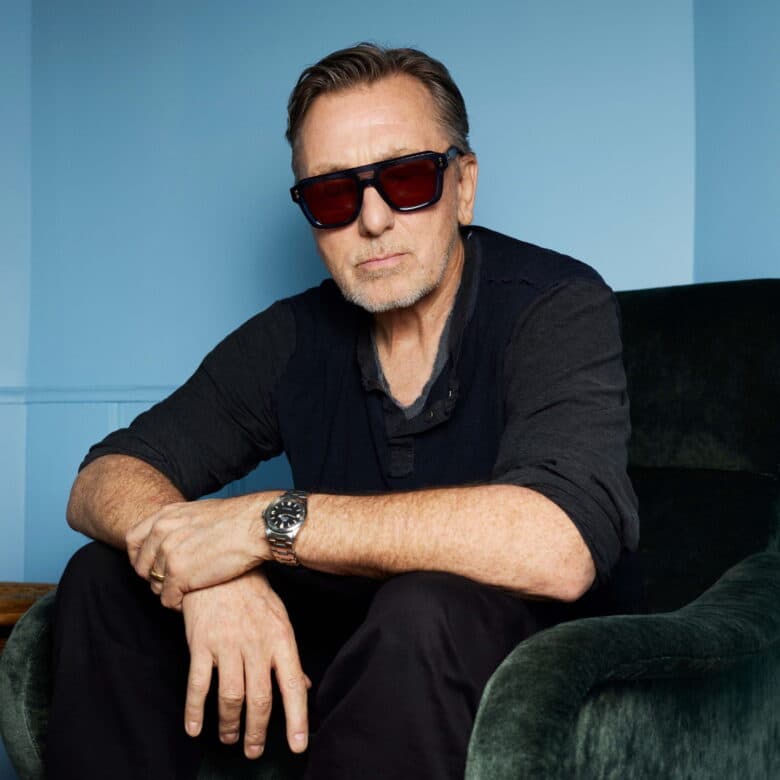
Without the knowledge of how to properly use it, the AI boom can feel like a threat to the creative industry. But Danny O’Donoghue sees it as a tool to enhance, not suppress. The Script, the band of which the 45-year-old is frontman, might be best known for their gut-punching lyrics about heartache and the trials and tribulations of making it as a young artist. Over time, however, O’Donoghue has discovered that the key to a good score lies in mathematical patterns — like how the storyline usually comes in about 60 percent of the way through a song. In The User’s Guide to Being Human, O’Donoghue recounts tales of his organic childhood and a life well-lived. Employing AI as a creative companion for an album with such a title might seem contradictory. Yet, arguably, it’s a natural way to communicate with a generation more comfortable existing online than in the real world. A world where the lines between reality and technology are increasingly blurred. A world where, when it comes to AI, O’Donoghue believes you must “get in now, or you drown”.
Rankin: What’s the idea behind the name of The User’s Guide to Being Human?
Danny O’Donoghue: We feel really detached from society these days. With AI and all this tech, it feels like you need a return to being organic and human. We’ve gone so far down the technological road that you almost need a user’s guide to remember what it’s like.
R: Is that generational?
DO: Yeah. We had a great childhood. Cut knees, jumpers for goalposts, all that. We’ve got a visceral memory of being kids. But people who are 15 to 20 now, they don’t have any of that.

R: So they don’t actually know what it used to feel like to be human?
DO: Exactly. So it’s to remind people our age what it was like, and also give kids an insight into what it should be like.
R: That’s mad timing, because this issue of HUNGER is called ‘Reality vs. Fantasy’. I’m basically saying the same thing about AI in it: yes you can do it, but you have to go the other way at the same time.
DO: A hundred percent. If you don’t, you’re going to get lost.
R: And the mental health side of it?
DO: It’s fucked. Absolutely fucked. My nieces and nephews can’t sit here for two minutes and have a conversation. But then they’ve got 200 friends on their phones, and they’re brilliant at that world.
R: You mentioned you’re working with an artist visually for the album. What’s the aesthetic?
DO: He mixes in stuff I’ve always been into: Fibonacci sequence, golden ratio, sacred geometry, iconography, chakra, that kind of universe language. It’s intricate and it’ll work for stage visuals and re-skinning, socials too.
R: What interests you about the golden ratio specifically?
DO: It’s in nature. You think beauty is just organic, but there’s maths and science underneath. That’s where the perfect balance is with technology.

R: Have you been looking at whether the golden ratio shows up in music, too?
DO: Yeah. If you take a song as 100 percent, it often hits around 60 to 62 percent when the story arc kicks in, like a film.
R: And it happens inside smaller sections, too?
DO: It does. If you take a chorus as 100 percent, it can still land around that 60 to 62 percent point. In ‘Breakeven’, the penultimate note in ‘pieces’ lands right there. It’s mad.
R: That also explains why AI seems so strong at music. It’s mathematical. Words are messier — they’re prediction, but music is pattern.
DO: Exactly. And that’s why it can feel so convincing.
R: You’ve got a meeting with Google DeepMind about AI music tomorrow. Are you going in to confront them or collaborate?
DO: Collaborate. There’s an opportunity to be on the side of musicians. What I want to discuss is licensing — being able to take songs that are already out, and generate multiple versions legally.
R: What does that unlock for you?
DO: If labels license their music, I can put my songs in and say, “Give me ten different versions of the same song”. If it gets close to what the first track sounded like, I’ve now got a version I can use as leverage to negotiate rights back or become a shareholder in what it is.

R: That reminds me of artists re-recording their catalogues.
DO: Exactly. I know of artists who re-recorded their hits so they sounded the same, then told the label they’d stop clearing their version, and it forced a joint venture.
R: And on your album, you’re mixing organic and AI?
DO: Yeah. That’s the future. People act like it’ll do it on its own. It won’t. We’ve been using machine help for years: Auto-Tune, algorithms, even retouching under eyes in photography.
R: You also mentioned an AI vocal- translation plan. Explain it.
DO: I’m talking to a company that can translate songs, then put my own voice on top, like what Joe Rogan does — translated podcasts with his voice-over. For the first single, I want versions in key markets: German, French and the Philippines.
R: But translation is the danger zone, you can’t lose the essence.
DO: Exactly. I need humans who understand the song. My wife will translate the French versions to keep it faithful, then someone sings it, then we apply my AI voice.
R: If you land that, it’s genuinely new. And the ethical framing matters.
DO: Yeah. It has to be ethically sourced, paid translators, real people involved, and it actually creates jobs.
R: There’s also a PR tension here, people at the gates screaming about it.
DO: Totally. But if you’re transparent, and it’s helping, it’s the best route forward.

R: My view is, you’ve got to get in the pool. This isn’t going away.
DO: Exactly. Get in now, or you drown.
R: For me, it’s not an ‘assistant’, it’s a collaborator. Ping pong. Sometimes it’s shit, sometimes it’s magic.
DO: Yeah. Let it run on its own and you’re in trouble. It hallucinates.
R: But when you’re curating, the eye still matters. That’s the whole point.
DO: Hundred percent.
R: You said something like, “There are no words in any language that could ever explain how I feel, so let me make a sound instead”.
DO: Yeah, that was it.
R: I mean, that’s profound. People have been circling that idea forever, but in
the context of what we’re talking about, creativity and AI, it really hits. Everyone keeps talking about AI being frictionless, and I just think, no, you want friction.
DO: Yeah.
R: That’s the cut on your leg. That’s jumpers for goalposts. That’s your mum telling you to get to bed.
DO: Yeah. The tension between wanting the love of your life back and knowing she never will. That’s where friction lives, and that’s where some of the best work comes from. Most great work comes from ‘I’ll never please my parents’ or ‘I’ll never get that love back’. That’s the battleground.

- Original Photography and InterviewRankin
- AI GeneratorRankin
- StylistShannon Clayworth
- Hair StylistLuca Portadibasso using BUMBLE AND BUMBLE
- GroomerDominique Desveaux
- Fashion AssistantSarah Munchenberg