MARO is learning it’s not that deep

MARO has spent years moving between cities, languages and stages, but sitting with her in Lisbon, just hours before her sold-out show, it’s clear she’s arrived somewhere far less tangible: not a place, but a mindset. It’s somewhere rooted in ease, clarity and something she returns to often: the idea that maybe, just maybe, it’s not that deep.
I meet MARO at the Coliseu dos Recreios before her performance in the city where it all started. She hugs me instantly. Immediately, MARO is warm, open and completely unguarded. When I introduce myself, she pauses and smiles, thinking my name is Fleur, like the Harry Potter character. I laugh and correct her — “it’s Flore” — and feel no qualms in doing so; there’s no pretence to MARO, no sense of distance. Just someone entirely present in who she is.
Catching MARO at this point in her career feels like stepping into a moment of transition. She’s about to finish the European leg of her tour before heading to North America in September. Yet, nothing about her energy feels rushed or overwhelmed. If anything, it’s grounded. What becomes striking, as we settle into a quiet corner backstage, is how little of MARO’s story is framed by ambition in the traditional sense. There’s no neatly packaged narrative of ‘always knowing’, or a grand, singular turning point. Instead, MARO’s relationship with music feels almost accidental in its inevitability. “I never thought I wanted to do music until I was 19,” she says. “It was just… there. And then one day, I realised I couldn’t live without it.”
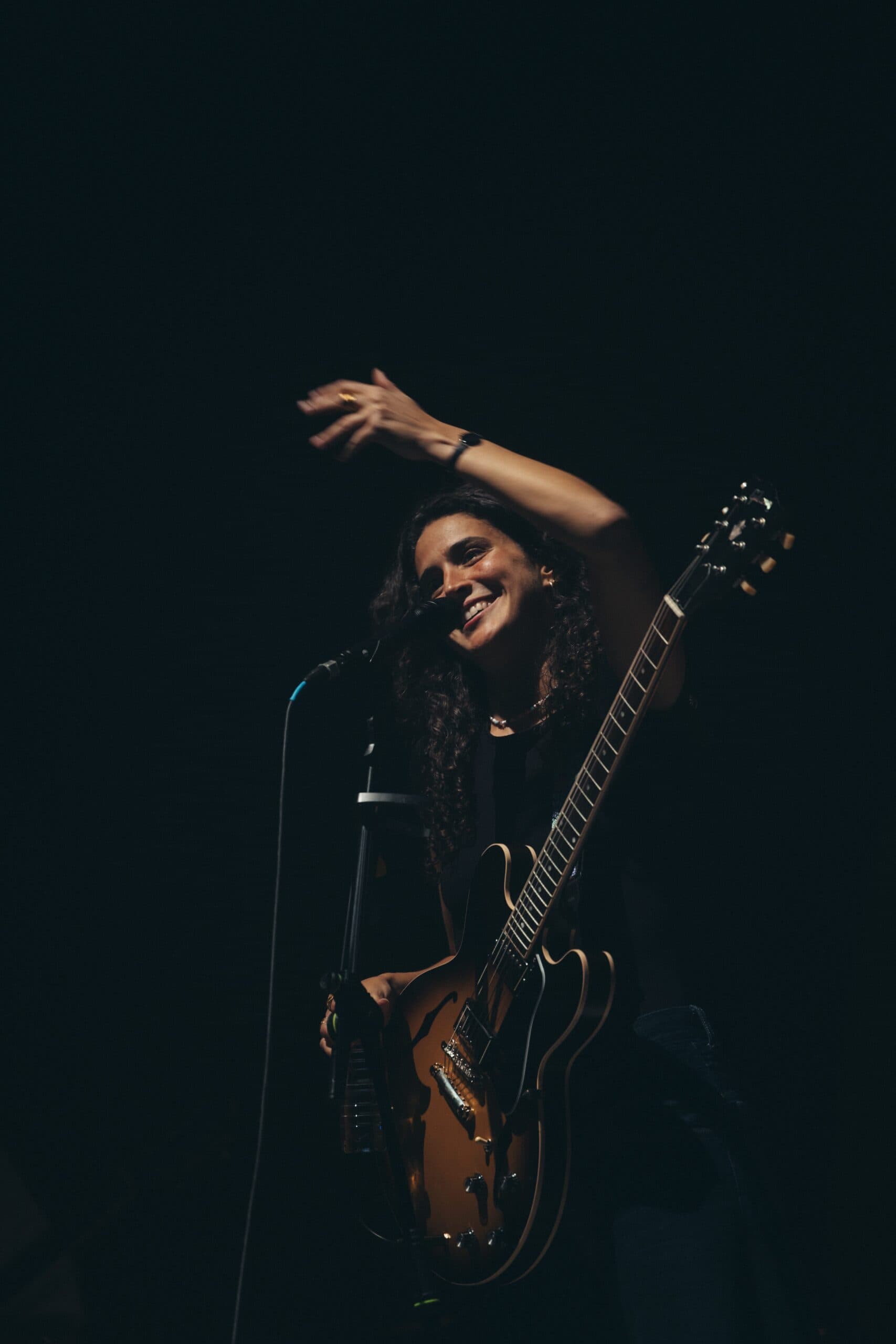
It’s a sentiment that threads through everything she says: this idea of music not as a pursuit, but as something closer to a reflex. Growing up in Portugal, surrounded by family, long lunches and constant sound, music wasn’t so much a decision as it was an environment. Her mother sang. She started piano at four. Brazilian music, Portuguese music, global influences all bled into one another. Even now, she struggles to separate intention from instinct when it comes to how she creates.
That instinct has taken her far, from Lisbon to Los Angeles, from intimate collaborations to global tours, sharing stages with artists from Jessie J to Shawn Mendes. But she resists attaching too much weight to geography. When I ask if any place feels more like ‘home’ for her music, she shakes her head. “It’s true that music really is such a universal thing that, at this moment, there’s no place for me where it makes more sense,” she responds. It’s not a vague answer. If anything, it reflects the way MARO talks about connection: tied to a feeling rather than a location. She recalls a recent show in Brussels with genuine surprise, still slightly in awe of how deeply audiences can connect regardless of language or background.
And yet, despite the scale of her career, the way she describes it all remains disarmingly simple. Touring, she says, still feels like “having fun with my best friends”. The motivations haven’t shifted. The excitement hasn’t dulled; it’s just grown, quietly, steadily, without spectacle. That same understated evolution defines MARO’s latest album, So Much Has Changed, shaped by introspection and gratitude. Written as she approached 30, the intimate coming-of-age record marks a subtle but significant shift. She describes the process as unusually fluid and natural. “I’m such a fan of having things be what they are,” she says. What began as a structured writing period quickly dissolved into something more intuitive, with new songs arriving almost fully formed.
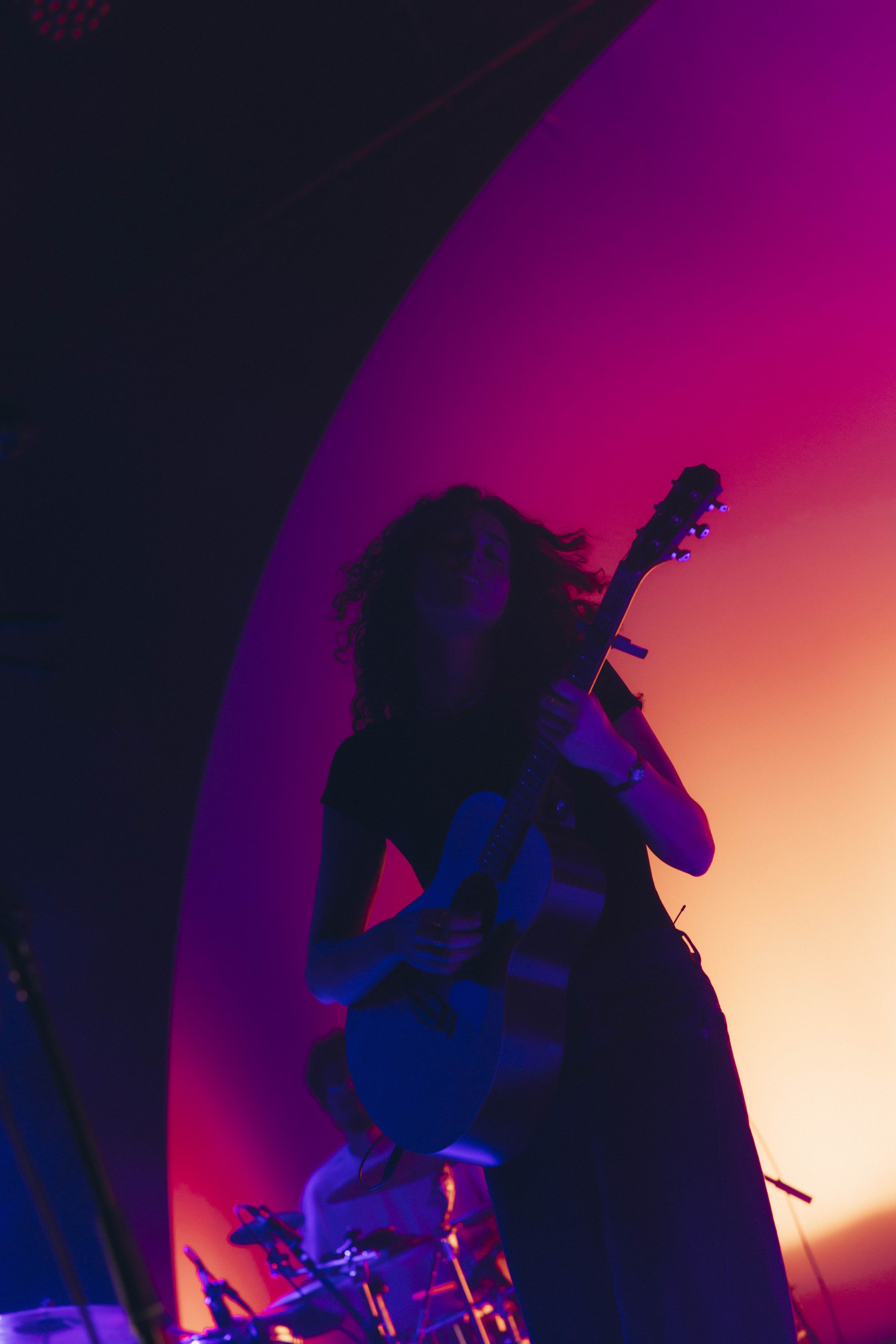
“The writing is the same,” MARO explains. “It’s more the themes that changed.” Those themes centre around a kind of emotional recalibration: a softening, rather than a sharpening. Where her earlier work might have leaned into intensity, this new chapter feels more spacious and forgiving. It’s here that she returns to the idea she began with: it’s not that deep. “Things don’t need to feel as heavy,” she says. “Life goes on.” It’s a realisation that didn’t come easily, though. She speaks openly about the contrast between her present self and her younger years, particularly her teenhood, which she describes as “difficult”, marked by feeling out of place and disconnected. But there are no dramatics in the way she recounts it. “I feel like it’s normal when you’re younger to not like yourself enough or not understand your worth enough that you go after things that aren’t meant for you,” she says. Looking back, what strikes her most is not the hardship itself, but how different everything feels now. “If I could talk to my 13-year-old self,” she says, “I’d just tell her, ‘You don’t even know how good it’s going to get’.”
This levity seems to form the throughline of how MARO moves through everything in life. Even when it comes to language, something that could easily be overthought, she keeps it instinctive. Despite releasing music in both English and Portuguese — with this latest album entirely in English — she doesn’t overanalyse the choice. For her, language is purely situational; a reflection of her surroundings rather than a strategic decision. “It’s just what comes out naturally at the time,” she says.
Even the making of the album itself followed the same logic (or, perhaps more accurately, lack thereof). There were no major challenges, no drawn-out struggles. Instead, MARO describes the process with a kind of lightness that feels unusual in an industry that often romanticises difficulty. “It was so fun,” she says, smiling. “Even when I listen back, I can hear the energy. I can hear the laughter.” It’s a reminder that, for MARO, music is as much about the experience of creating as it is about the final product.
The importance of experience extends to her audience, too. While MARO is careful not to overstate music’s impact, she acknowledges the role it can play both for herself and for those listening, sometimes even acting as therapy. “If it can make someone feel better or at least have some sort of happy feeling when they listen to it, anything positive,” she says, “that’s already a big goal.” It’s a modest ambition, but it feels entirely in line with who MARO is. There’s no desire to position herself as a spokesperson or a saviour, just someone offering something honest and hoping it resonates; helping people connect to this idea that life goes on and things can feel lighter even when they are hard.
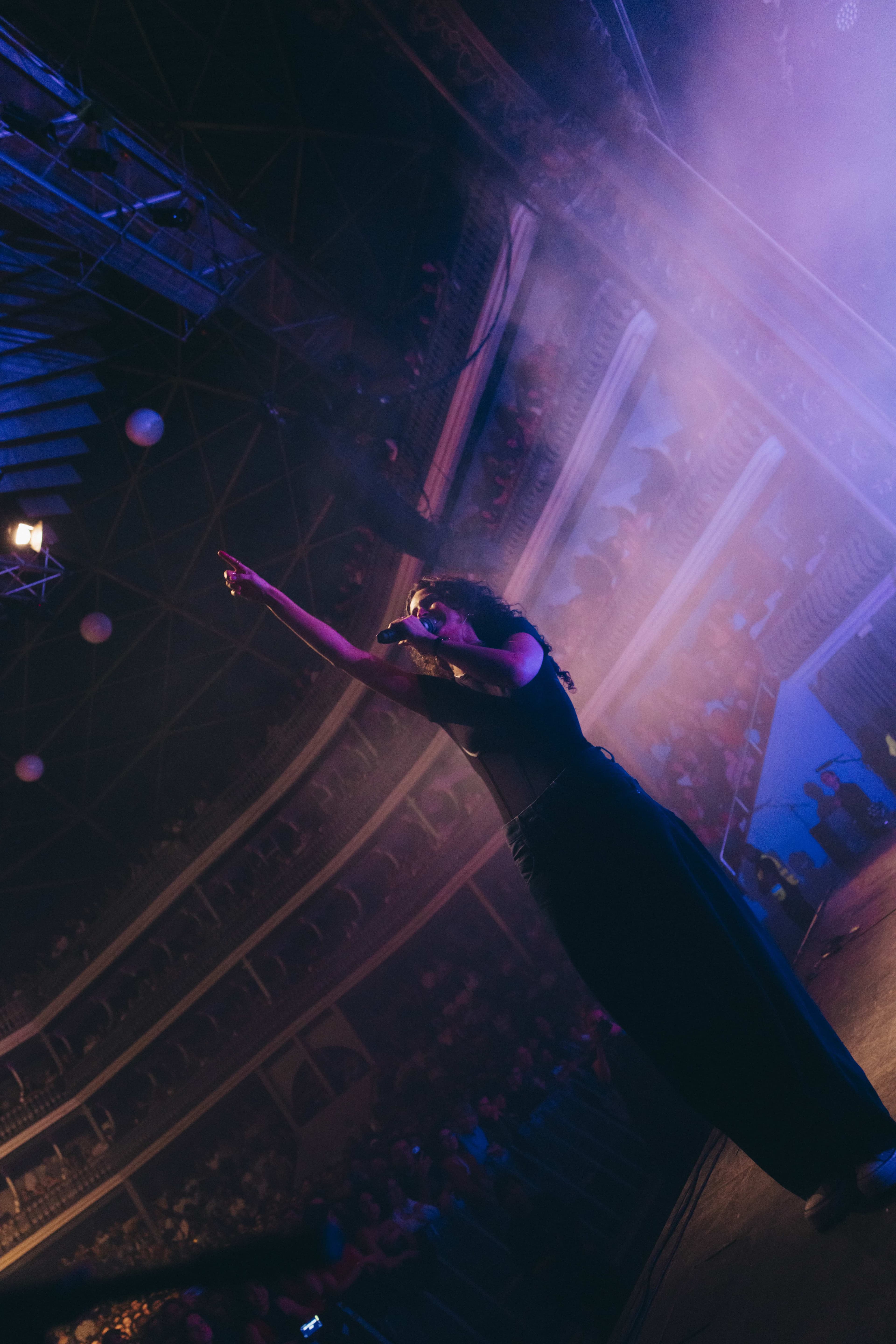
And tonight, that connection comes full circle. When I ask how she’s feeling about the night ahead, her answer is immediate: “We’re all really, really pumped.” There’s something different about this show at the Coliseu dos Recreios: a venue she once dreamed of playing, now sold out with a crowd that’s entirely hers. “It’s my city,” she says, almost in disbelief. “People want to come.” The dream, as she puts it, now feels real.
As she heads off to prepare for her show, it becomes clear that MARO hasn’t just arrived at a new chapter in her career. She’s arrived at a new way of moving through it, one that’s lighter, more present and quietly assured. And maybe that’s the point. Not everything needs to be monumental to matter. Sometimes, it really isn’t that deep.

- WriterFlore Boitel
- Image CreditsSimão Pernas