IDER are just on time to the world
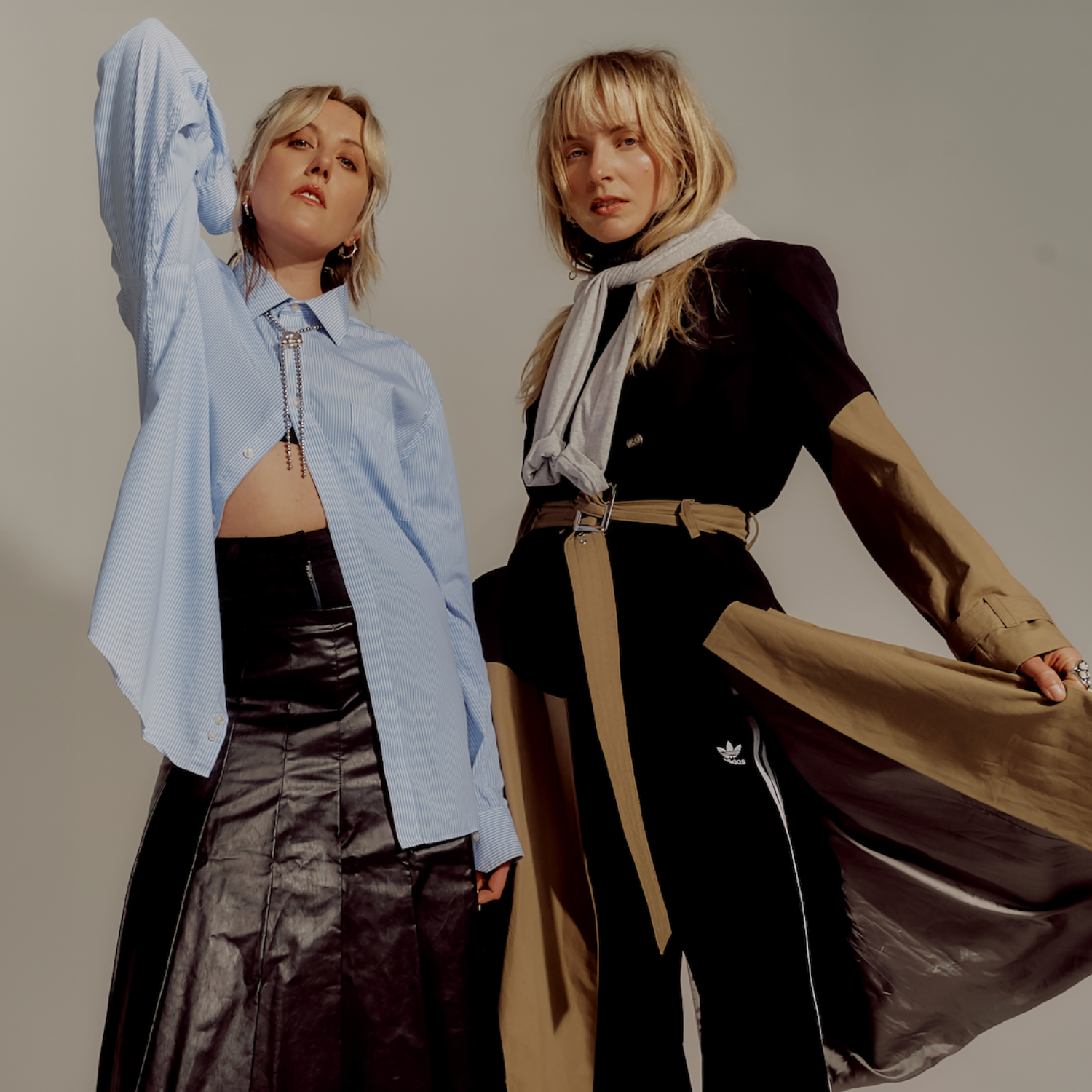
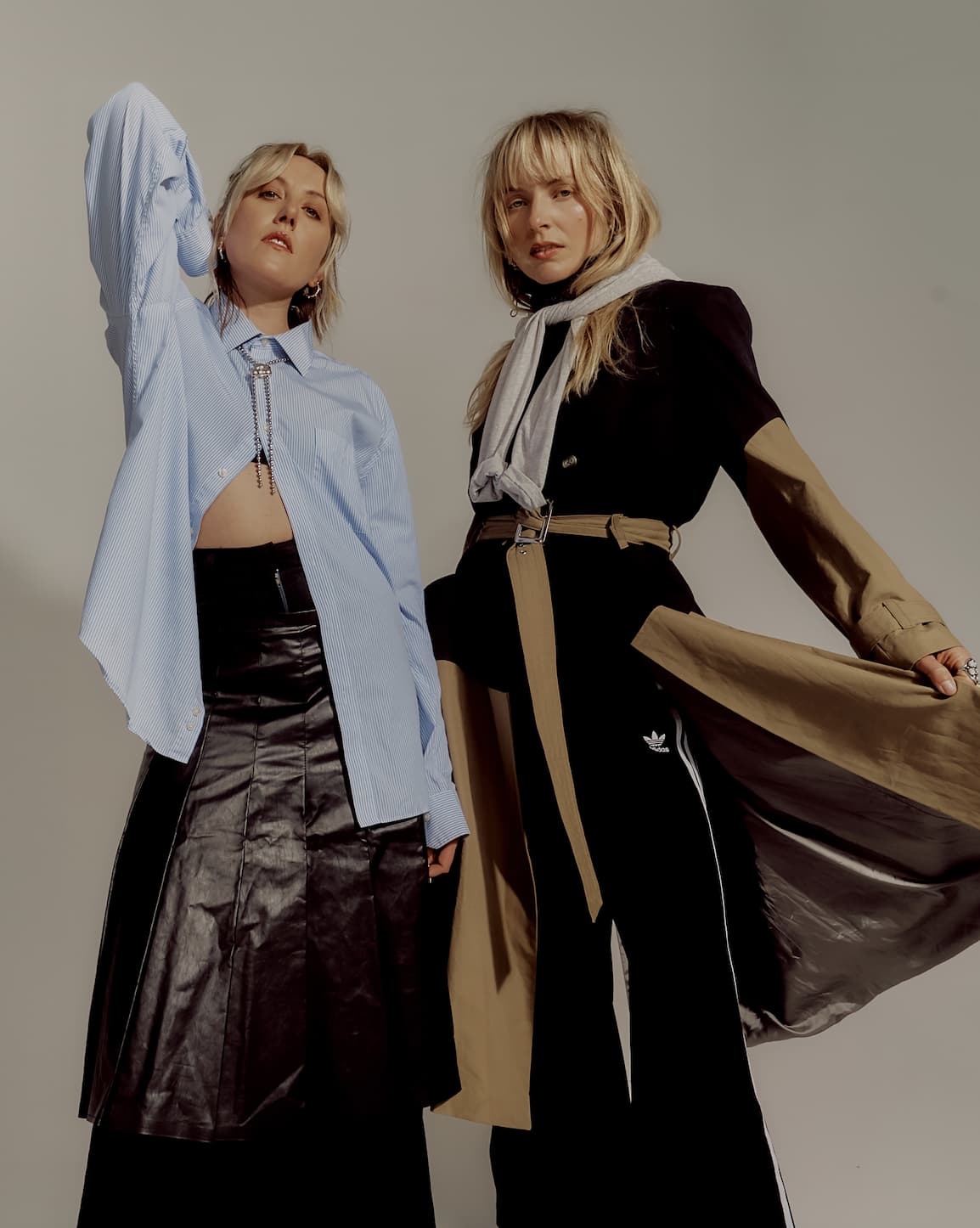
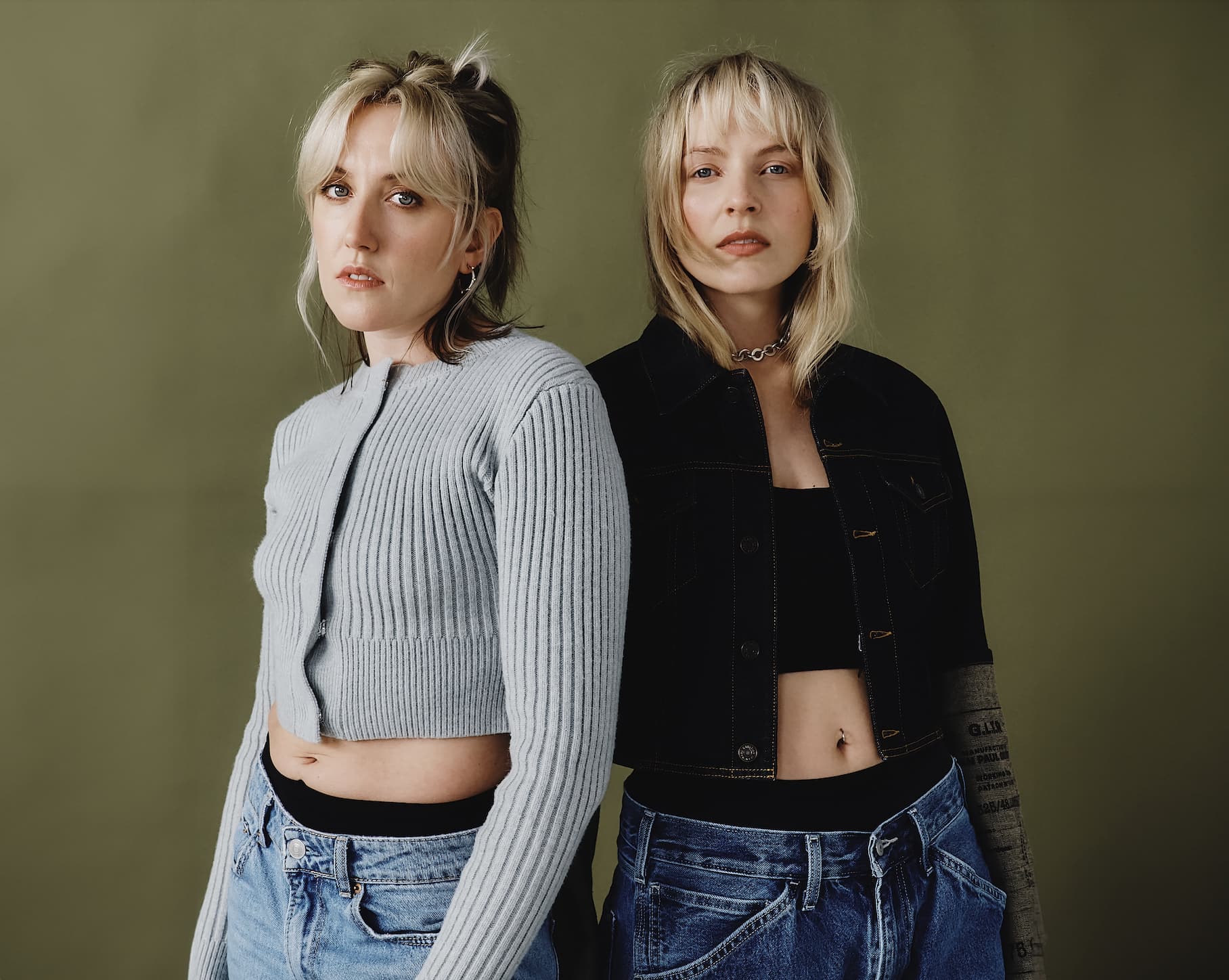
The duo that is IDER, comprising Megan Markwick and Lily Somerville, are nestled on the sofa in Markwick’s London flat. Both beautiful, blonde and forthcoming, it’s no surprise that the friends, who met at university in Falmouth, are often asked if they’re sisters. “Or lovers,” Markwick points out. The magnetism between the two women isn’t just representative of their life off-stage, though — it’s the crucial component that makes their music exactly what it is, both sonically and in its essence. Their songs comprise harmonies that weave together like an audible representation of sisterhood, while their lyrics take the sentiment one step further, expanding into an axiom of the female experience. Their most well-known song, ‘You Don’t Know How To Drive’, for example, addresses the classic non-committal partner. The lyrics, “I want to throw your shit in the middle of the street […], slag you off all over town,” is one many women can relate to — over three million of them if Spotify figures are to be accounted for.
The song’s success is something Markwick pins down to one simple, but sad, fact: “Everyone’s known a fuckboy.” Nevertheless, IDER’s songs are far from male-centric. Their latest album Late To The World originated from a beach-walk chat about what it means to be a ‘late bloomer’. Subsequently, the album delves into themes spanning societal expectations for women, personal growth, relationships and trauma. And if those subjects weren’t pertinent enough already, the duo released a ‘stripped’ version of five of its songs in September — which they’re currently performing on tour. As we chat, IDER is one show down, having debuted the stripped down set in Dublin the day before. “You could hear a pin drop,” Markwick says. “You’re aware of your every movement,” Somerville adds. “But there’s something really special about that.” Untinctured and raw, IDER is bringing the set to London for a three-day residency at The Old Church in Stoke Newington. In some ways, it’s the inverse of the duo’s BST Hyde Park performance this summer, where they supported Sabrina Carpenter as part of the show’s aptly all-female line-up. But setting and volume aside, the message remains the same: IDER is showing up just on time.

What inspired the stripped-down version of Late To The World?
Megan Markwick: A lot of our songs start that way, with us on the piano, singing and writing harmonies, and then we produce them up, so they become bigger and faster versions of themselves. There’s something quite special about stripping them back and showing people how they began. I think you can hear the lyrics more.
Lily Somerville: It’s kind of going back to our roots a little bit.
Speaking of your roots, what drew you to each other when you first met at uni?
MM: The only thing I can say is, when we met, this sounds maybe a bit cheesy, but it was as if we’d met before. And our voices, as well — they harmonised really naturally together. A lot of people would ask us, Oh, are you sisters? And people still do because there’s that thing called ‘blood harmony’.
What’s that?
MM: It’s basically when you’re siblings or family, there’s a natural harmony that sounds like you’ve been singing together for your whole life. But we met at nineteen, and it definitely felt like we’d met in the past.
LS: It was as though we’d done a couple of lives together already and we were like, Oh yeah, there you are.
“Because there’s two of us, it almost gives us more license to be more open and more vulnerable. I think that’s an armour that we give one another.”
Would you say your harmonies represent that bond at all?
MM: Oh, absolutely. I think it’s the power of female friendship, and women coming together and using their voices.
Your lyrics feel very vulnerable. How much of that comes from your life versus an imagined world?
LS: I think it’s a bit of both, really. There’s a lot of very personal stuff in there, and we’re talking from experience mostly. One of the things that drew us together was the conversations we were having about the things we were interested in or figuring out about ourselves — our own stories and the psychology around things. So I think it’s deeply rooted in the personal and the conversations that we have together, and then how that feels universal and reflected in other people’s experiences.
MM: Because there’s two of us, it almost gives us more license to be more open and more vulnerable. I think that’s an armour that we give one another. And if anything does go awry, I’ll be like, Well, that’s Lil’s story, not mine. [Laughs.]
Do you have any particular tracks that feel special to both of you?
LS: I would say ‘Body Love’ has always been a special one. It’s always made its way onto every set list and it feels as true now as it was when we wrote it. I also think ‘Quiet Violence’ is a special one at the moment, especially if we’re playing it in the stripped set. The messaging behind it is owning your shadow side, or the side of you you want to hide and feel a bit ashamed of.
MM: Interestingly, both of those songs are ones that we’ve both brought personal experiences to and then it’s found its message in that.
A lot of people must have found you through ‘You Don’t Know How To Drive’.
MM: That definitely had the most immediate impact when we released it as a single. We had so many messages. When we went on tour in March this year, people would message us being like, I’m coming to your show tonight, can you dedicate ‘You Don’t Know How to Drive’ to my ex? Then it got a little bit serious when they were like, Can you dedicate it to my ex so-and-so, they’re going to be there at the show…
“By the time you’ve got back to base level, you’re like, Fucking hell, I’ve missed all of those social landmarks.”
‘You Don’t Know How To Drive’ is on Late To The World. Where did the name for the album come from?
MM: We were walking along the coast in Margate, where Lil lives, in summer 2023, — a good year and a half before the album came out — and we were talking about feeling like late bloomers and what that meant. Because everyone feels a little bit like that in different ways. We’re in our early thirties and you see people doing different things. It’s this really formative time in life where people are really, in a lovely way, blooming. Whether it’s career or relationships or friends starting to have children — such wonderful things. But it’s quite a big conversation for us and for a lot of our peers and friends at the moment. I think I was like, Oh, it’s just feeling a little bit late to the world. And then Lil said, Oh, that’s a good song title. So then we were like, Okay, we’ve got to write a song called ‘Late to the World’. And we did, and then we knew it was the album title. It was very genuine and very true — the message of the song and the message of the album.
Do you think, in turn, the album resonates particularly with women in the same age bracket?
LS: Not to be too gendered about it, because everyone can experience being a late bloomer at certain points in their life, but I think it’s definitely a big thing that comes up for women because we have so much conditioning. We’re brought up with all of these expectations and ideas of what you need to look like, how you need to be, what you need to achieve by certain ages. You then spend quite a long time unlearning and figuring out who you are underneath all of that stuff. By the time you’ve got back to base level, you’re like, Fucking hell, I’ve missed all of those social landmarks.
Now that you’ve had all these milestones — the album, Hyde Park, this tour — do you feel like you’ve gotten over that feeling of being late?
MM: It’s interesting because the thing about feeling like a late bloomer is that, from the outside looking in, it always looks different. It’s about how you feel inside — competitiveness or worries or fears that are from ourselves. The world and the conditioning we’re brought up with has a lot to answer for, but ultimately, internally it can be so different. But I think that we’re definitely in a place of owning our journey and our path at the moment. We’re really feeling that actually. Since all the touring we’ve done this year and releasing the album, that to me is the ultimate success — feeling proud. Feeling like, This is my path.
Is there an overall message you want to give people through your music?
LS: I think the overarching message would be connection and being brave. Being able to say it how it is.
MM: Vulnerability. Being vulnerable and being sensitive is a superpower.
LS: So often in life, sensitivity is seen as a bad thing. But being sensitive, if you think about it literally, you’re more connected to your senses than other people are. So then why is that not something to lean into? It’s about leaning into that vulnerability, sensitivity and the connection that comes with that.
- WriterScarlett Coughlan