Cody Frost isn’t gatekeeping the alt scene
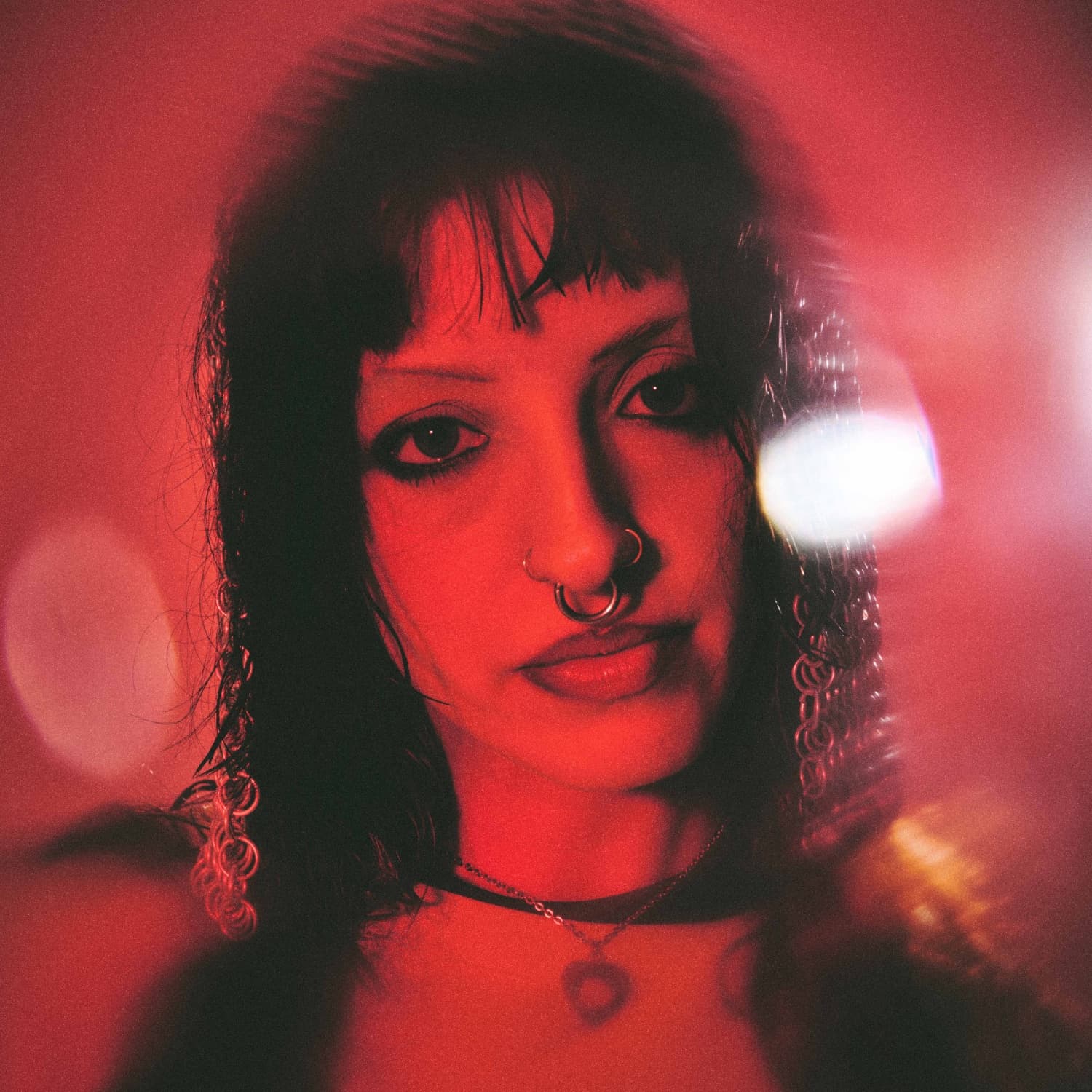
Cody Frost has mastered the art of self-expression. From making music to illustrating their own cover art and working as a tattoo artist on the side, the singer — whose 2021 debut EP, IT’S NOT REAL, amassed a whopping three million streams — has made every aspect of their craft a reflection of who they are. “I’ve always used art as a way of communication,” they explain. “My style of communication is pretty scattered, and art is something that is more honest in a lot of ways.” They have a point. During our conversation on Zoom, Frost jumps from one quick thought to another, crafting answers like one would start assembling a brand new puzzle: unscrambling and putting different clusters of pieces into place, before they eventually come together and paint a picture.
This multifaceted nature of Frost transfers to the outside. Their usual onstage, alternative style — platform shoes, thick eyeliner and a signature red
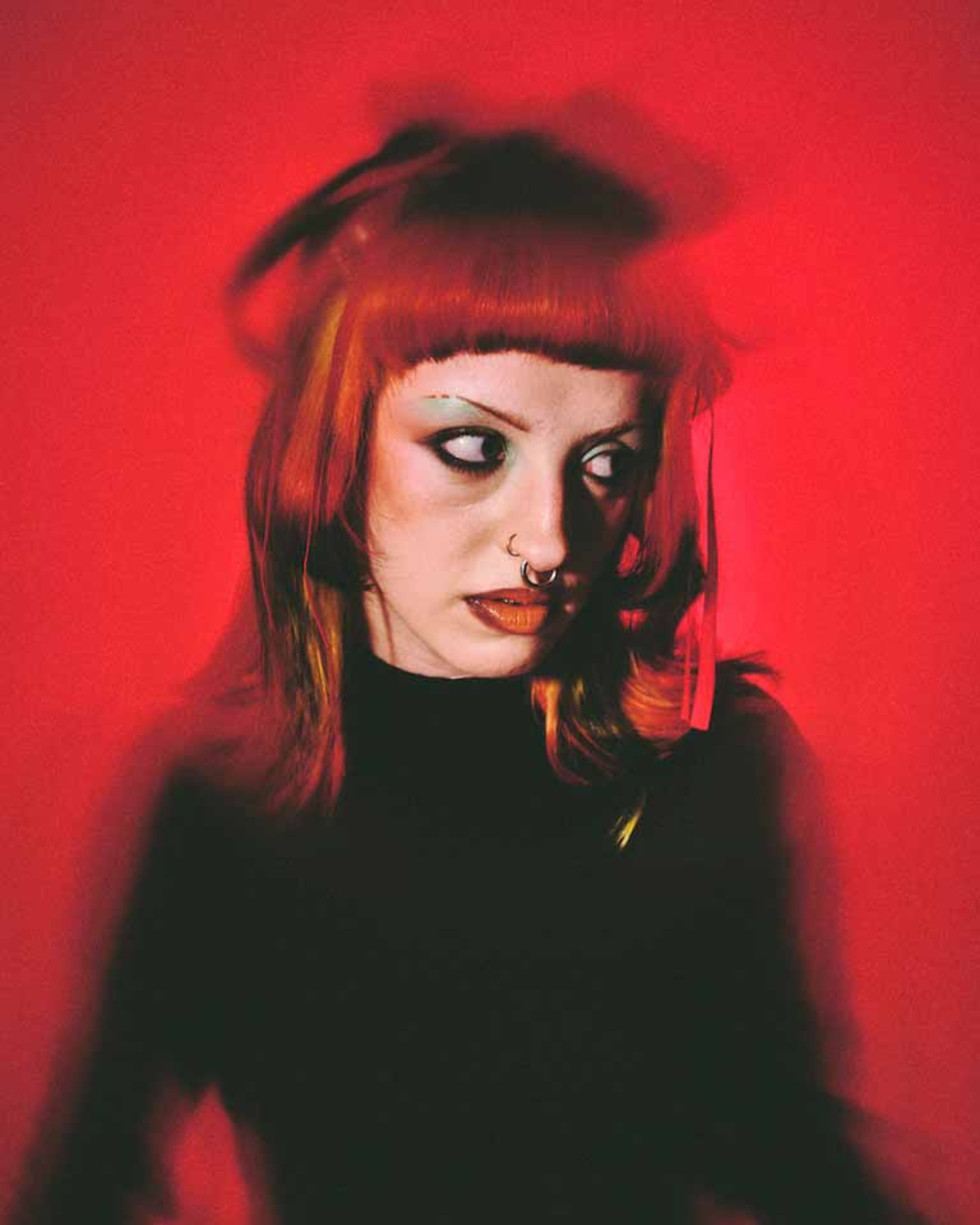
and black colour palette — is replaced by oversized hoodies, funky patterns and trainers when they’re at the tattoo studio. I, however, am greeted by a Cody Frost with smudgy black eyeliner and short scarlet pigtails, falling somewhere between the two ends of the spectrum. Our conversation takes place on the announcement day of MECHAEVAL, their upcoming EP. ‘Mech’, the term used for robotic suits in anime, and ‘eval’ making the title a play on the word ‘medieval’. “I feel like we’re very much in the medieval times of the internet, and Gen Z are the first people to be truly traumatised by its presence,” they say as we discuss how their experience of growing up online inspired the EP. “I’m touching on the rise of technofascism, if you will.”
As in our discussion, Frost doesn’t shy away from hard topics in their music, either. “Songwriting is journaling,” they say. “Just like how journalling can really help you get a better perspective, songwriting can, as well.” It’s cathartic, too. While Frost comes across as laid- back and lighthearted in our conversation, their latest single, ‘VIOLENCE’, perfectly encompasses just how visceral, experimental and, oftentimes, angry, their sound can be.
Ioná Corrêa: ‘VIOLENCE’ is such an interesting blend of electronic and rock elements, and it makes a powerful statement around themes of objectification and consent. How did that song come to be?
Cody Frost: I was on tour — this has happened a couple of times — but this particular night when I started writing this song, I had quite a few men touching me inappropriately, just while trying to meet them and say hi. A couple of weeks later, it was Halloween or something, I went into a club, and a dude just slapped my arse. You know when you get into an argument, and afterwards you’re filled with all these things you wish you had said? That’s basically ‘VIOLENCE’. It’s a reactionary song. Of course I shouted at him, but I think in times like that you get so filled with anger that you want to lash out, and I’m not a fighting person. So, writing an angry song and making money off it seems like a good way to deal with it.
IC: You’ve been singing since you were very young but didn’t properly start writing music until you were about eighteen. What made you want to start writing?
CF: Before, I didn’t really have the physical tools to record anything. No guitar, no microphone, no laptop, just vibes. A lot of the time when I’d post a YouTube cover, I’d gone to a friend’s house and borrowed their stuff. But then I was on [The Voice UK], and through that I met my producer. He was a big inspiration for me to realise my ability to write. I’ve always been inspired by really good lyricists and world builders, and that’s something that I knew I had in me, but I didn’t get to take it seriously until I had a little bit of funding to put it all together.
IC: Alt music and the alt scene were a massive part of your life when you were young, and you’ve spoken about how you found a sense of belonging within that community, even though you were exposed to predominantly male bands while growing up. What has your experience been like now, as a queer artist trying to find your space in the industry?
CF: The alt scene was a place to go when nowhere else would have me. I found it on my own, and I connected with it so heavily. Finding other people that look like you or express things in the same way that you do is so important, and the alt scene saved my life in many ways. There were times when I didn’t have anyone else. I didn’t really have family members to rely on, I wasn’t a very well-liked person when I was younger, I was bullied. I think queerness ties into alt music as well. I find that a lot of my queer friends are also alternative. It’s just that freedom of expression — being unique and different. There’s still definitely some gatekeeping going on in the alt scene, and there’s still work to do in terms of it being more inclusive and accessible, but I do think it can also be a place of sanctity, provided you find people that resonate with you.
IC: Can you tell me a bit about the artwork that you created for MECHAEVAL?
CF: In the first single [‘NATURAL SELECTION’], there’s a castle and it’s got loads of billboards all over it, and it’s on fire. The second one [‘SOMETIMESICAN’TFEELATHING’] is just my face in the sky. Then the third one [‘VIOLENCE’] is me with a helmet, floating about in space. I imagine that this artwork is the aftermath of ‘the empire’ burning down. I went through a period of time when I was quite heavily medicated, and I felt like a robot. I was doing it on purpose because I liked not feeling anything over feeling sad. The artwork definitely ties into that feeling.
IC: From illustrating your own artworks to writing your own songs, your craft is so unapologetically yours — and fashion also seems to play a big part in that. Both alternative and queer cultures have such a rich history when it comes to self-expression through fashion, so what has that journey looked like for you?
CF: I had a very rigid idea of how I should dress for a really long time, because I very much aligned myself with a lot of punk music. But then I actually love wearing streetwear and trainers most of the time. I’m trying to stop this separation between what I dress like when I’m tattooing versus what I dress like on stage. It’s nice to be a bit freer in that way. I think fashion also very much echoes the political scene, and right now it’s almost an act of protest to be looking queer openly. I think now more than ever, it’s important to be loud and expressive. It feels like when I was a teenager — not in a good way, but in terms of how people comment on my appearance. I just keep reminding myself that if I don’t exist like this, then maybe other people won’t feel brave enough to exist like this [either]. I’m not the leader of the queer community or anything, but I do think having a silly haircut and not letting the fun die out is a minor act of protest.
- PhotographerMatt Moorhouse
- StylistDillon Ware-Lane
- WriterIoná Corrêa
- Make-Up ArtistFreya Paxton using ARMANI Beauty
- Hair StylistVodka at W Artists using BUMBLE AND BUMBLE
- Digital TechnicianCharlotte Cullen