Lleo is turning chaos into clarity
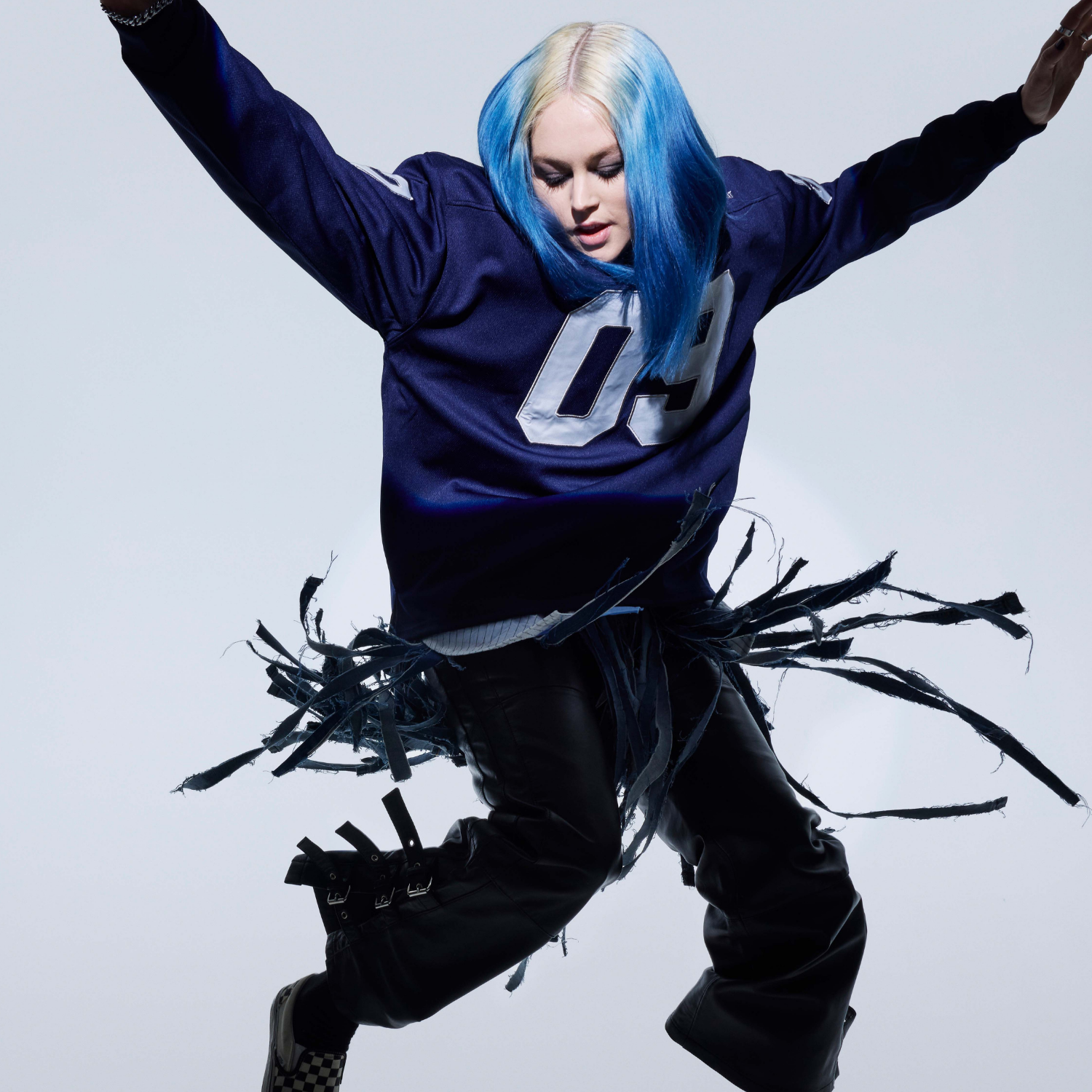
Lleo has never been one for disguises. “The only person I ever want to be is me,” they tell me. And it shows. The artist from London has quietly staged a rebellion against pop’s need for polish. Coining their own genre, “bipolar pop”, Lleo condenses what they call “the highest highs and lowest lows into bangers”. It’s music that tackles identity, mental illness and queerness with humour and heart, proving vulnerability can still hit hard. “I piss some people off because I just say how I feel and what I think,” they say. Across it all runs one unfiltered line: to tell the truth, even when it stings. Her song ‘Bipolar’’s bright, hazy sound and light harmonies sound almost too upbeat for its words: “I keep doing the wrong thing in thе right side of my brain.” Meanwhile, ‘Serotonin’ flips the mirror inward with heavier guitars, sharper edges, the voice pushing back at itself.
“There’s a gut‐sized hole that you’re trying to fill, so you make a lot of money, then you spend it on pills,” the artist sings. For Lleo, that truth isn’t just in the lyrics — it’s in the act of being visible. When they appear on screen,
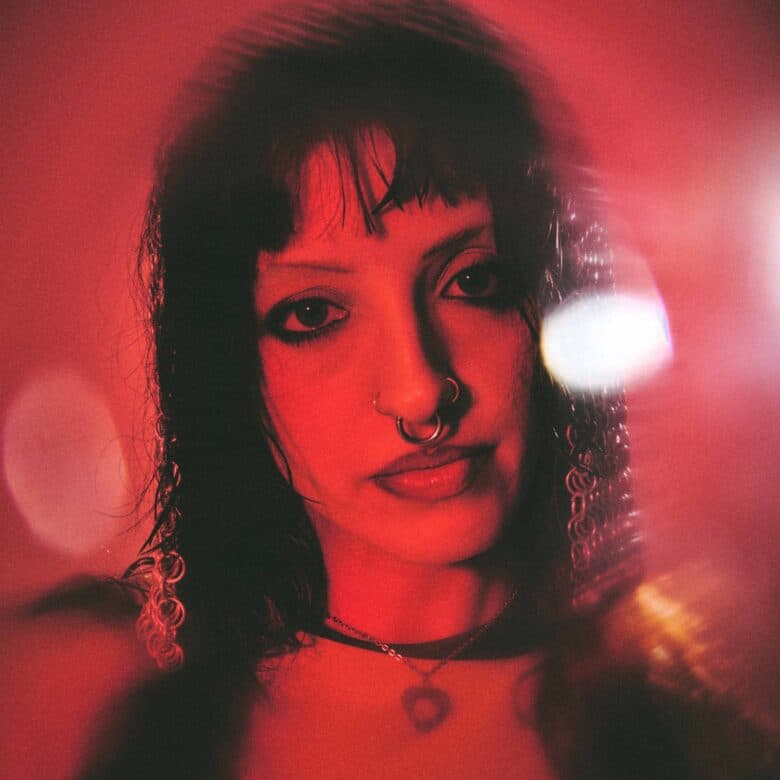
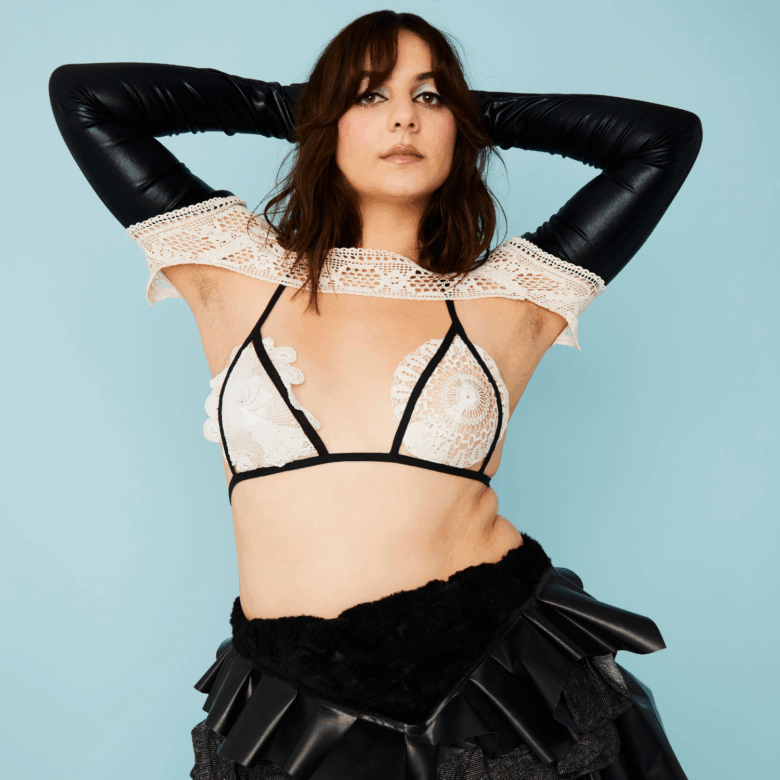
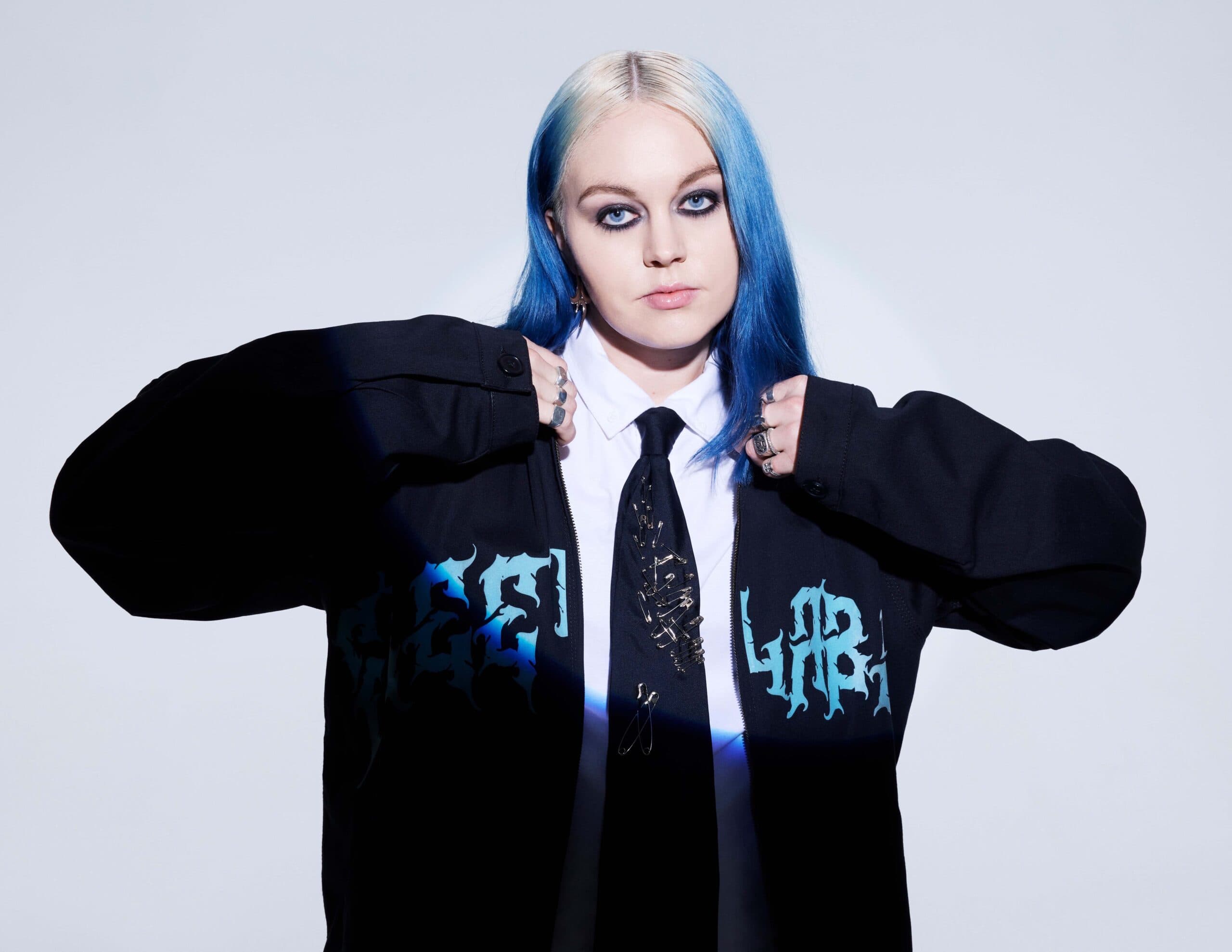
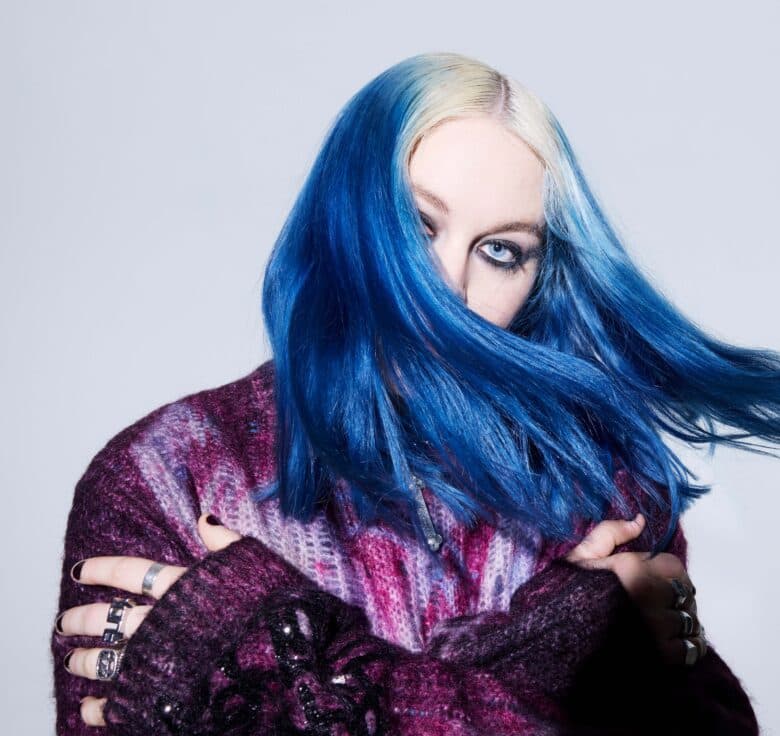
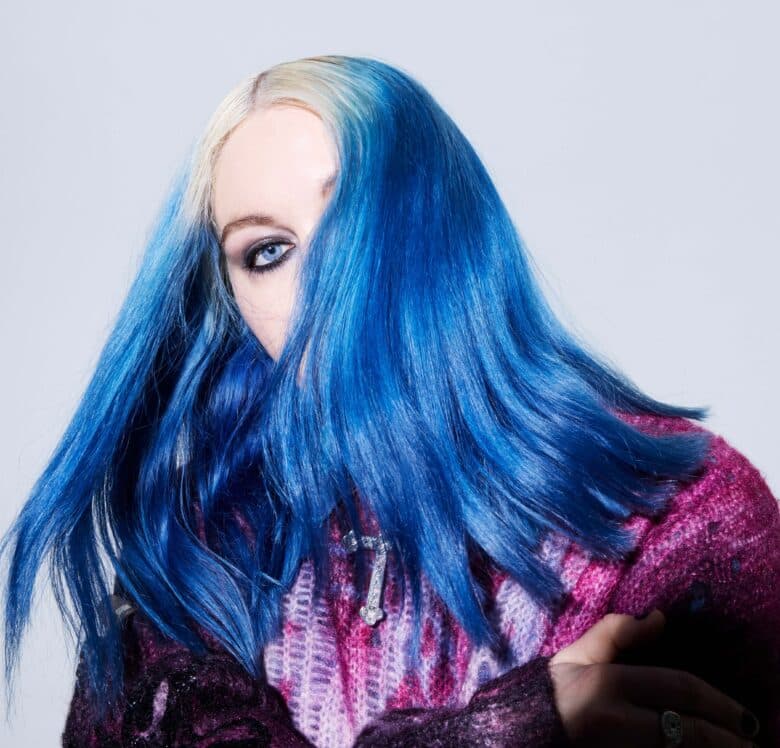
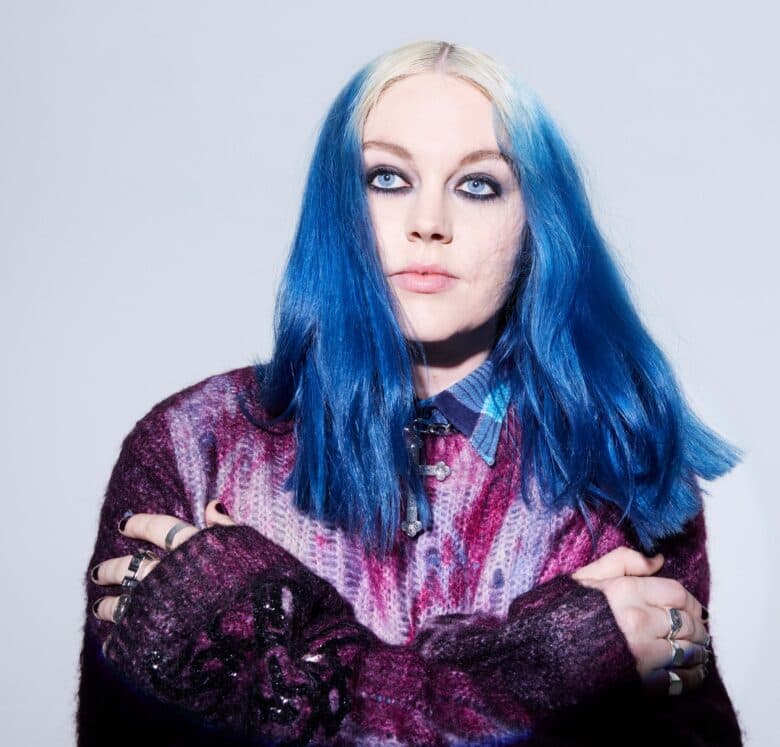
the energy clicks into place. Bleached blue hair, dark liner and all confidence, but beneath that an unmistakable warmth. They smile wide, laugh easily and fill the silence before it’s even quiet. There’s a looseness to them, like someone who’s learned that being bold and being kind can live in the same space. “I sing about things I struggle to say out loud,” they tell me. “If it helps someone else feel less alone, then it’s worth creating.” In that, Lleo becomes exactly what they never had — the kind of role model they once needed, owning every shade of their identity without apology.
Roisin Teeling: Where did your music journey begin?
Lleo: I was really ill from seven to seventeen, in and out of the hospital, so I didn’t have a normal childhood. I stayed in my room and taught myself piano. If a real pianist watched me play, they’d probably throw up.
RT: When did songwriting become the outlet?
L: I began writing songs at twelve about my first little gay heartbreak. I went to music college in Leeds, and that’s when I really started to push myself. In 2020, I launched Lleo and released tunes into the world, each time just trying
to do it a little bigger and a little better.
RT: You call your sound ‘bipolar pop’. What’s behind that?
L: I have bipolar. Surprise! I was diagnosed in 2020. I don’t know if serendipitous is the right word, but all the music I was writing for Lleo felt very layered. It was happy, sad, happy, sad. It really makes me laugh when I see a group of people singing along at a gig and they’re smiling. The music sounds happy, but the song is really about feeling depressed.
“I piss some people off, because I just say how I feel and what I think.”
RT: Does that honesty ever push people’s boundaries?
L: That’s why I piss some people off, because I just say how I feel and what I think. In tunes, if you like it and if it speaks to you, then it really does connect on a deep level.
RT: Are you finding that the connection is growing?
L: I have management now and a very small team. I’ve always felt like a lone wolf until last February. I went on tour supporting an artist called RØRY. I really saw people who connected with what I was saying on such a deep level. It was a bit of a shock. I feel like the wheels are turning now. It’s powerful.
RT: Has anyone ever told you what your music means to them?
L: A girl came up to me after a gig two weeks ago. She saw me earlier that year and, after that show, she really got into my music. She said, This year you’ve saved my life. I thought I was going to be sick. She had a really bad year, and the stuff I was saying really helped her. You don’t realise the kind of reach that you have just by putting out what you’re feeling.

RT: Do you ever feel like there’s a line where you’re oversharing in your songs?
L: To me, there’s not really a line. I say some things in sessions and people say, You can’t say that. I’ll say what I want. I remember when we wrote my song ‘Bipolar’. It’s a really happy song, but it’s saying, I’ve got bipolar, I’m fucked. I played it to my sister, and she said, You can’t put that out. People are going to think you’re taking the piss. I kind of am, but I’m also not.
RT: How do you turn a low into a lyric?
L: When I have something that’s in me, it’s always after a situation has happened. Some people write about stuff when they’re still in it. I can’t. I need to process it, heal and then I’m ready to reflect. If you need to cry, then cry. If you need to be angry, then be angry.
RT: ‘i love a girl’ feels particularly vulnerable. What was it like writing about your sexuality?
L: I never used to want to write about being gay or girls. I used to keep everything very neutral. I think being gay or bi can be a painful experience. When I realised I was gay, there was Ellen DeGeneres and Beth Ditto. That was it. I really struggled with accepting myself for years. ‘i love a girl’ really encapsulates that feeling — it’s scary and sad.
“Being gay or bi can be a painful experience.”
RT: Who are the artists that make you feel seen?
L: If I had to pick one, I would say the band Muna. There’s this song ‘You’re Gonna Be Okay, Baby’. The first time I heard it, they were saying all these things that I see so much of myself in. I sing about a lot of things I struggle to say out loud. That song is brave.
RT: You also played Reading and Leeds this year. Was that a pinch‐me moment?
L: Leeds was my favourite. I felt like I’d come home. People actually knew the songs. There was one point I was about to cry because a girl knew all
the words. BBC Introducing has shown me so much support and is the last pure thing in music.
RT: Who helped shape your sound?
L: I want to play at Twickenham Stadium [because] I saw Lady Gaga there as a teenager. I love Lady Gaga — I was just crying my eyes out. Also, Michael Jackson, Billy Joel and Kendrick Lamar. My favourite Billy Joel song is ‘Scenes from an Italian Restaurant’. It just makes me cry. It’s the ultimate story.
RT: What’s next? Is the new EP a continuation of these stories?
L: It’s not as situational as songs like ‘i love a girl’. It’s all feelings‐focused. In the EP, we explore the deep, uncomfortable feelings so other people know they’re not alone. Listening to these songs is an immediate acknowledgement — both a relief and a release.
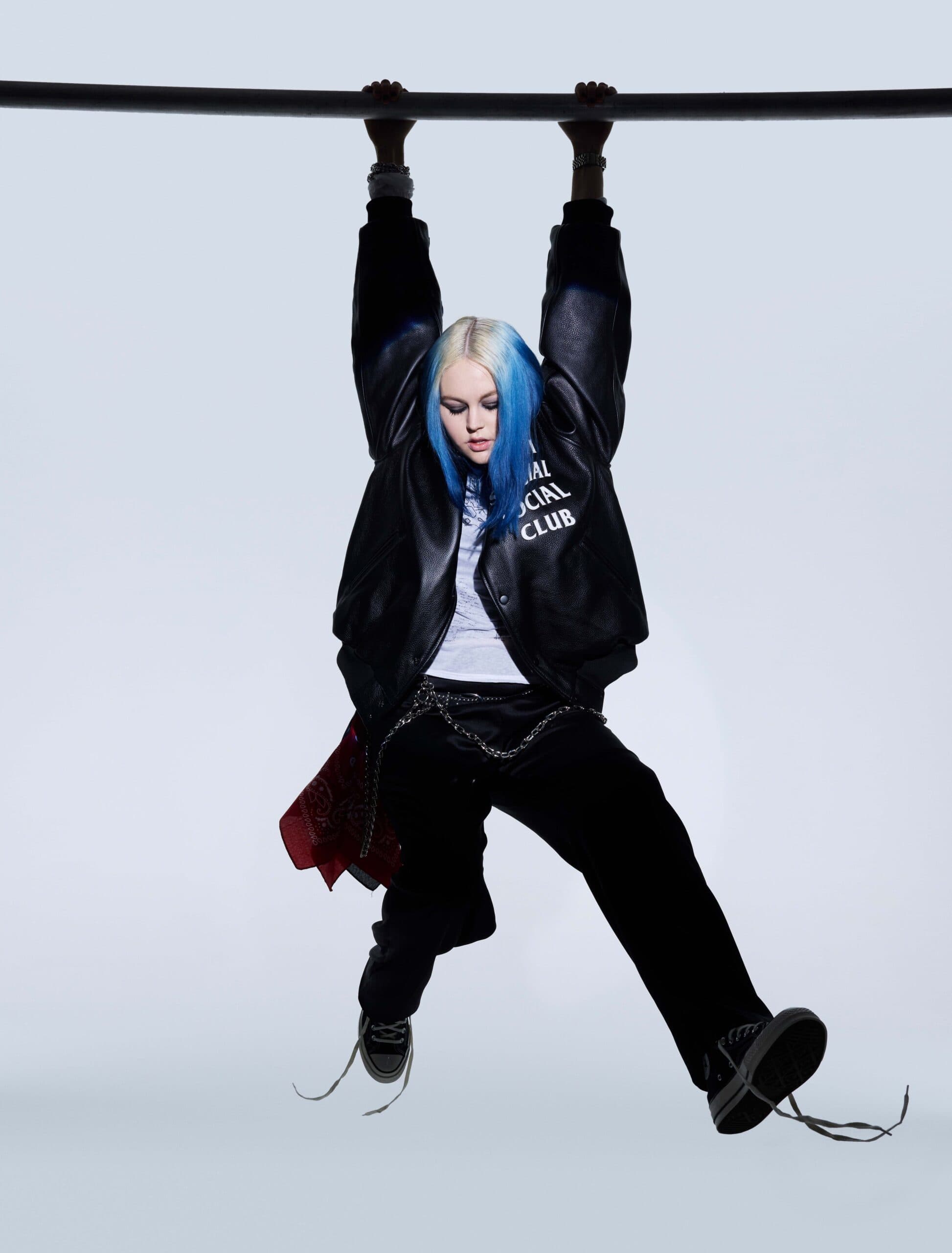
- PhotographerRankin
- StylistMy Olsson Pajkin
- WriterRoisin Teeling
- Hair and Make-Up ArtistIli Mavroidakou