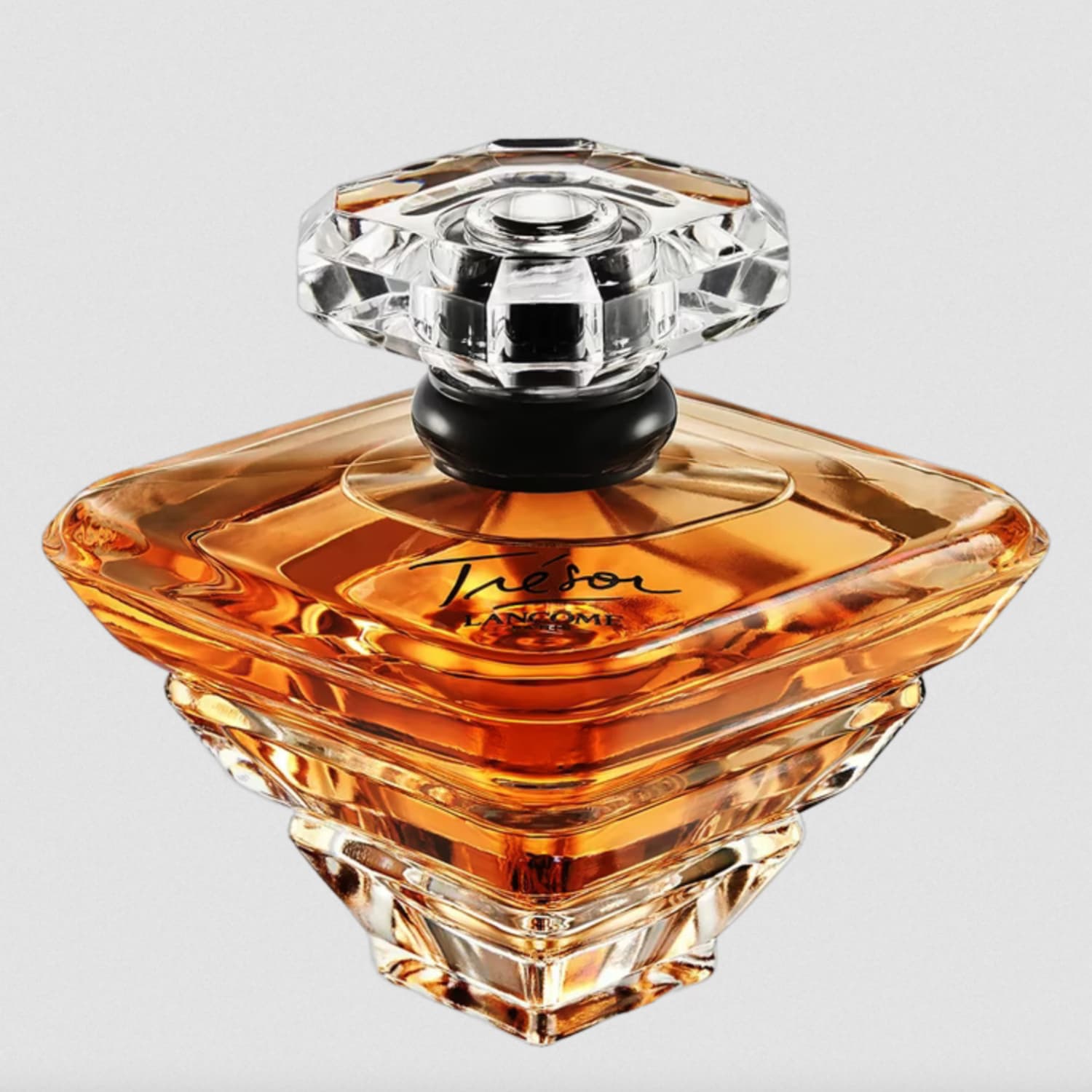
Perfume marketing loves a hunt — pheromones, seduction, the promise of an invisible weapon. But Sophia Grojsman, one of the most influential perfumers and Vice President of IFF between 1998 and 2016, rewrote the rules. In the late 80s and early 90s, the era of Poison and Giorgio Beverly Hills, instead of attack, she proposed an embrace. The so-called “hug me” accord, canonised most famously in Trésor (1990), though already quietly developing in her earlier works, such as Vanderbilt (1982) and Paris (1983), didn’t announce itself with sharp top notes or architectural grandeur. It wrapped. It lingered. It stayed close to the body, like warmth held in wool.
Isabella Rossellini, the face of Lancôme at the time of Trésor’s launch, once described it as “a mysterious combination that envelops and intrigues you”, a line that still feels startlingly precise. The fragrance didn’t unfold in the classical manner with well-defined top, mid and base notes. Instead, it arrives almost fully formed: plush, cosmetic, intimate. Less evolution, more presence. Monolithic, linear, self-contained.
This approach to formulation emphasizes presence instead of evolution. In Grojsman’s case, this relied on a very simple structure: the “hug me” accord, where four synthetic materials — Hedione, Iso E Super, Methyl Ionone, and Galaxolide — made up 80 percent of the formula. Together, they create a seamless cocoon: ambiguous clean florals, soft wood, cosmetic sweetness, powder, and skin. For those who are curious about the smell of the raw materials, Escentric Molecules has built entire fragrance collections around some of these individual components — undoubtedly a nod to the linear philosophy Grojsman pioneered, though reframed through contemporary minimalism.
In her interview with fragrance historian Michael Edwards, Grosjman explained that she wanted Trésor to “invite, not attack”. The opening is deliberately gentle — a fleeting impression rather than a grip that won’t let go. It’s a fragrance designed to grow on you. For Grojsman, this is the subtle boundary between sexy and sensual. “That’s the effect of the big molecules in the air,” she noted. “A sensual fragrance can also be sexy, but a sexy fragrance is not necessarily sensual. Most men love Trésor. They all say they just want to hug the person who wears it.”
The late 80s and early 90s proved fertile ground for this shift. In Perfumery: Practice and Principles, Roebrt R. Calkin and J. Stephan Jellinek elucidate that Grojsman’s work coincided with, and arguably accelerated, a move away from rigid pyramidal structures toward more linear compositions. She reused variations of this structure in Spellbound (1991), though, where Trésor leans into violet and lily-of-the-valley softness, Spellbound replaces these with carnation and tuberose — florals more akin to the boldness of Poison.
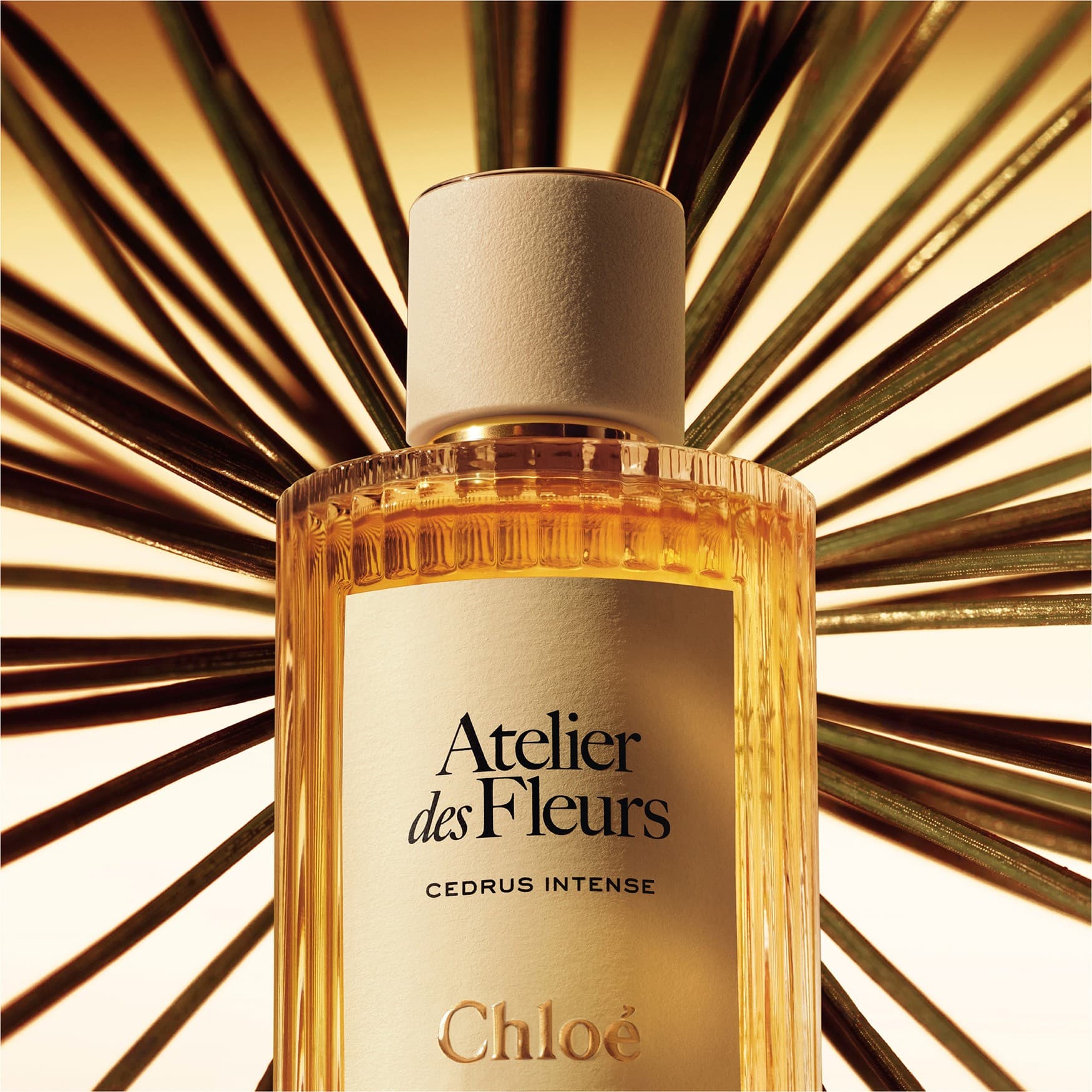
Similar techniques appear in later oriental and semi-oriental fragrances like Dune (1991) and Casmir (1992), where vanillin plays a more dominant role, as well as more traditional floral composition like Amarige (1991). Published in 1994, Calkin and Jellinek’s text understandably stops short of addressing more contemporary perfumes. Yet the legacy of this structure remains unmistakable. You can still smell its imprint across today’s market — from Delina (2017) and Cedrus Chloé (2019), to the repertoire of more experimental brands, such as Noël au Balcon (2007) by État Libre d’Orange, where the “hug me” effect is rendered warmer and spicier, stripped of overt florality and cosmetic sweetness, but no less enveloping.
Behind the romance, there were practical realities. Regulatory pressures and cost-cutting by big corporations encouraged simpler structures and higher concentrations of certain “safe” materials. Grojsman was sometimes accused of “cheating” for re-using such a high percentage of a simple base formula. But cheating implies laziness. What Grojsman demonstrated instead was confidence and clarity: an understanding that impact doesn’t come from clutter. Mastery lies in committing to a well-formed idea and having the confidence not to dilute it.
This philosophy feels especially resonant now. In today’s niche-saturated landscape, where shock value often substitutes for substance, the “hug me” accord reads almost as provocation. These are perfumes that invite rather than assault. They don’t perform seduction; they offer composure and reassurance. The Trésor wearer doesn’t need to prove anything or to make any bold statements.
Which brings us back to pheromones. I’ve long been skeptical of the so-called “pheromone perfume” trend in our industry, not only because there’s little scientific basis for it (as Richard L. Doty compellingly argues in The Great Pheromone Myth), but the idea it sells is even more troubling. It reduces desire to something engineered, triggered, biological — flattening attraction into a switch that can be flipped. John Stephen, the owner of Cotswold Perfumery, told me that desire is never one-size-fits-all, which is the fundamental flaw in pheromone claims. Real seduction is imaginative, contextual and deeply personal. It can’t be conditioned or triggered by some sort of biological gimmick.
For Valentine’s Day — a holiday increasingly hijacked by aggressive monetisation and performative intimacy and sensuality — the hug feels like a radical alternative. Grojsman’s legacy reminds us that desire doesn’t have to shout. It can murmur and whisper. It can smell like skin, powder, warmth, memory. Forget the pheromone myth. The most powerful fragrances don’t seduce you. They hug you.
- WriterCherry Cheng