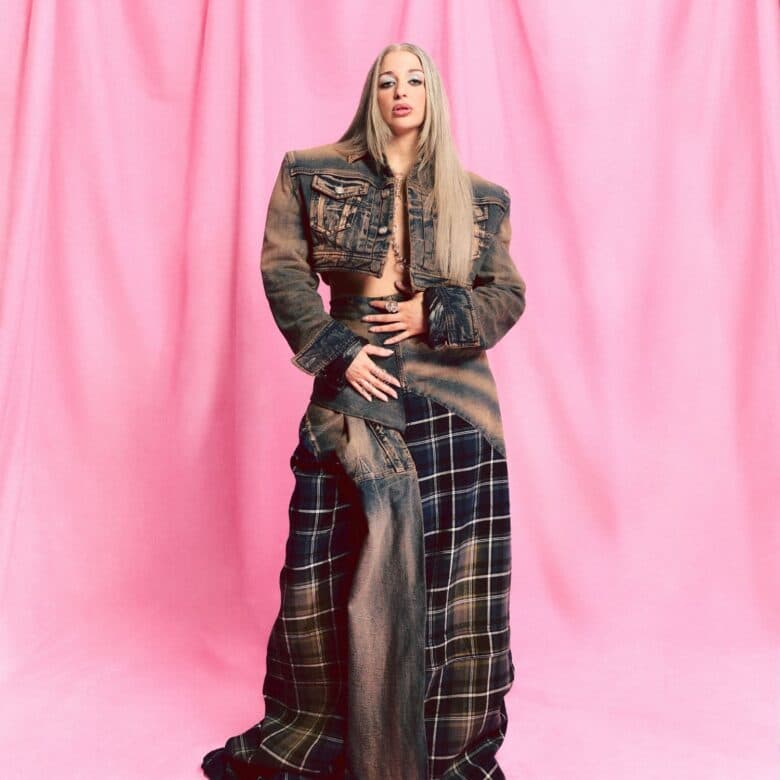
“I’m just enjoying being here”: Arden Rose on artist imposter syndrome, internet culture and US ‘garbage’
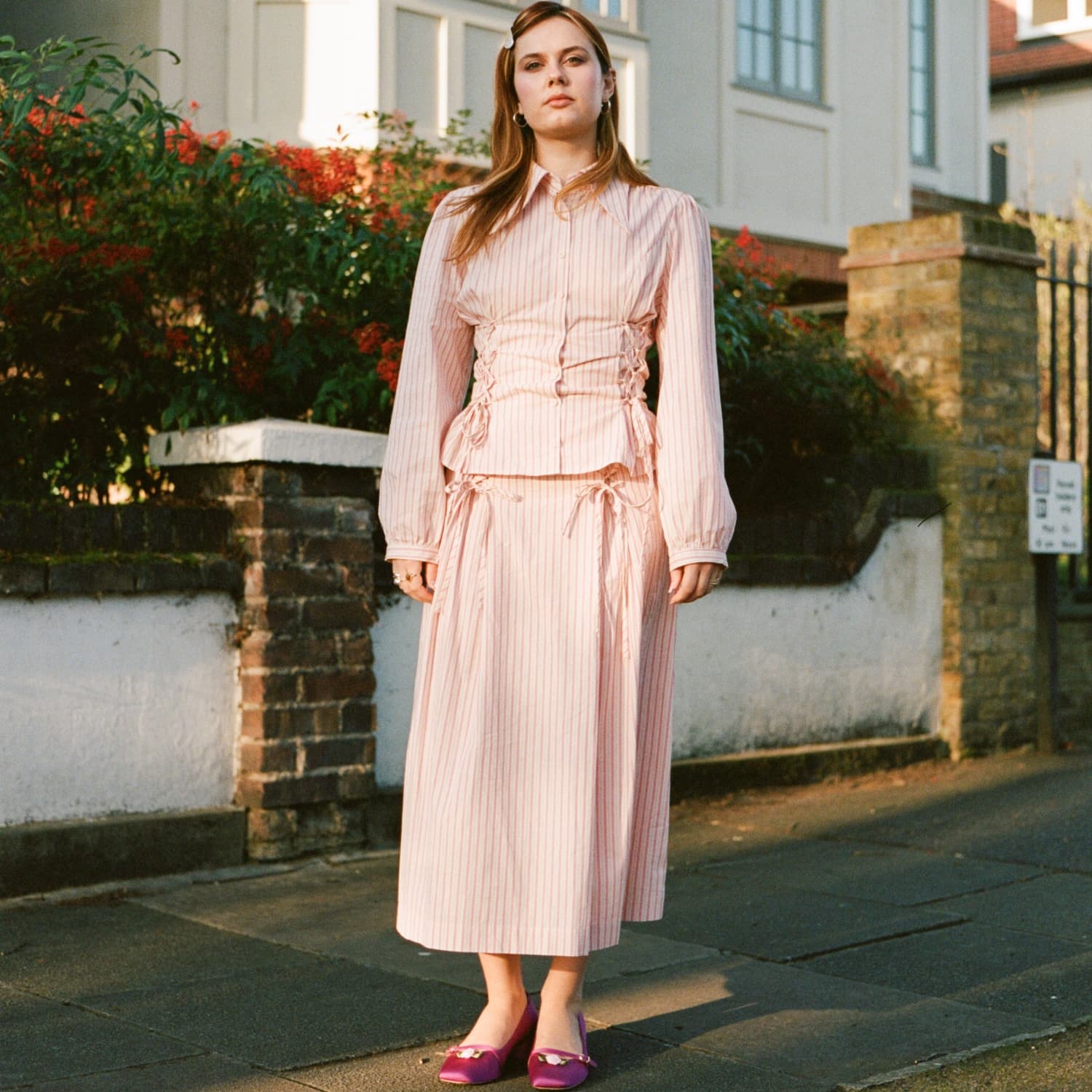
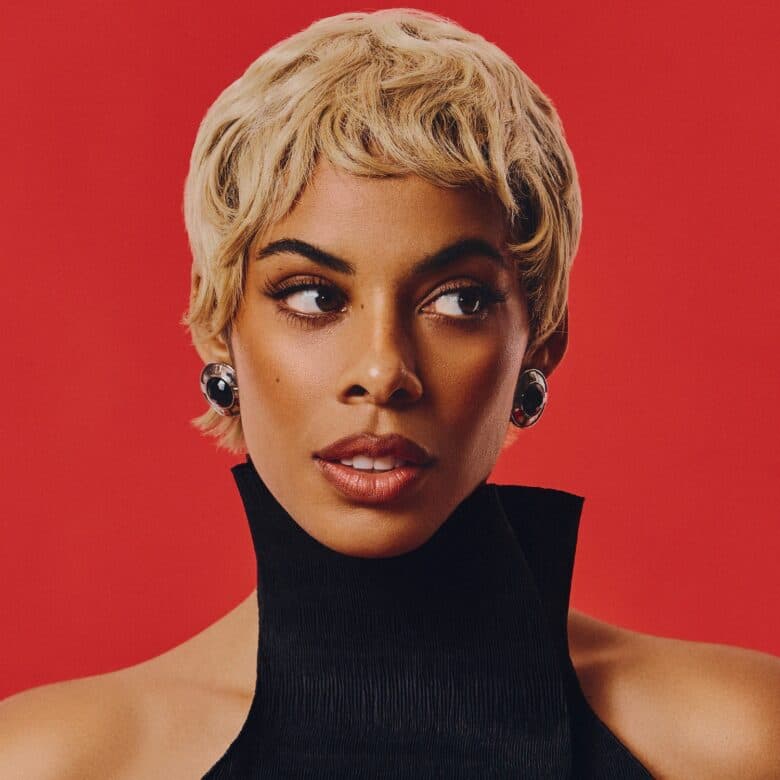
Would Arden Rose cut herself off from the internet if she could? “I think I would,” she says thoughtfully. Her only hesitation, however, would be the wax-cracking ASMR videos she listens to before going to sleep. “It’s just really important to me.” Her wide smile surfaces easily. Of course, the internet personality turned artist’s 1.5 million YouTube subscribers might not be pleased if she went offline entirely, but the 30-year-old is keen to avoid being on her phone where she can. “I resent being available all the time,” she says with force. “It’s bullshit. Sometimes I find it a relief when my phone dies.”
That’s where oil painting comes in. For Rose, it’s a way to slow down and zone out. When she and her husband, director and occasional content creator Will Darbyshire, moved from Los Angeles to England in October 2024, they stayed with his parents. After six months of painting in their living room, the couple found a home in northeast London and Rose started to rent a cubicle in a nearby artist collective. “We don’t have the best WiFi in our studio, so it cuts you off even if you want to still be plugged in,” she explains. Her hands remain in motion as she talks, stacked rings clinking as they brush past each other. “There’s a wave of creators who feel like they are shackled to the internet because we have to post content,” she says. “We have to sell ourselves in some kind of way, but we don’t really want to be doing that.”
In a way, having to document one’s craft can detract from its purity. Once Rose slips into the trancelike state that painting induces, she can stay sitting for eight hours without eating, drinking or using the bathroom. “That’s something that happens basically every time I paint,” Rose admits. She tucks loose strands behind her ears, bright blonde against the warm auburn of her ponytail. “Unless I set myself alarms, it’s very easy for me to slip into forgetting where I am.” But in the current political climate, Rose counts her ability to tune everything out as a strength. “Being an American is so awful,” she says. “We’re such a shit country. Having any kind of separation from the firehose of garbage that’s coming across the pond is really nice.”
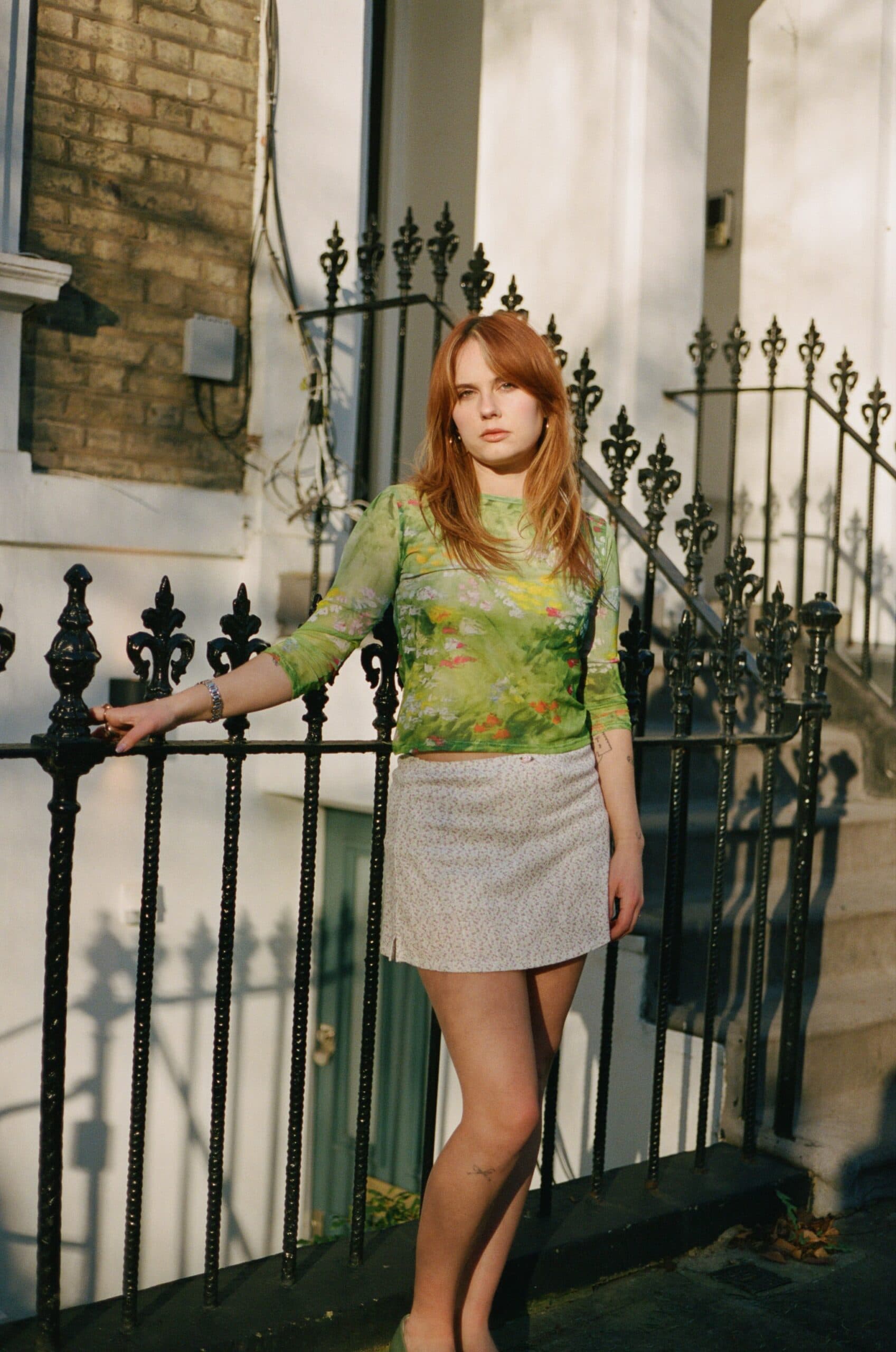
Conversely, retreating to the studio has invited stability into Rose’s life, especially among the chaos of moving to England. For her, art has always provided a refuge from the everyday, going as far back as middle and high school when she’d often eat lunch in the art room. In fact, this shared studio space reminds Rose of being at school. “I really love being able to have that communal viewing of other people’s artwork — almost slightly voyeuristic,” she says. “It gives you more muchness to what you’re trying to do.”
Rose attended school in Little Rock, Arkansas, and was taught by the same formidable art teacher from ages five to 18. “She was a teacher that used to get in trouble with the administration because she had no qualms with being mean to people over their artwork,” she declares. “It was not okay!” When Rose produced a subpar portrait — “it was objectively bad” — she remembers the teacher laughing and saying: “You can do better than that. So just do better than that.” Rose rolls up the sleeves of her jumper, a mossy cable knit with multicoloured buttons, to reveal a dainty silver watch and a cluster of fine line tattoos. “It was so embarrassing and gut-wrenching, but it also helped me be realistic with my artwork,” she says.
It was during school, too, that Rose started to post painting videos on her YouTube channel. But as time went on, she talked herself out of art as a money-making career. “Since I was a kid, I’ve always been like, ‘I want to be an artist’,” she says. “‘I want to get paid to paint. But that would never happen. So do the realistic stuff. Then maybe when you retire, then you can consider your hobbies your main thing.’” And, eventually, it became difficult to oil paint at all. Rose’s 55-metres-squared LA apartment only allowed her to watercolour cross-legged on the floor until her legs and bum went numb. “I never invested in myself enough to make my artwork worth something,” she says matter-of-factly. “You have to believe in yourself before anyone else is going to believe it.”
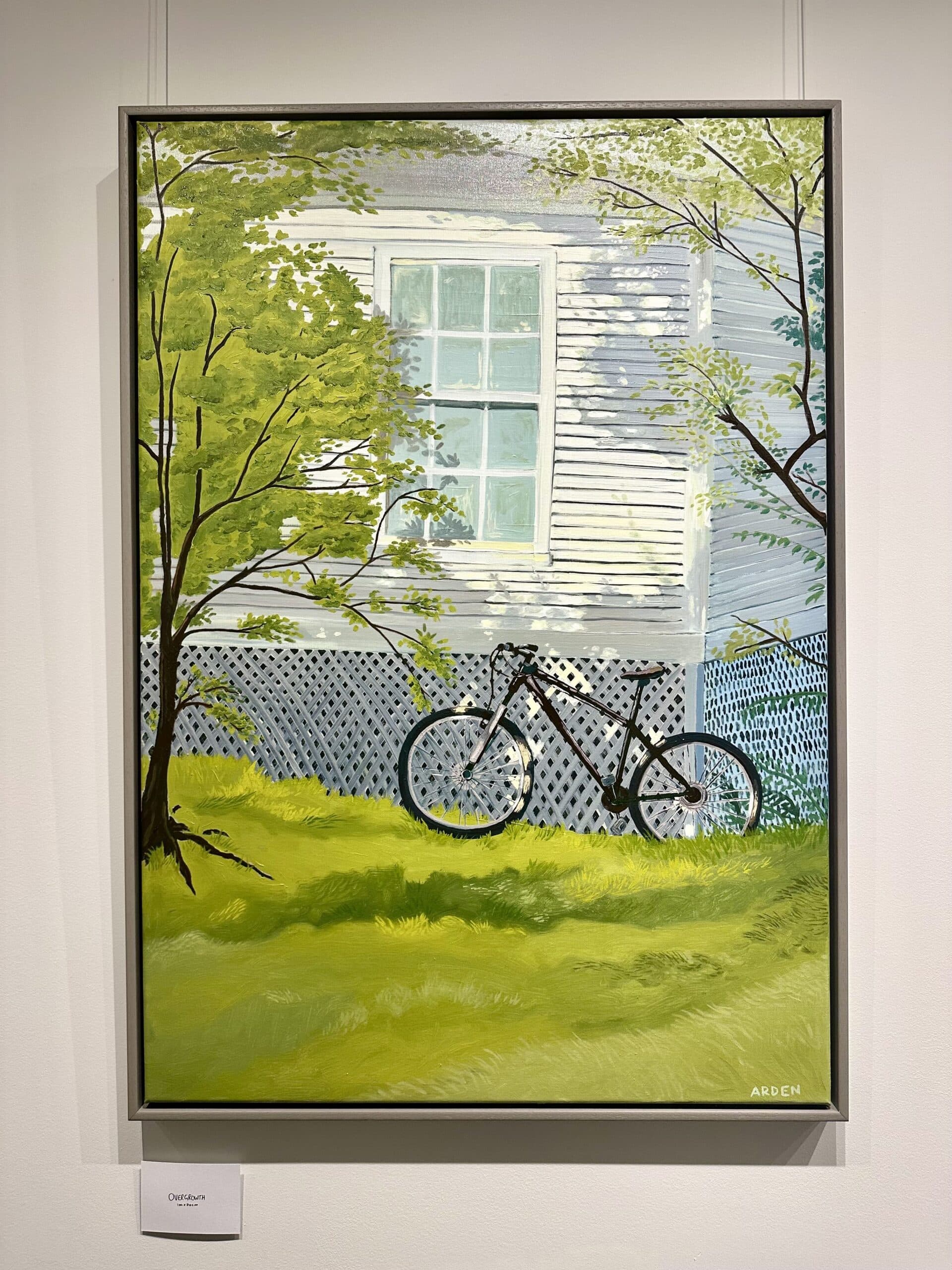
Finally, at age 29, Rose realised that, instead of wishing she had the time and space to oil paint, she had to create those conditions herself. Armed with bug spray and coated in suncream, Rose brought her easel outside under the unforgiving LA sun. “Once I broke that seal and was like, ‘I’m going to be invested in this’, then it was like I couldn’t stop,” she says. “Then I was constantly wanting to paint, [thinking] about what my next thing was going to be, about how long it was going to take for this layer to dry.” She continues: “All the way along, I gave myself more and more legitimacy, because every time there would be a moment where I was like, ‘I could put this to the side and maybe pick it up later’, I was like, ‘No, I really want to do this. I’m going to do it in every circumstance.’”
Despite her growing confidence, Rose didn’t think she’d ever sell her paintings until a year into living in London when she and her friend, fellow painter and content creator Adrian Bliss, set up a joint exhibition for November of last year. With just six weeks’ notice to finish their paintings, studio time became a daily activity, alongside securing alcohol sponsors, doing a photoshoot for advertisement, and framing and hanging their work. As if that wasn’t enough, Rose’s father-in-law passed away just one week before the exhibition’s opening night. “It was just a lot of stress,” she reflects. “I think the new year has been very healing.”
On that opening night, Rose and Bliss had been at the studio from 8am, and only snatched 45 minutes to return home, shower and dress. Five hundred and fifty people came to Hackney Downs Studios over the course of the evening, including Rose’s longtime friend and fellow YouTuber, Connor Franta. A rotating gaggle of visitors smoked soggy cigarettes in the pouring rain before returning inside to mingle in the warm warehouse.
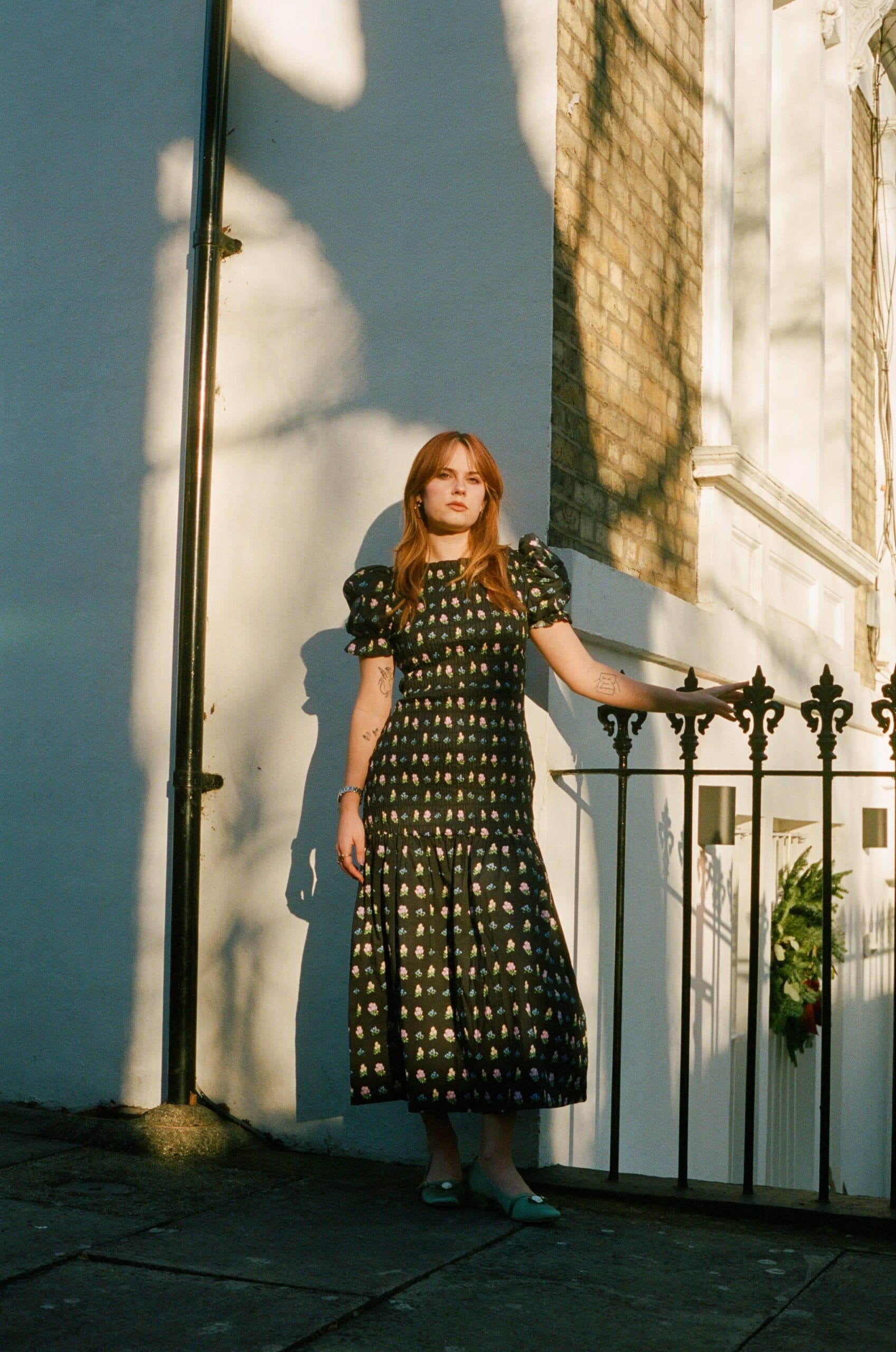
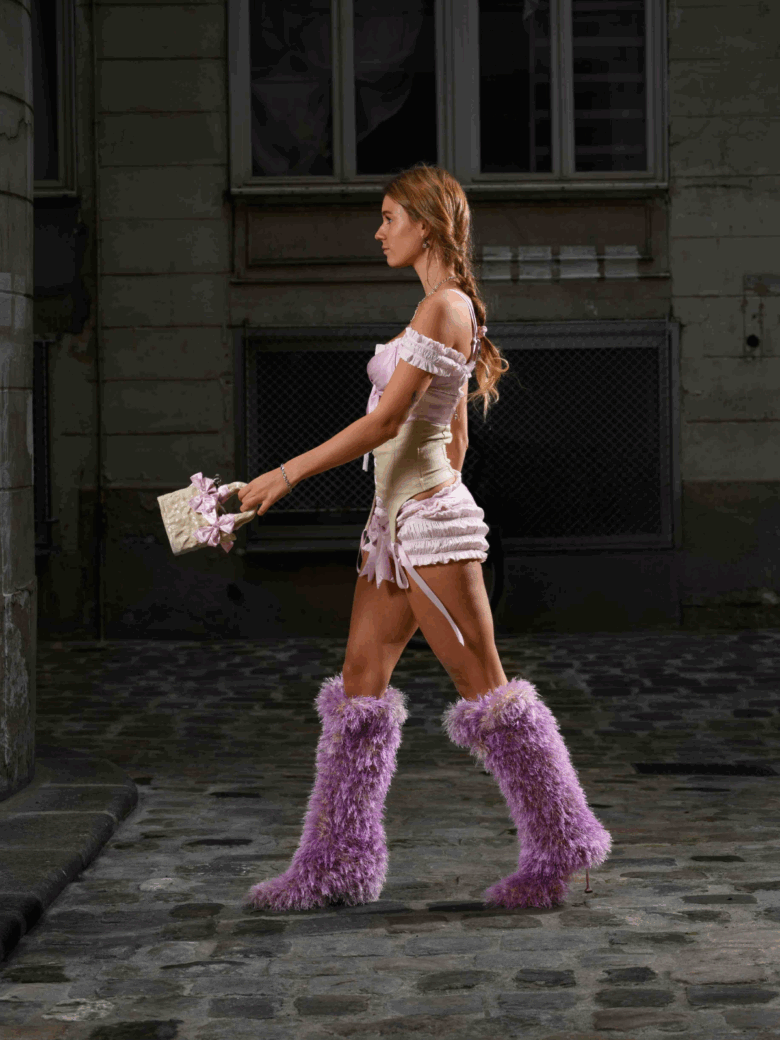
Her next event came on 15 January, in the General Assembly Gallery off Regent Street. It celebrated the launch of Rose’s clothing collaboration with LA-based brand Lisa Says Gah. The room was filled with friends, fans and swathes of Instagram fashion girls. (There were also a striking number of redheads sporting the same glossy copper shade as Rose herself.) Women in gingham and denim squeezed past men in navy knits to flick through the clothes on racks at the end of the room. Delicate florals and spring colours characterised the range of mesh tops, dresses and satin heels — apple green, pinks and lilac inspired by English interior design, “countryside cottage fabrics” and Rose’s paintings, seven of which were on display.
Rose herself was wearing the striped skirt and shirt set from the collection and, when I arrived, was animated in conversation with a mother and her beaming daughter. Once I reached her through the throng, she was chatting to the girls serving drinks, a choice of red, white or rosé Amie wine in plastic cups, which Rose promptly knocked over. While mopping the table, she told me that the turnout “makes a nice change from LA”. People there think themselves “too cool for school”, she tells me, so event turnout can be pretty poor.
The collaboration marks the second time Rose has worked with Lisa Says Gah. Back in 2020, she was drawing custom rats for her followers in order to raise money for The Bail Project, a California-based charity which provides bail for low-income people. She designed a fairy-princess rat for the clothing company, which they sold as a graphic tee alongside some rat-themed jewellery. The opportunity arose from Rose’s online following, and she acknowledges that social media has helped her to carve a foothold in the art world — despite her wavering feelings about it. “It’s given me an excuse to post about my artwork when normally I would just be making it for myself,” she says. “It’s helped me get rid of some shame around being observed in that way. Though she describes the internet as a “hellscape”, she acknowledges its benefits, too. “It’s also something that opens gates you would otherwise be locked behind,” Rose says. “It’s democratising.”
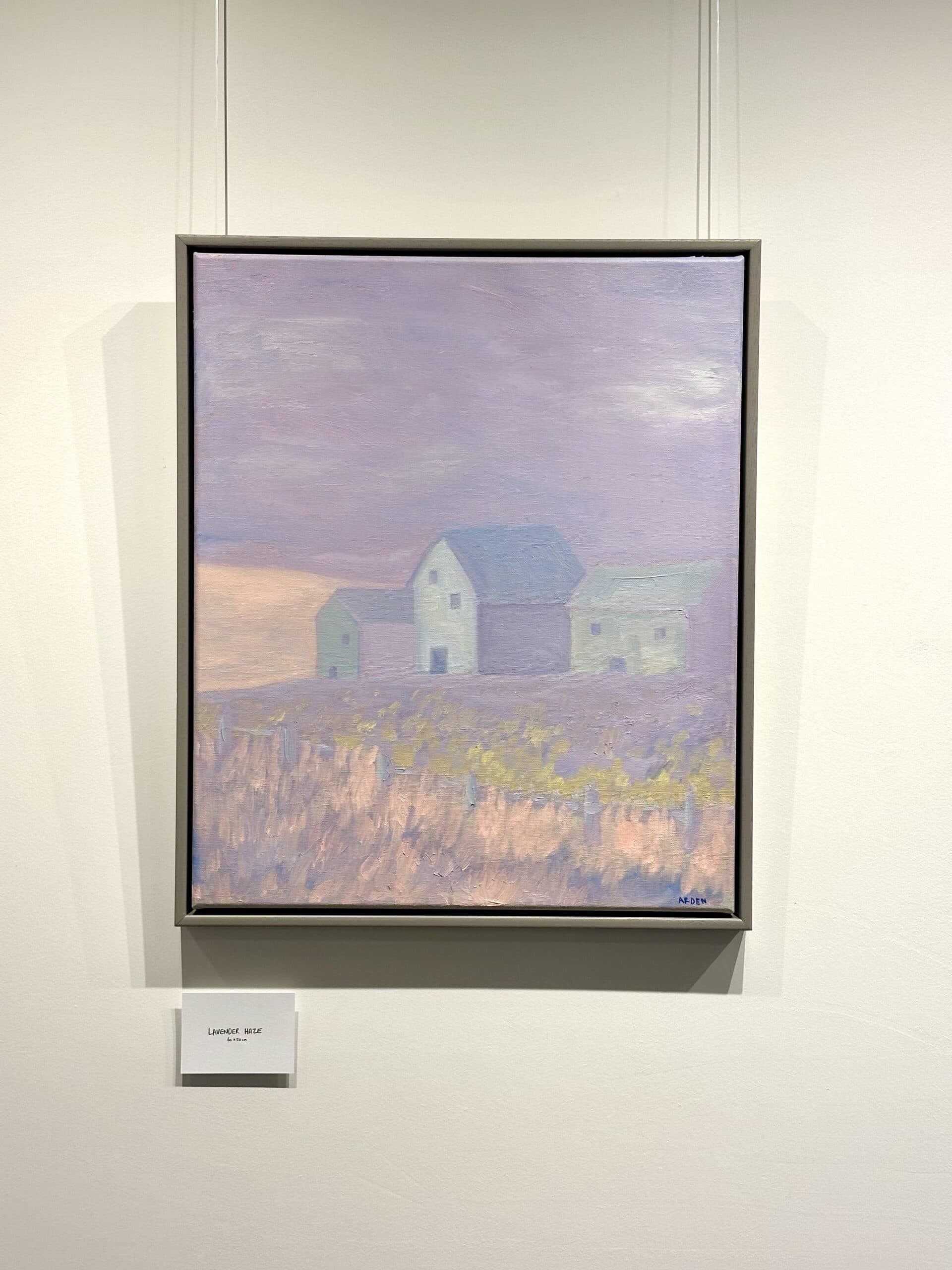
But it hasn’t always been that way. “10 years ago, it would have made me a more illegitimate artist to post my artwork online,” Rose says. She likens her position to people who used to make skits online. Previously, they weren’t taken seriously as actors. Now, as Rose says, “everyone on SNL is pulled from TikTok”. In contrast, Rose created her YouTube channel in 2008. “Because I’m from the old side of the internet,” she says, “I had that feeling of illegitimacy if I was posting about my artwork. Nowadays, it’s actually the reverse.” Even her “bonafide, true blue” artist friend, Michael Kirkman — so legitimate he has a stockist in Paris — is hoping to get more eyes on his art by posting on social media. As a representative of the traditional art world, Rose confides that she expected Kirkman to be “standoffish” towards her attempts to enter his domain. Fortunately, he was anything but; he attended her first exhibition and stayed for the entire evening.
Nonetheless, Rose still harbours some doubts as to how her foray into the art world will be perceived by other artists. “I think there would probably be a bit more pushback if I expanded myself,” she anticipates. But, exploring this stream of income feels increasingly important. “It feels like the influencer market space is collapsing under the weight of so many voices,” she says. “Everyone is a personal brand online now. So for a while I’ve wanted to divest away from being entirely reliant on random brand deals.” Fortunately, painting was always the end goal for Rose anyway. “I never, ever in my life thought that I would ever get paid to do anything with my artwork,” she concludes. “It’s been a hopeful and gratifying time, and I’m just enjoying being here.”
- WriterLara Iqbal Gilling